
Bird
Red-headed Woodpecker
Melanerpes erythrocephalusAlso known as Flying Checkerboard, Half-A-Jack, Jellycoat
Red-headed woodpeckers are strikingly patterned birds known for their swooping flight and exceptional flycatching prowess. Unlike most woodpeckers, they frequently catch insects in midair and store nuts in tree bark crevices or under shingles for winter. Nesting pairs aggressively defend standing dead trees, which serve as essential roosts, larders, and breeding cavities.
StrikingCavity NesterOmnivorous
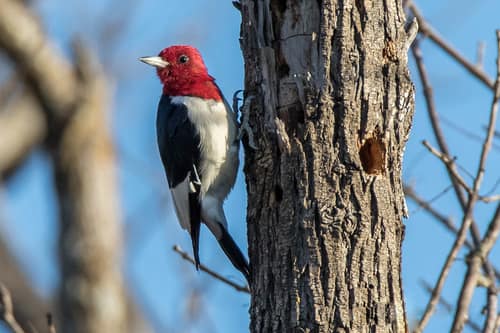

—observations
—countries
—peak records
Least ConcernConservation statusIUCN Red List categoriesLCNTVUENCREWEXLeast ConcernRed List categories, explained →
Diet & preyBeetles, Grasshoppers, Acorns
Predators
- Cooper's Hawk
- Eastern Screech-Owl
- Rat Snake
ThreatsLoss of dead standing trees, competition with starlings
HabitatsOak savannas, open pine forests, river bottoms, orchards
Life span8–12 years
Classification
- OrderPiciformes
- FamilyPicidae
- GenusMelanerpes
- SpeciesMelanerpes erythrocephalus
Range data is not available yet.
Interaction riskLow
- Low
- Moderate
- High
- Very high
- Why interaction risk is low
- Safe to observe at a normal distance.
Responsible observation
- Listen for Calls: Scan dead snags when hearing their harsh churr or rattling calls.
- Watch for Flycatching: Look for sudden aerial sallying off high branches to snap up flying insects.
- Provide Habitat: Retain standing dead trees and snags on private land to support breeding pairs.
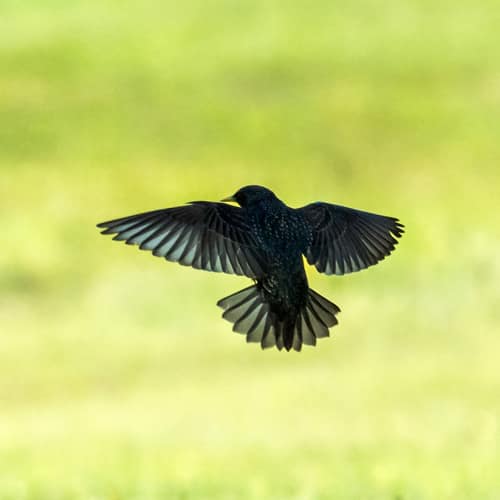
Competitor (c) Shiva Shenoy, some rights reserved (CC BY), uploaded by Shiva Shenoy · cc-by
Close Relative "Red bellied Woodpecker" by Manjith Kainickara *manjithkaini.net* is licensed under CC BY-SA 2.0. To view a copy of this license, visit https://creativecommons.org/licenses/by-sa/2.0/. · cc-by-sa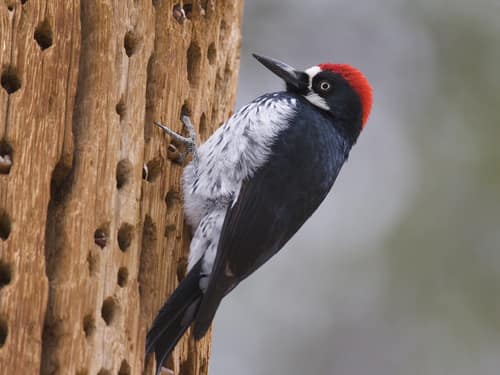
Close Relative (c) Dmitry Mozzherin, some rights reserved (CC BY) · cc-by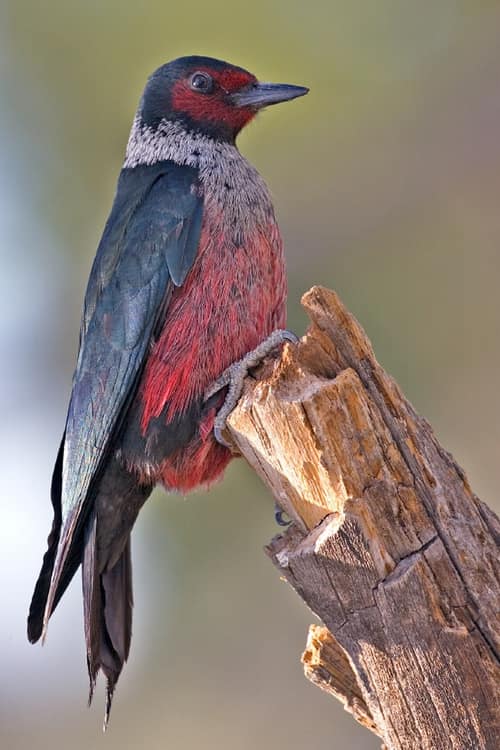
Close Relative http://www.naturespicsonline.com/ / CC BY-SA 3.0 · cc-by-sa
Keep collecting in Fauna
Found in Collections
Ecosystem chain Pro
Secret Garden
Red-headed Woodpecker is found in this collection. Identify it in Fauna to fill this slot and continue your progress.
Unlock to track progress
Help improve the field guideSomething wrong?
Checking your Fauna account…Report a name, category, or profile issue for review.