
Bird
Giant Hummingbird
Patagona gigasAlso known as Southern Giant Hummingbird, Patagonian Giant Hummingbird
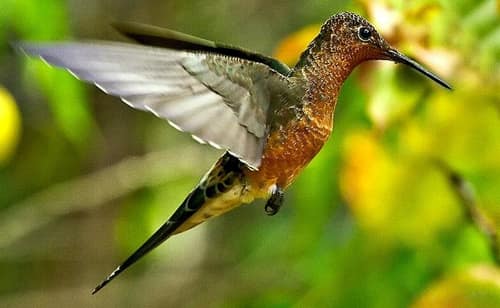
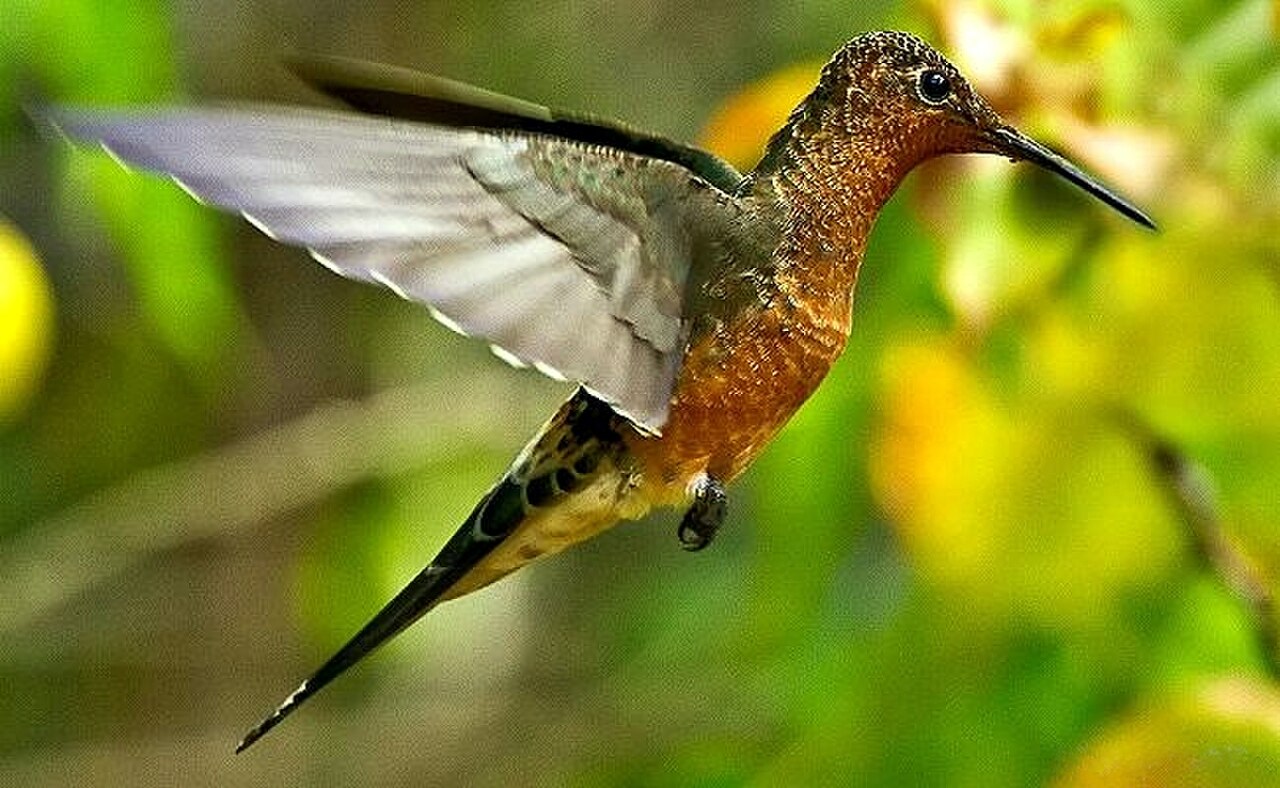
Giant Hummingbirds are the largest members of the hummingbird family, easily recognized by their sluggish, slow-flapping flight that resembles a swift or a swallow rather than the typical blur of smaller hummingbirds. They inhabit the high-altitude Andes, where they defend large feeding territories centered on flowering cacti and bromeliads. During the winter, southern populations migrate northward along the mountain chain to find warmer valleys.
High-AltitudeMigratoryNectar-Feeder
—observations
—countries
—peak records
Least ConcernConservation statusIUCN Red List categoriesLCNTVUENCREWEXLeast ConcernRed List categories, explained →
Diet & preyFlower Nectar, Insects, Spiders
Predators
- Raptors
- Feral Cats
- Snakes
ThreatsHabitat loss from agriculture and climate change affecting alpine flowering seasons
HabitatsAndean scrublands, montane forests, and high-altitude grasslands
Life span6 to 10 years
Classification
- FamilyTrochilidae
- SpeciesPatagona gigas
Native
Interaction riskLow
- Low
- Moderate
- High
- Very high
- Why interaction risk is low
- Safe to observe at a normal distance.
Responsible observation
- Look for slow wingbeats: Watch for a hummingbird that glides and flaps slowly, resembling a swift, rather than hovering in a blur.
- Scan flowering cacti: Look around large columnar cacti and agave plants in the Andes, which are favored feeding stations.
- Listen for loud chirps: Listen for their sharp, metallic 'chip' calls used to defend feeding territories.
 Image unavailable
High-Altitude Competitor 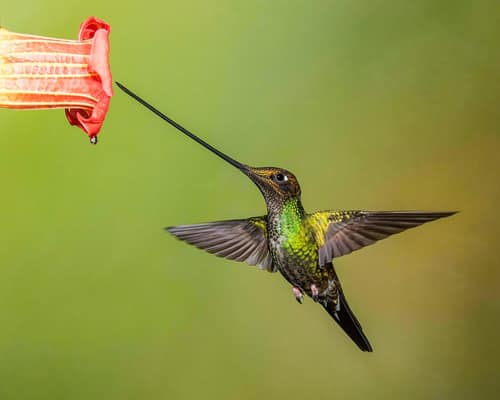
Co-occurring Species Andy Morffew from Itchen Abbas, Hampshire, UK / CC BY 2.0 · cc-byClose Relative
Help improve the field guideSomething wrong?
Checking your Fauna account…Report a name, category, or profile issue for review.