
Bird
Hooded Visorbearer
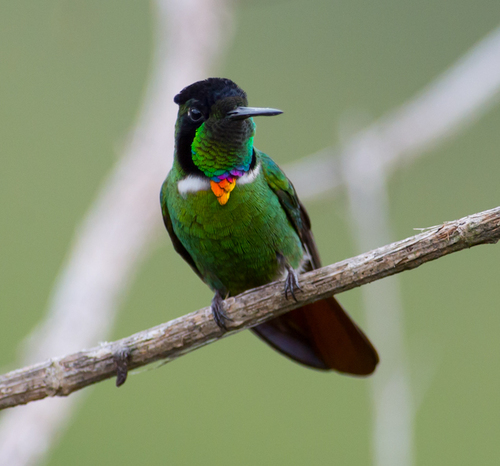
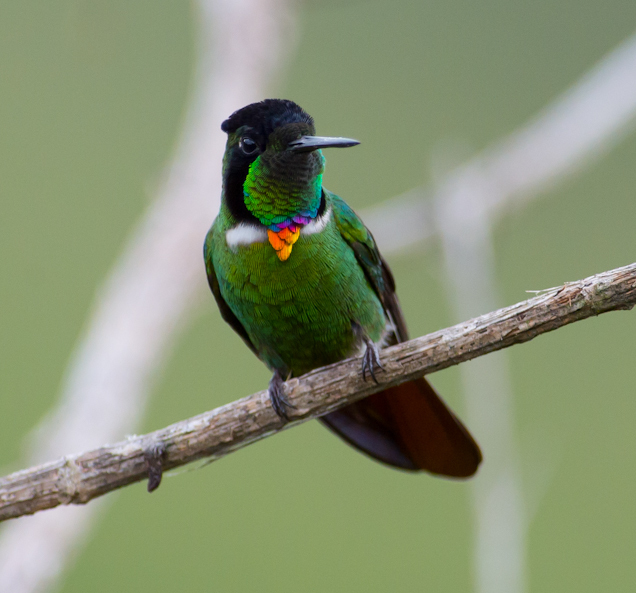
Augastes lumachellaMale Hooded Visorbearers possess an astonishing plumage display, sporting a jet-black hood framing a glittering emerald-green forehead and a throat patch that flashes brilliant fiery orange and gold. Adapted to the wind-swept, sun-drenched rocky summits of Bahia, these agile fliers dart between scattered flowering shrubs and cacti to defend tight feeding territories. Females construct tiny, cup-shaped nests anchored against rock crevices or cactus thorns, expertly weaving cactus spines and silky plant fibers together with spider silk.
EndemicHighlandPollinator
—observations
—countries
—peak records
Near ThreatenedConservation statusIUCN Red List categoriesLCNTVUENCREWEXNear ThreatenedRed List categories, explained →
Diet & preyFloral nectar, Small flying insects, Spiders
Predators
- Small raptors
- Snakes
- Praying mantises
ThreatsHabitat loss from mining, cattle grazing, fire, and climate change
HabitatsHigh-elevation rocky montane grassland (campo rupestre)
Life span5–8 years
Classification
- FamilyTrochilidae
- SpeciesAugastes lumachella
Range data is not available yet.
Interaction riskLow
- Low
- Moderate
- High
- Very high
- Why interaction risk is low
- Safe to observe at a normal distance.
- What to notice
- Look for an intense iridescent golden-orange throat patch framed by a black hood on birds perched atop exposed rock pinnacles.
- Support conservation
- Stay firmly on established trails to protect fragile alpine vegetation, and never use audio playbacks that stress territorial adults.
Responsible observation
- Observation: Scan exposed rock perches and flowering cactus patches early in the morning when birds are most active.
- Territory respect: Use binoculars or a long lens to observe quietly, as territorial birds easily flush from aggressive approaches.
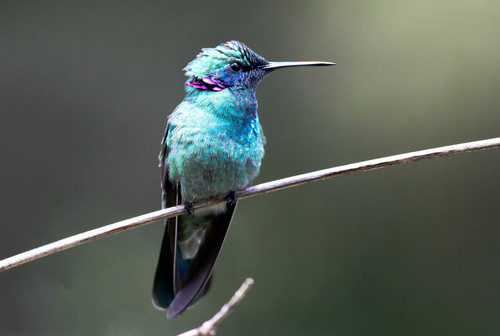
Competitor (c) Rick elis.simpson, some rights reserved (CC BY-SA) · cc-by-sa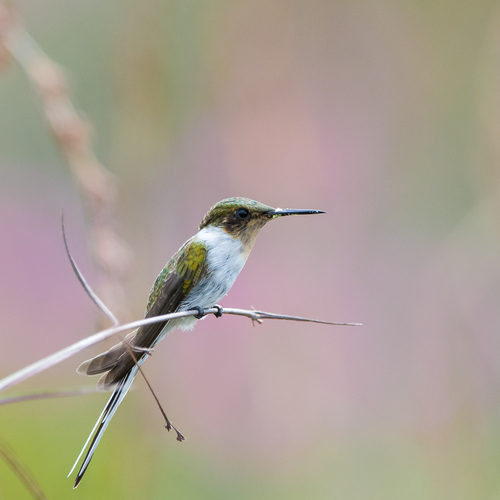
Neighbor no rights reserved, uploaded by NINA WENÓLI · cc0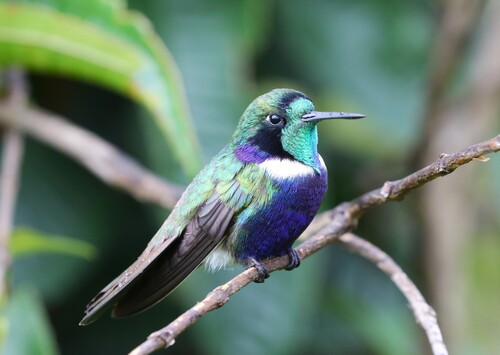
Close Relative (c) Lindolfo Souto, some rights reserved (CC BY), uploaded by Lindolfo Souto · cc-by
Help improve the field guideSomething wrong?
Checking your Fauna account…Report a name, category, or profile issue for review.