
Bird · GBIF taxon 2476012
Great Hornbill
Buceros bicornisAlso known as Concave-casqued Hornbill, Great Indian Hornbill, Great Pied Hornbill
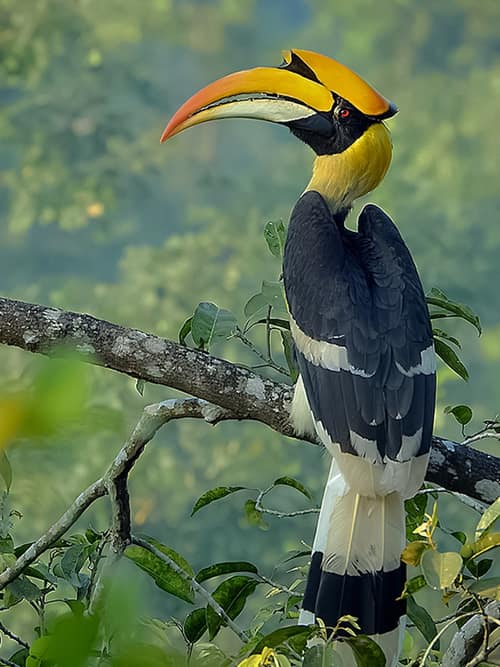
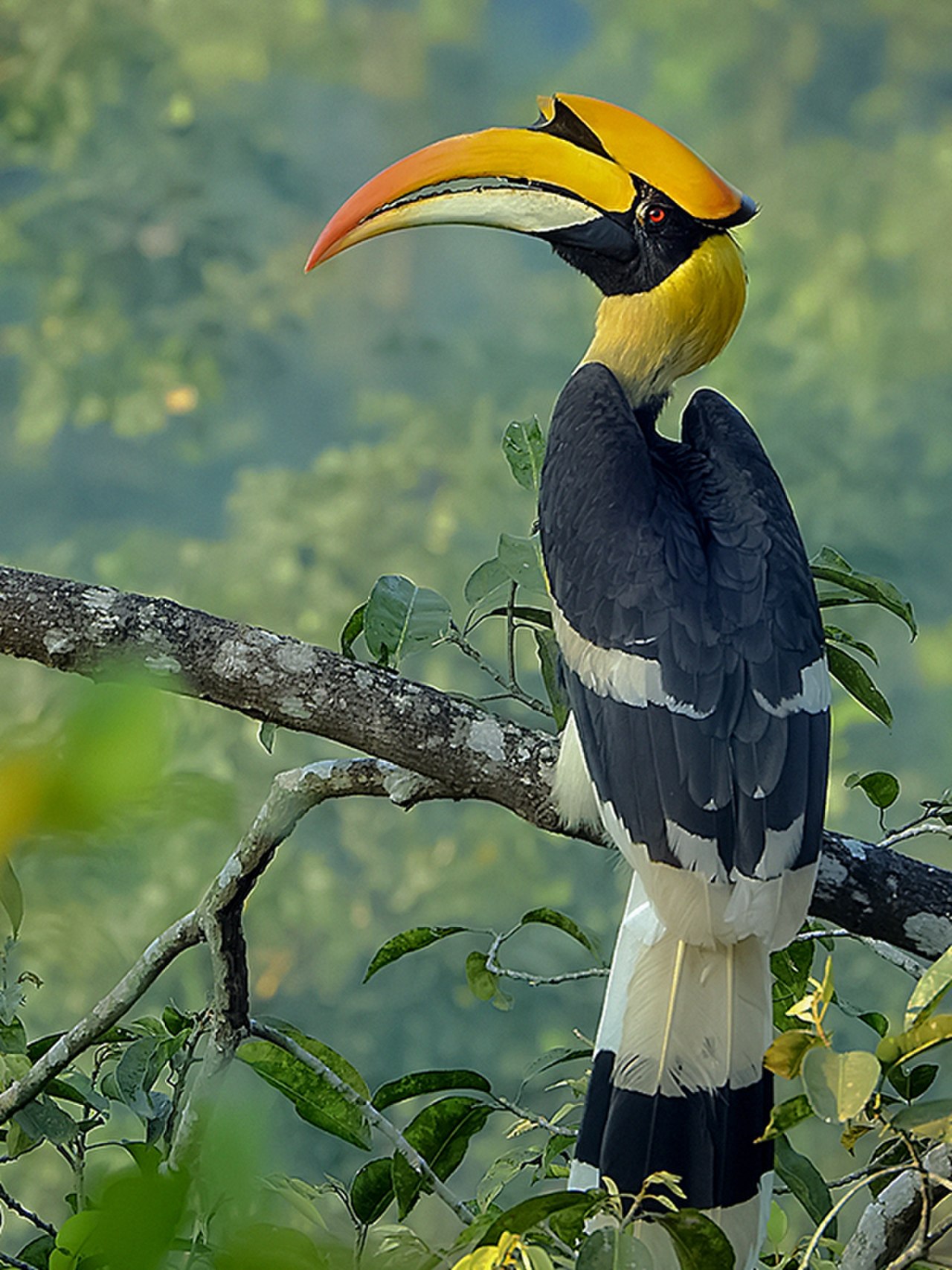
Great hornbills are majestic canopy dwellers instantly recognizable by the massive yellow casque atop their heavy bills. Their powerful wingbeats lack sound-dampening coverts, creating a roaring sound like an approaching train as they fly across forest valleys. During breeding, females seal themselves inside hollow trees using mud and droppings, relying entirely on their mates to supply food through a narrow slit until chicks fledge.
FrugivorousCanopyVocal
—observations
—countries
—peak records
VulnerableConservation statusIUCN Red List categoriesLCNTVUENCREWEXVulnerableRed List categories, explained →
Diet & prey
- Figs
- Nutmeg fruits
- Lizards
Predators
- Eagles
- Leopards
- Pythons
ThreatsDeforestation, loss of nest trees, poaching for casques and meat
HabitatsPrimary tropical rainforests, mature hill forests
Life span35–50 years
Size / weightNot available
Classification
- FamilyBucerotidae
- SpeciesBuceros bicornis
Range data is not available yet.
Interaction riskLow
- Low
- Moderate
- High
- Very high
- Why interaction risk is low
- Safe to observe at a normal distance.
- What to notice
- Recognizable by its massive size, bright yellow casque, and deep roaring flight sound.
- Support conservation
- Maintain a quiet distance from nest sites and avoid using artificial lights or loud sounds.
Responsible observation
- Listen for Flight: Listen for loud, rhythmic whooshing sounds overhead created by their heavy wing structure.
- Use Binoculars: Scan high canopy emergent trees where these birds gather to feed on ripe figs.
- Maintain Distance: Avoid approaching nest trees during breeding season to prevent adult abandonment.
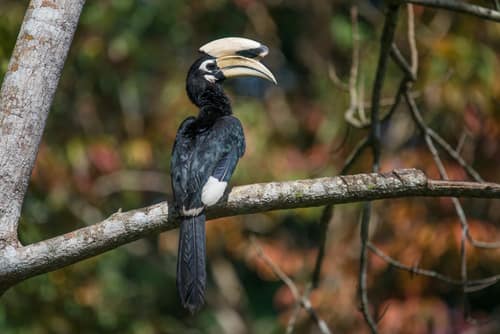
Forest Companion (c) Rushen, some rights reserved (CC BY-SA) · cc-by-sa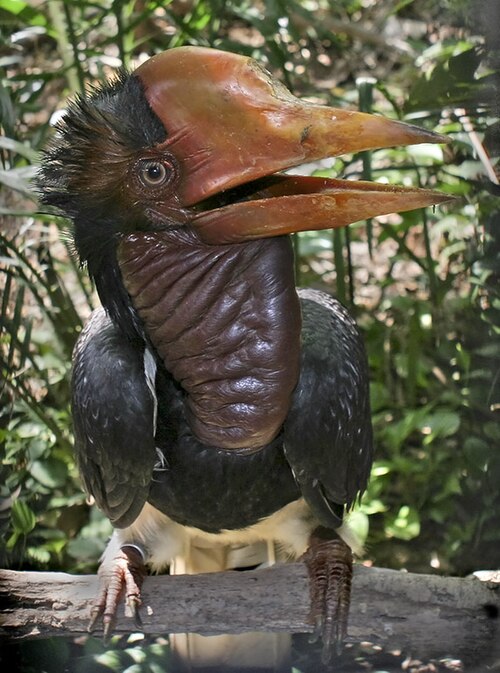
Forest Competitor Doug Janson / CC BY-SA 3.0 · cc-by-sa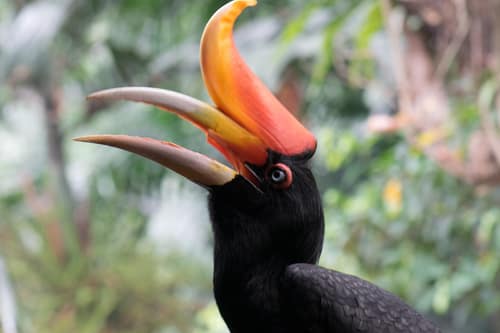
Close Relative (c) Thomas Quine, some rights reserved (CC BY) · cc-by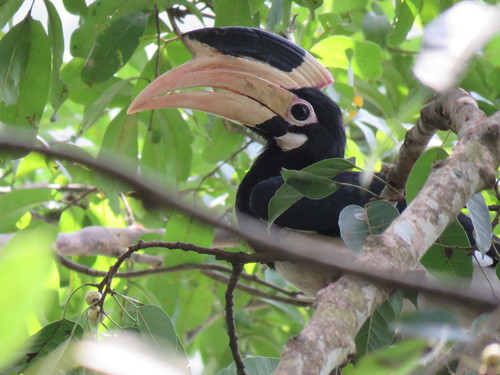
Regional Relative (c) Meghaa, some rights reserved (CC BY) · cc-by
Help improve the field guideSomething wrong?
Checking your Fauna account…Report a name, category, or profile issue for review.