
Bird · GBIF taxon 2476004
Rhinoceros Hornbill
Buceros rhinocerosAlso known as Bornean Hornbill, Rhinoceros Bird
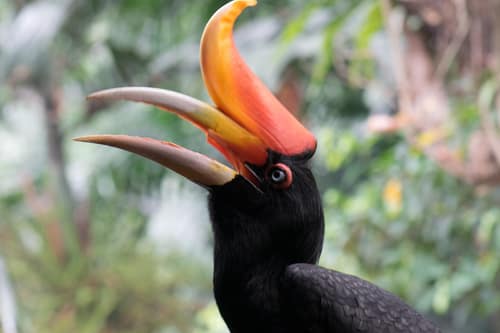
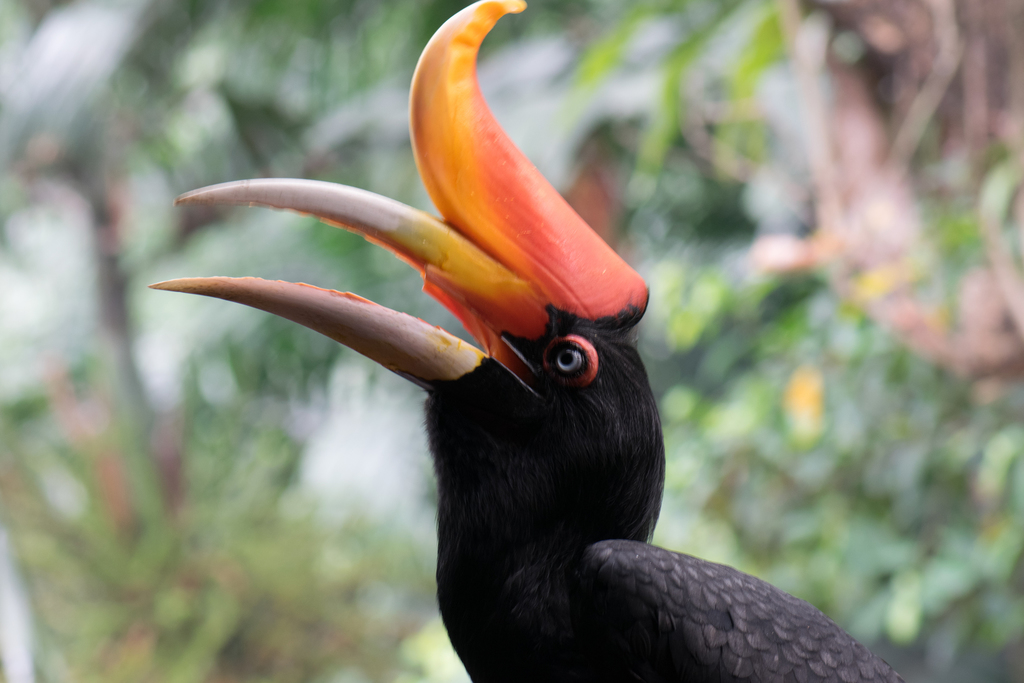
Rhinoceros hornbills navigate the rainforest canopy using their massive, upward-curving orange casques to amplify deep, reverberating calls that carry across the forest. Mated pairs form lifelong bonds, working together during nesting when the female seals herself inside a tree cavity for months while the male brings her food. These iconic birds play a crucial role as primary seed dispersers for canopy trees across Southeast Asia.
Canopy DwellerFrugivoreVocal
—observations
—countries
—peak records
VulnerableConservation statusIUCN Red List categoriesLCNTVUENCREWEXVulnerableRed List categories, explained →
Diet & prey
- Figs
- Insects
- Small Lizards
Predators
- Eagles
- Pythons
ThreatsDeforestation, logging, and hunting for feathers and casques
HabitatsLowland and montane tropical rainforests up to 1,400 m
Life span30–35 years
Size / weightNot available
Classification
- FamilyBucerotidae
- SpeciesBuceros rhinoceros
Range data is not available yet.
Interaction riskLow
- Low
- Moderate
- High
- Very high
- Why interaction risk is low
- Capable of delivering a powerful bite with its massive bill; observe quietly from a distance.
- Why it is dangerous
- The strong, sharp beak can cause severe crushing injuries or deep puncture wounds if handled.
- How to recognize a risky encounter
- Look for a large black bird with a red and orange horn-like casque on its massive bill.
- What to do
- Never attempt to catch or touch a wild bird; leave handling to licensed wildlife rescuers.
- What to notice
- Recognized by its black plumage, white tail with a dark bar, and prominent curved casque.
- Support conservation
- Observe from a safe distance and do not publish precise coordinates of active nest trees.
Responsible observation
- Listen for Calls: Listen for loud, roaring calls and heavy wingbeats in the upper canopy.
- Watch Fruiting Trees: Search high in canopy fig trees during early morning feeding periods.
- Keep Distance: Avoid disturbing active nest cavities to prevent parents from abandoning chicks.
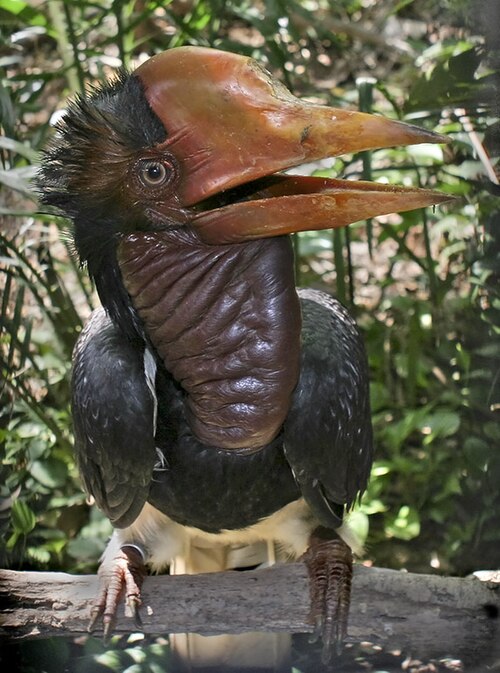
Competitor Doug Janson / CC BY-SA 3.0 · cc-by-sa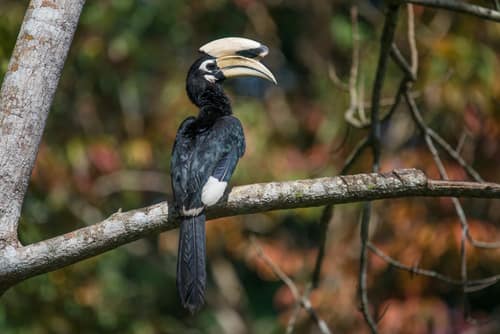
Co-occurring Hornbill (c) Rushen, some rights reserved (CC BY-SA) · cc-by-sa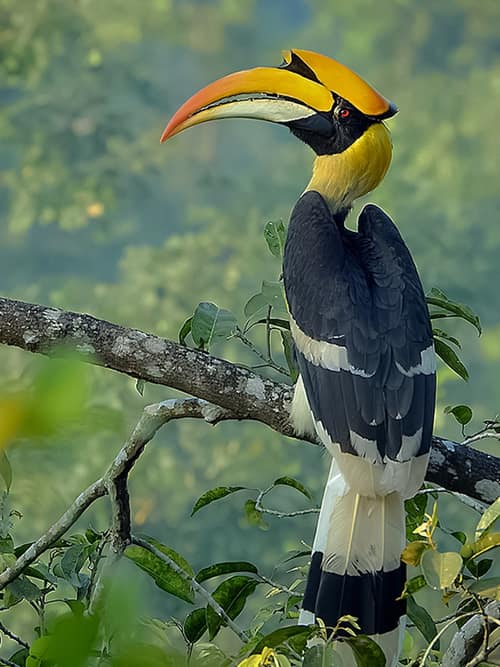
Close Relative Shantanu Kuveskar / CC BY-SA 4.0 · cc-by-sa
Help improve the field guideSomething wrong?
Checking your Fauna account…Report a name, category, or profile issue for review.