
Bird
Indian Grey Hornbill
Ocyceros birostrisAlso known as Indian Gray Hornbill
Indian grey hornbills are famous for their remarkable nesting ritual, where the female seals herself inside a tree hollow with mud and droppings, leaving only a narrow slit through which the male delivers food. They act as essential seed dispersers across the Indian subcontinent, thriving wherever mature fig trees flourish in both rural woodlands and bustling city parks. Pairs frequently communicate through piping, gull-like squeals while navigating canopies in distinctive undulating flight patterns.
FrugivoreCavity NesterUrban Wildlife
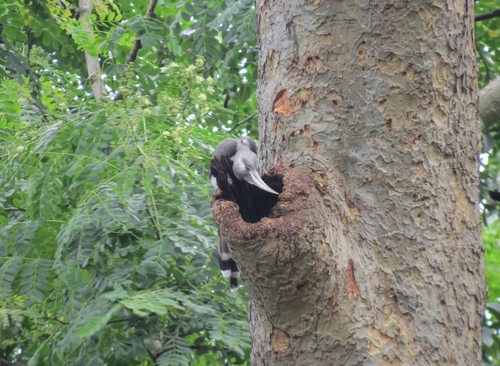
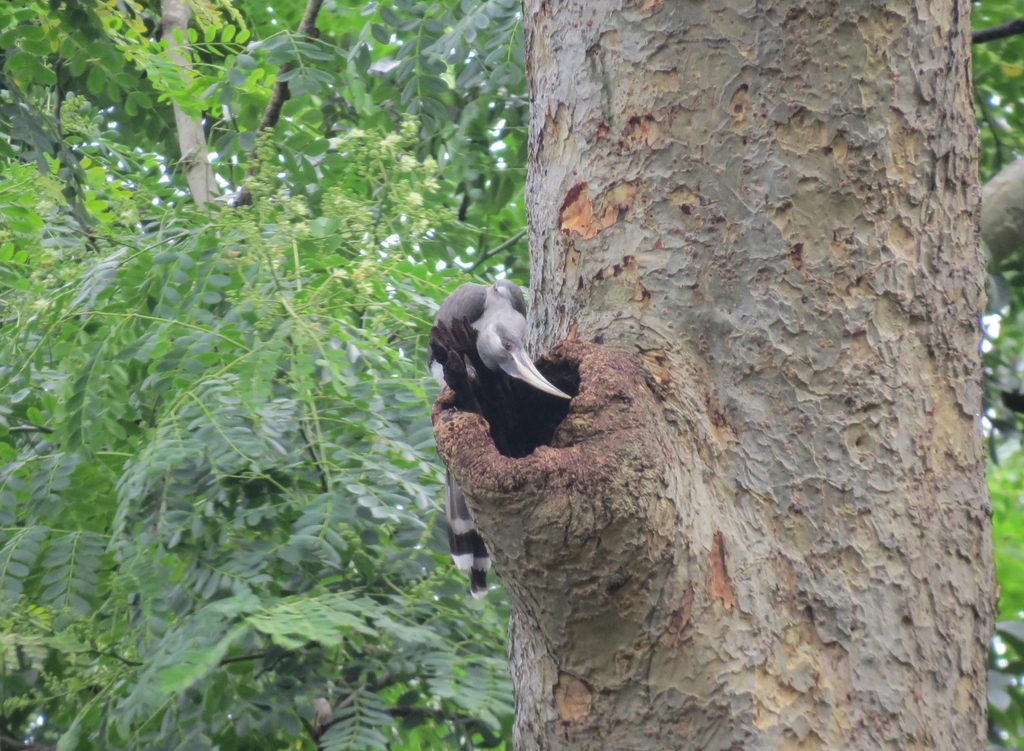
—observations
—countries
—peak records
Least ConcernConservation statusIUCN Red List categoriesLCNTVUENCREWEXLeast ConcernRed List categories, explained →
Diet & preyCluster figs, Beetles, Garden lizards
Predators
- Black Kite
- Shikra
- Monitor lizards
ThreatsFelling of mature nesting trees, urbanization, and pesticide use
HabitatsDeciduous forests, thorn scrub, plantations, and urban gardens
Life span15–20 years
Classification
- FamilyBucerotidae
- SpeciesOcyceros birostris
Range data is not available yet.
Interaction riskLow
- Low
- Moderate
- High
- Very high
- Why interaction risk is low
- Safe to observe at a normal distance.
Responsible observation
- Spotting: Look for pairs perched quietly on dead branches or gliding across suburban avenues.
- Listening: Tune in for high-pitched, piercing squeals that resemble the calls of black kites.
- Nesting Etiquette: Maintain a generous distance from active nest hollows to avoid alarming the provisioning male.
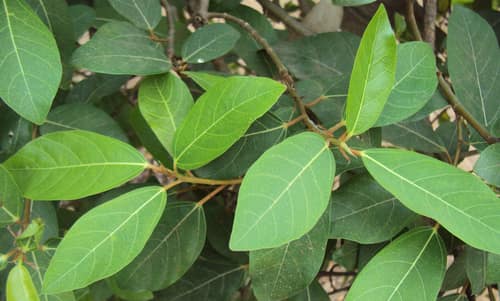
Food Plant (c) Vinayaraj, some rights reserved (CC BY-SA) · cc-by-sa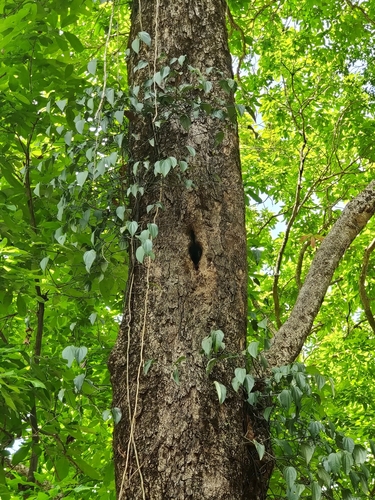
Close Relative (c) Chayant Gonsalves, some rights reserved (CC BY) · cc-by
Close Relative (c) Pieter Prins, some rights reserved (CC BY-SA), uploaded by Pieter Prins · cc-by-sa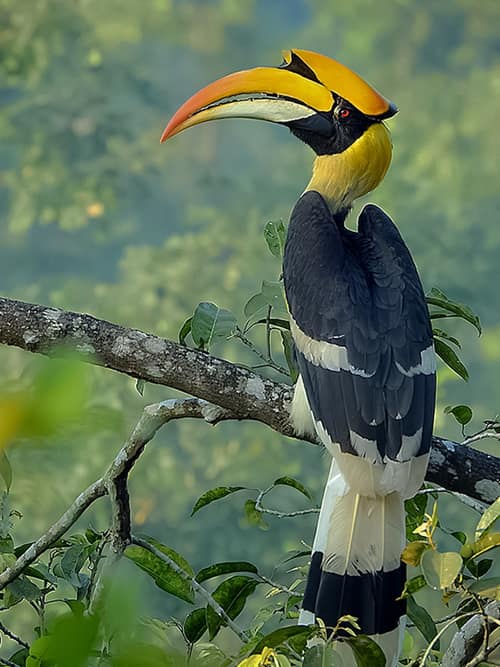
Same Family Shantanu Kuveskar / CC BY-SA 4.0 · cc-by-sa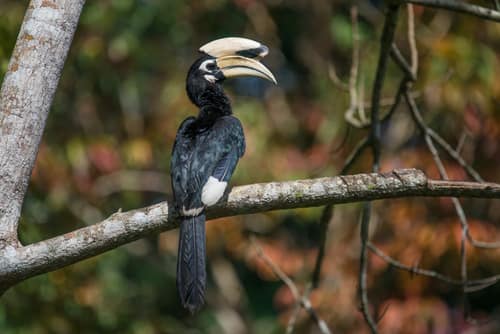
Same Family (c) Rushen, some rights reserved (CC BY-SA) · cc-by-sa
Help improve the field guideSomething wrong?
Checking your Fauna account…Report a name, category, or profile issue for review.