
Bird
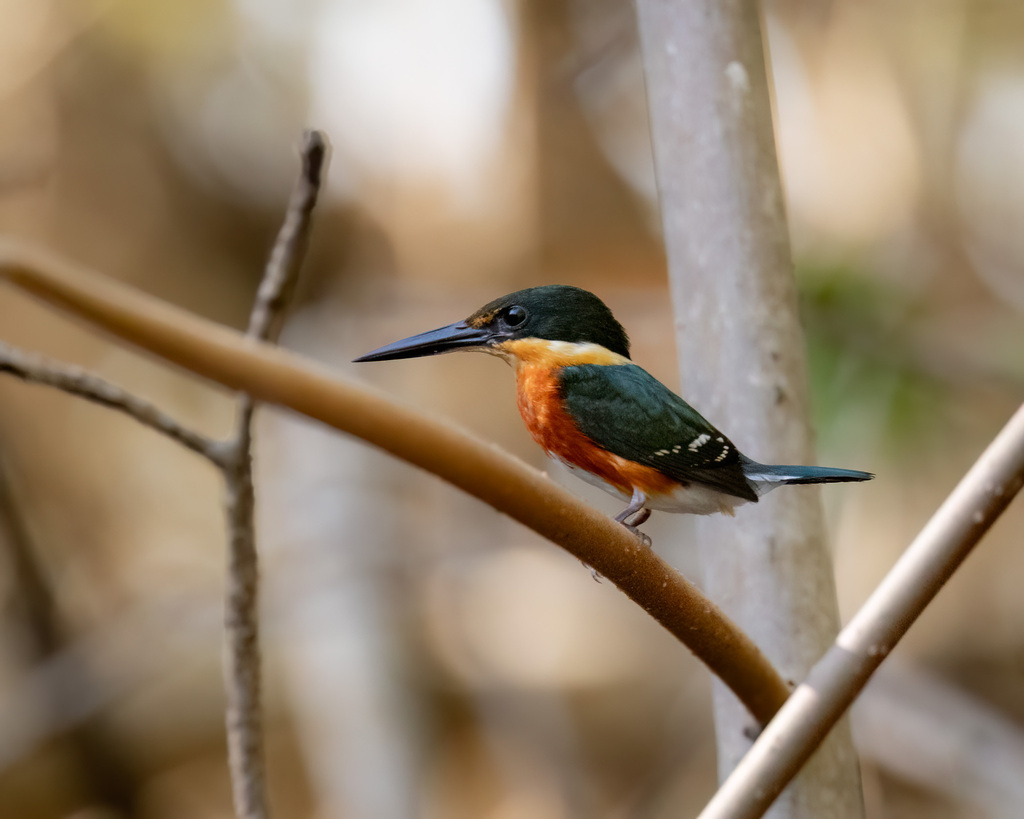
American Pygmy Kingfisher
Chloroceryle aeneaAlso known as Pygmy Kingfisher
Smallest of all American kingfishers, this tiny riparian hunter sits unobtrusively on low branches mere inches above slow-moving streams, swamps, and mangrove pools. It darts headfirst into shaded shallows to snatch small minnows and aquatic larvae before returning immediately to its secluded perch. Pairs excavate nesting tunnels into earthen riverbanks or arboreal termite mounds, uttering sharp, metallic clicking calls as they patrol their dense waterway territories.
RiparianPiscivoreNeotropical

—observations
—countries
—peak records
Least ConcernConservation statusIUCN Red List categoriesLCNTVUENCREWEXLeast ConcernRed List categories, explained →
Diet & preySmall freshwater fish, Aquatic beetles, Tadpoles
Predators
- Raptors
- Arboreal snakes
- Small wild cats
ThreatsDeforestation, wetland drainage, and stream siltation
HabitatsMangrove swamps, shaded forest streams, oxbow lakes, and flooded woodlands
Life span5–8 years
Classification
- FamilyAlcedinidae
- SpeciesChloroceryle aenea
Range data is not available yet.
Interaction riskLow
- Low
- Moderate
- High
- Very high
- Why interaction risk is low
- Safe to observe at a normal distance.
Responsible observation
- Scan Low: Search shaded roots and hanging branches within a half-meter of dark water surfaces.
- Listen Carefully: Listen for a distinctive, dry ticking sound reminiscent of tapping two coins together.
- Approach Gently: Canoe or kayak slowly along quiet banks to avoid startling this shy percher.
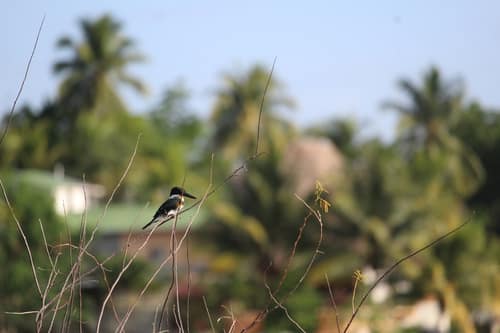
Close Relative (c) Ricard Busquets Reverte, some rights reserved (CC BY) · cc-by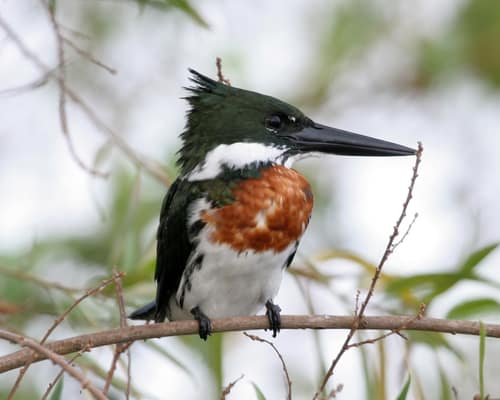
Close Relative (c) Lip Kee Yap, some rights reserved (CC BY-SA) · cc-by-sa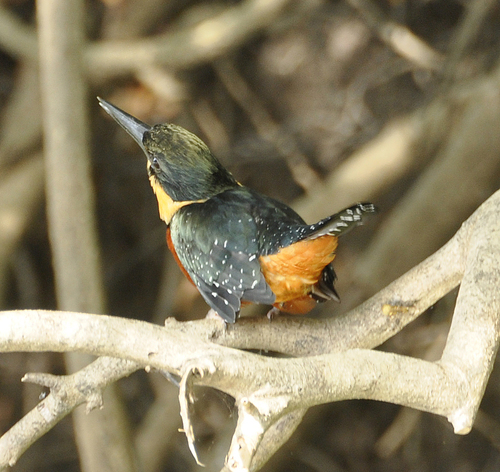
Close Relative (c) Bruce Kirchoff, some rights reserved (CC BY), uploaded by Bruce Kirchoff · cc-by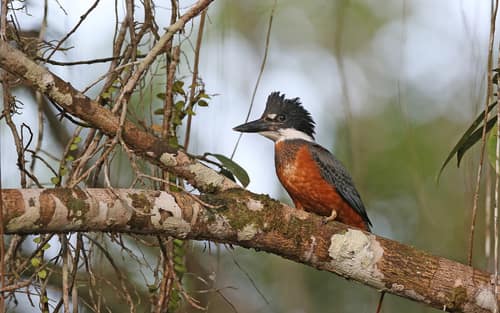
Same Family (c) Christoph Moning, some rights reserved (CC BY), uploaded by Christoph Moning · cc-by
Help improve the field guideSomething wrong?
Checking your Fauna account…Report a name, category, or profile issue for review.