
Bird · GBIF taxon 2475410
Green Bee-eater
Merops orientalisAlso known as Asian Green Bee-eater, Little Green Bee-eater
Green bee-eaters hunt flying insects from low wires, fence posts, or exposed twigs, sweeping down in acrobatic loops before returning to their perch to batter prey against a branch. These social, grass-green birds excavate long nesting tunnels into sandy banks or dirt mounds where monogamous pairs raise their chicks. Highly vocal throughout the day, they communicate with a cheerful, rolling trill across open habitats.
InsectivorousColorfulSocial

 1 / 7
1 / 7—observations
—countries
—peak records
Least ConcernConservation statusIUCN Red List categoriesLCNTVUENCREWEXLeast ConcernRed List categories, explained →
Diet & prey
- Honeybees
- Dragonflies
- Wasps
Predators
- Raptors
- Tree snakes
- Domestic cats
ThreatsPesticide misuse, loss of sandy nesting banks
HabitatsGrasslands, scrublands, open farmland, dry woodlands
Life span5–8 years
Size / weightNot available
Classification
- FamilyMeropidae
- SpeciesMerops orientalis
Range data is not available yet.
Interaction riskLow
- Low
- Moderate
- High
- Very high
- Why interaction risk is low
- Safe to observe at a normal distance.
Responsible observation
- Spotting perches: Look for perching birds along roadside telephone lines, fences, and exposed bare branches.
- Listening for calls: Listen for a rhythmic, cheerful rolling trill emitted frequently while perched or in flight.
- Observing behavior: Watch perches after a swoop to see them knock captured bees against wood to disarm stingers.
 Image unavailable
Former Conspecific 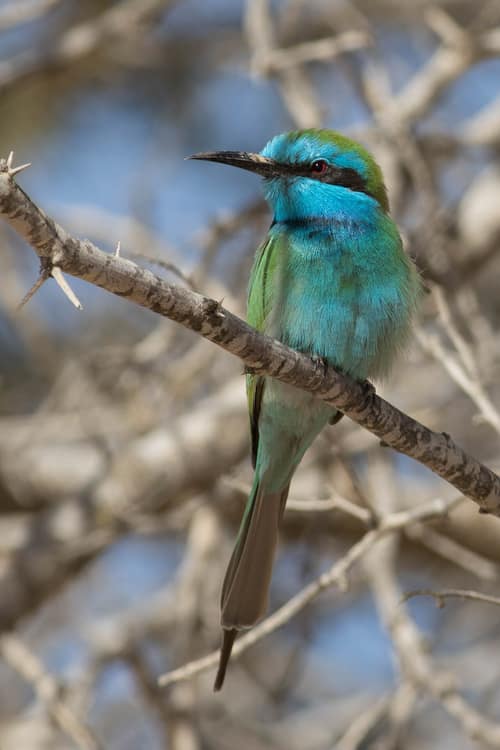
Former Conspecific מינוזיג - MinoZig / CC BY-SA 4.0 · cc-by-sa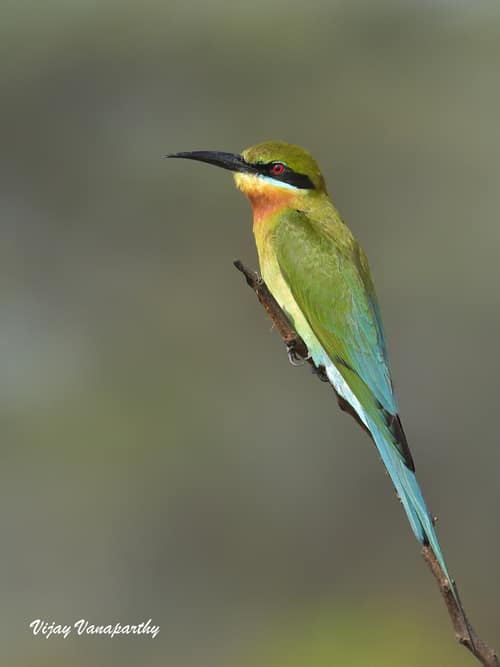
Close Relative (c) Vijay Vanaparthy, some rights reserved (CC BY), uploaded by Vijay Vanaparthy · cc-by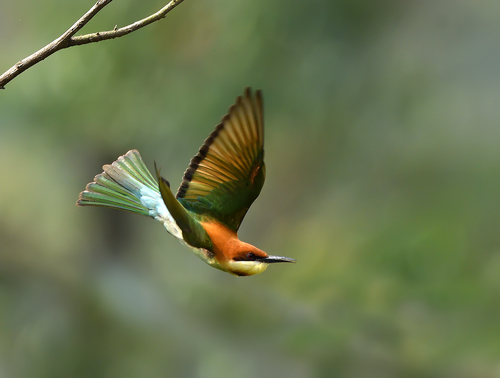
Close Relative (c) sunnyjosef, some rights reserved (CC BY), uploaded by sunnyjosef · cc-by
Help improve the field guideSomething wrong?
Checking your Fauna account…Report a name, category, or profile issue for review.