
Bird · GBIF taxon 2475396
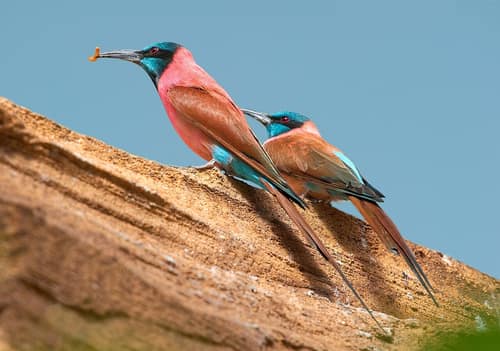
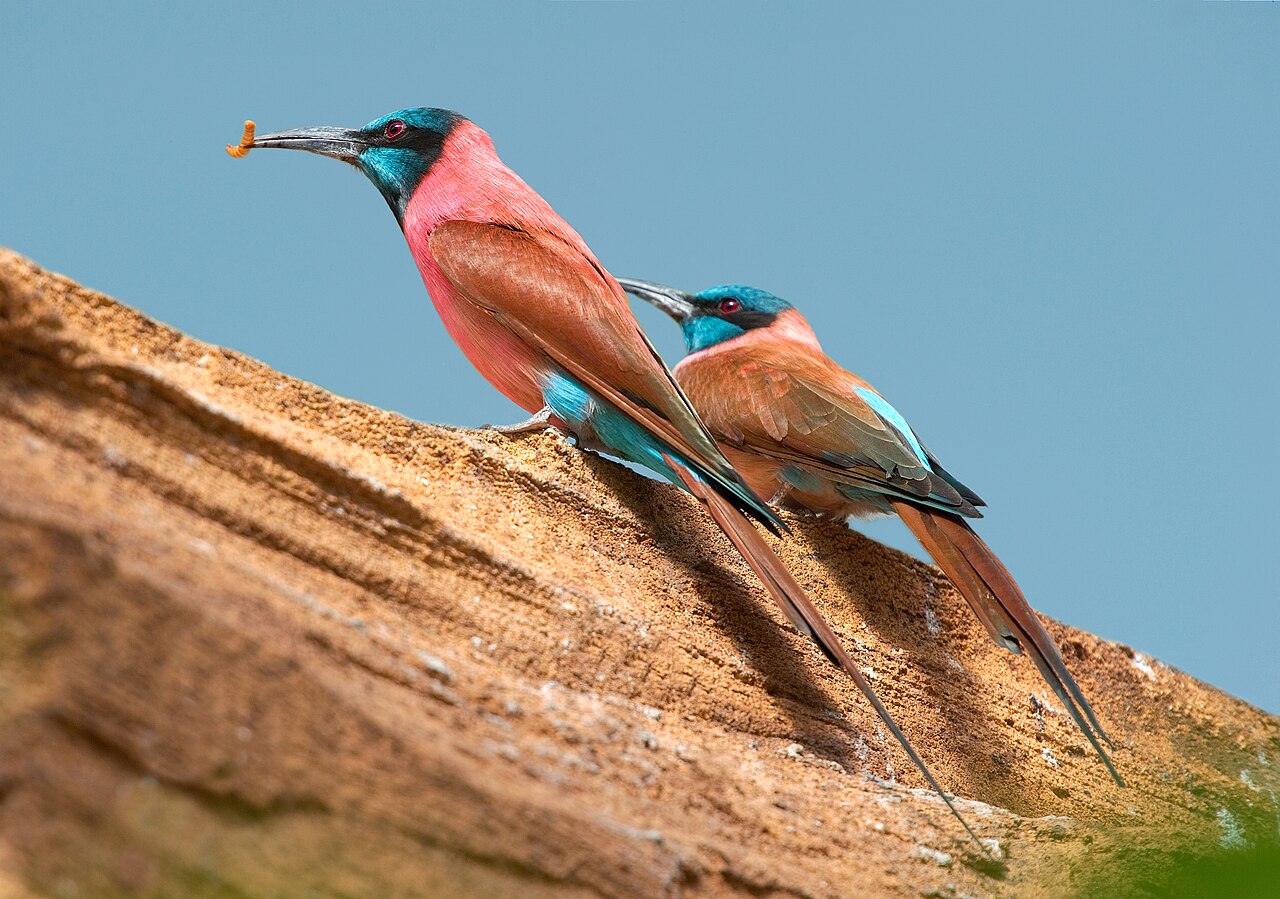
Northern Carmine Bee-eater
Merops nubicusAlso known as Carmine Bee-eater, Nubian Bee-eater
Northern carmine bee-eaters gather in noisy, brilliant pink and blue flocks that sweep across open African savannas in pursuit of flying insects. They famously associate with large herbivores, bustards, and grass fires, using them as beaters to flush out grasshoppers and locusts. Breeding birds excavate long burrows in sandy riverbanks, forming vast nesting colonies that can number thousands of individuals.
InsectivoreMigratoryColonial
—observations
—countries
—peak records
Least ConcernConservation statusIUCN Red List categoriesLCNTVUENCREWEXLeast ConcernRed List categories, explained →
Diet & prey
- Honey bees
- Wasps
- Locusts
Predators
- Raptors
- Snakes
- Monitor lizards
ThreatsRiverbank nesting site destruction, pesticide application, and human disturbance
HabitatsSavannas, river valleys, grasslands, floodplains, and pastures
Life span5–10 years
Classification
- FamilyMeropidae
- SpeciesMerops nubicus
Range data is not available yet.
Interaction riskLow
- Low
- Moderate
- High
- Very high
- Why interaction risk is low
- Safe to observe at a normal distance.
Responsible observation
- Scan for Fires: Watch smoke plumes from brushfires where flocks congregate to snap up escaping insects.
- Look for Large Mammals: Search the backs of livestock, ostriches, or kori bustards for perching birds using them as hunting platforms.
- Listen for Calls: Locate active colonies along riverbanks by listening for high-pitched chirping and deep rolling flight calls.
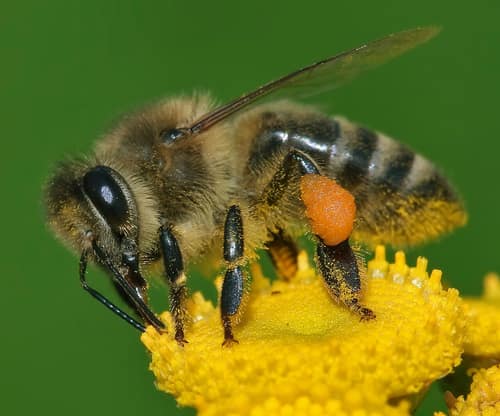
Prey Andreas Trepte / CC BY-SA 2.5 · cc-by-sa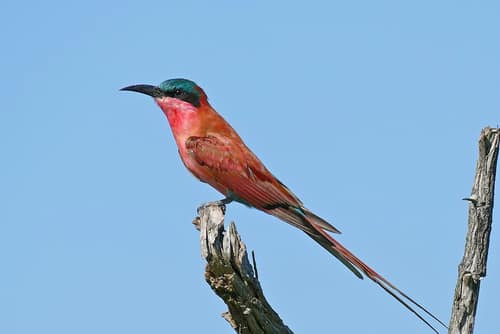
Close Relative Bernard DUPONT from FRANCE / CC BY-SA 2.0 · cc-by-sa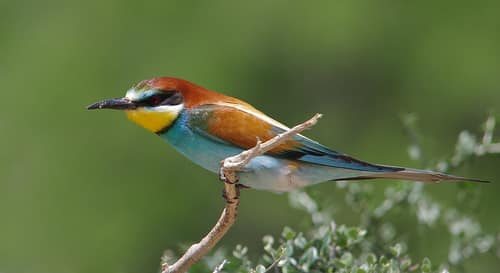
Close Relative Elgollimoh / CC BY-SA 3.0 · cc-by-sa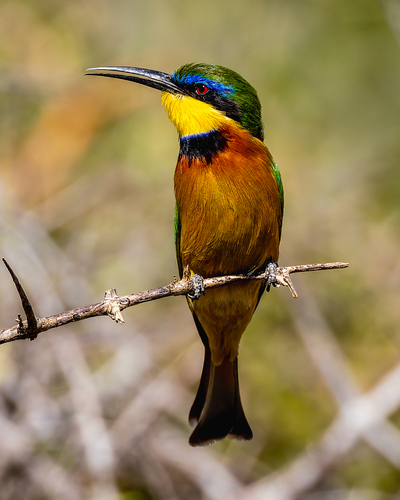
Close Relative (c) Gary Leavens, some rights reserved (CC BY-SA), uploaded by Gary Leavens · cc-by-sa
Help improve the field guideSomething wrong?
Checking your Fauna account…Report a name, category, or profile issue for review.