
Bird · GBIF taxon 2474942
White-naped Crane
Grus vipioAlso known as White-necked Crane
Striking grey-and-white plumage paired with a vivid red facial patch gives this majestic wading bird an unmistakable appearance across East Asian wetlands. Breeding pairs perform elaborate dancing displays with bowing, leaping, and unison calling to reinforce lifetime bonds. Annual migrations carry thousands of individuals between northern breeding grounds and key wintering sanctuaries in Japan, China, and Korea.
MigratoryWetland
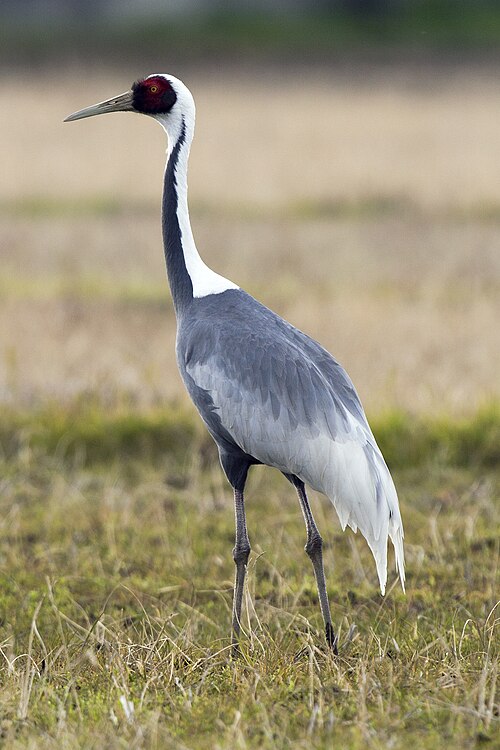
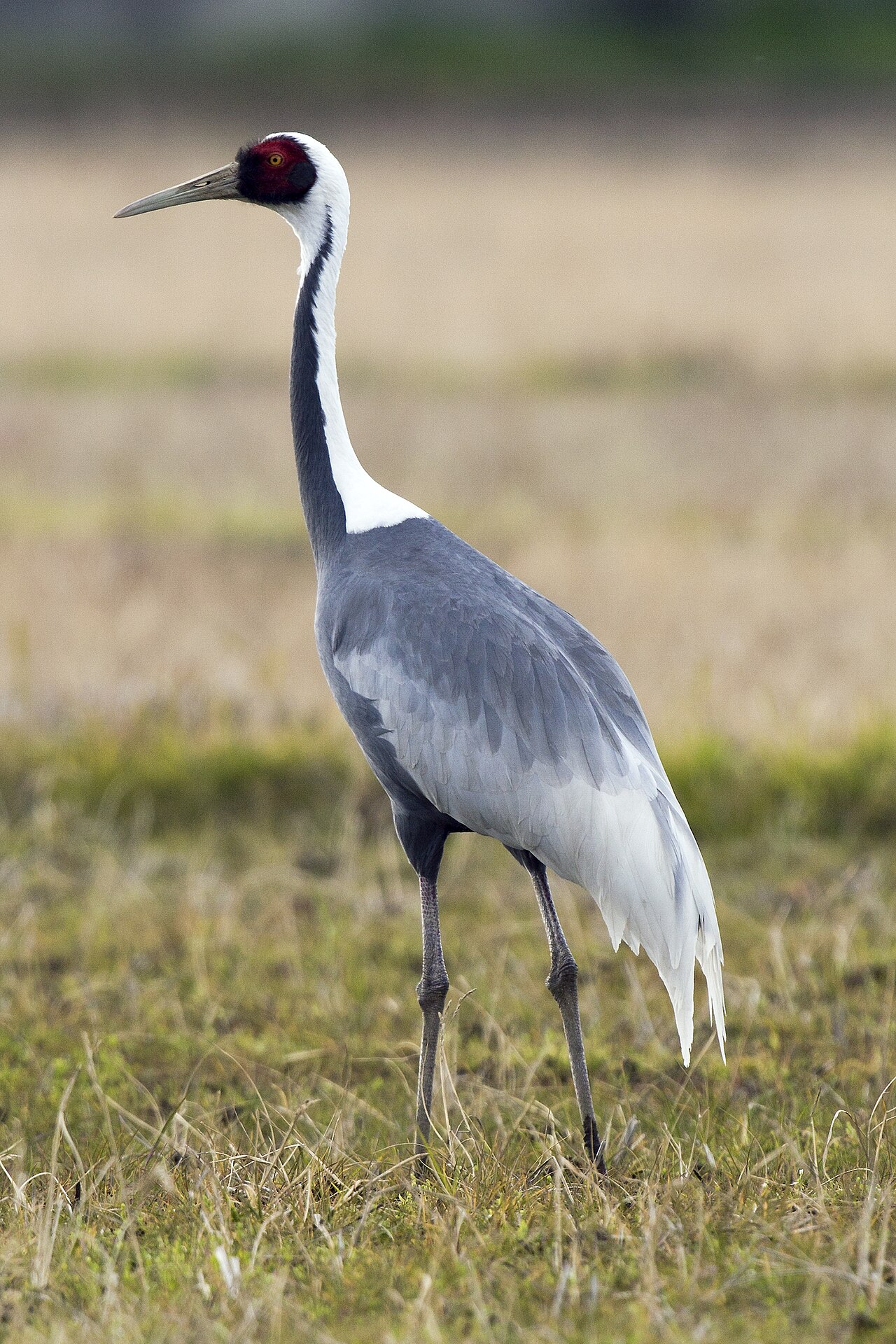
Licensed referenceSpaceaero2 / CC BY-SA 3.0 · cc-by-sa
—observations
—countries
—peak records
VulnerableConservation statusIUCN Red List categoriesLCNTVUENCREWEXVulnerableRed List categories, explained →
Diet & prey
- Plant Tubers
- Aquatic Insects
- Amphibians
Predators
- Gray Wolf
- Red Fox
- Golden Eagle
ThreatsWetland drainage, agricultural expansion, dam construction, human disturbance
HabitatsShallow wetlands, wet meadows, river valleys, agricultural fields
Life span20–30 years
Size / weightNot available
Classification
- FamilyGruidae
- SpeciesGrus vipio
Range data is not available yet.
Interaction riskLow
- Low
- Moderate
- High
- Very high
- Why interaction risk is low
- Nesting cranes can strike with their sharp bills if cornered; observe from a safe distance.
- What to notice
- Recognized by a dark grey body, white neck stripe, pinkish legs, and bare red face patch.
- Support conservation
- Observe from a distance using binoculars or a scope, especially near sensitive nesting and roosting areas.
Responsible observation
- Winter Viewing: Visit designated sanctuaries near Izumi in Japan or the Korean DMZ during winter for reliable sightings.
- Avoid Disturbances: Keep at least 200 meters away from feeding and roosting flocks to prevent startling them into flight.
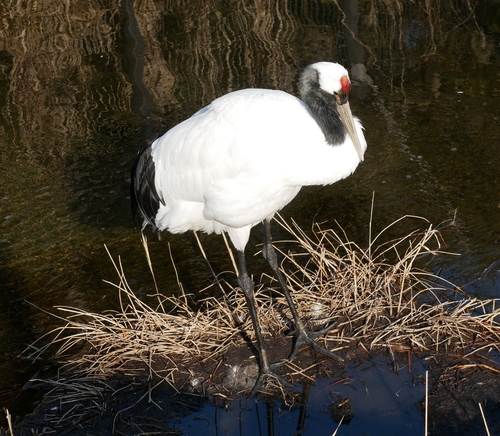
Close Relative (c) Nesnad, some rights reserved (CC BY) · cc-by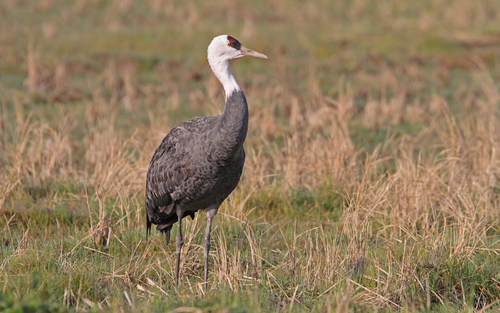
Close Relative (c) Christoph Moning, some rights reserved (CC BY), uploaded by Christoph Moning · cc-by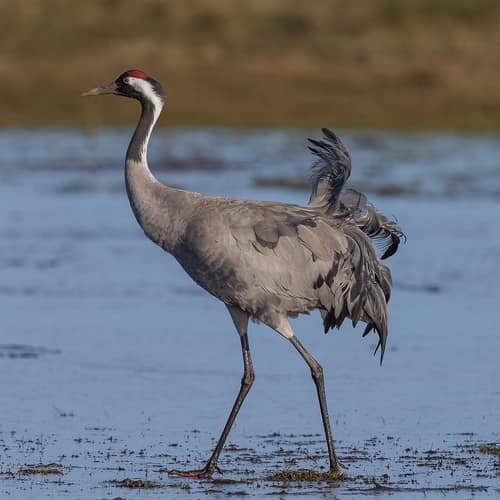
Close Relative Andreas Trepte / CC BY-SA 2.5 · cc-by-sa
Help improve the field guideSomething wrong?
Checking your Fauna account…Report a name, category, or profile issue for review.