
Bird
Northern Black Korhaan
Afrotis afraoidesAlso known as White-quilled Bustard, White-quilled Korhaan
Male northern black korhaans are unmistakable in southern African grasslands, flashing white wing patches and dangling their yellow legs during noisy, parachuting display flights. Their loud, raspy cackling calls carry far across open scrub, while cryptically mottled females stay low in the grass to incubate eggs. Mostly terrestrial, they stride steadily through dry savanna and semi-arid plains, picking off insects, seeds, and tender shoots from the ground.
Ground-dwellingTerritorialVocal
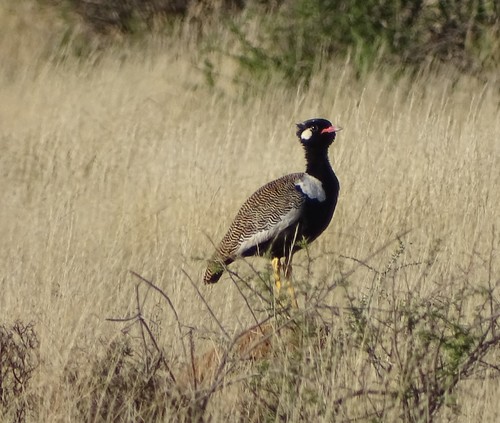
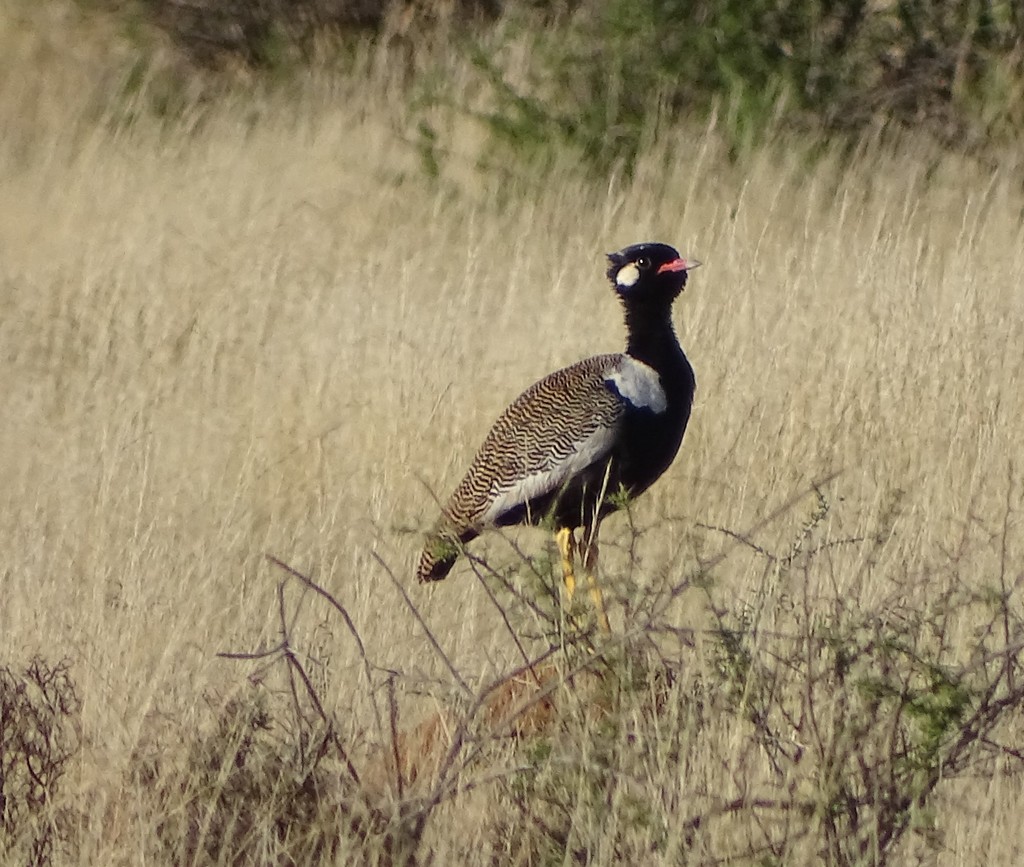
—observations
—countries
—peak records
Least ConcernConservation statusIUCN Red List categoriesLCNTVUENCREWEXLeast ConcernRed List categories, explained →
Diet & preyGrasshoppers, Beetles, Grass seeds
Predators
- Black-backed Jackal
- Martial Eagle
- Caracal
ThreatsAgricultural conversion, overgrazing, frequent veld fires, and collisions with power lines
HabitatsOpen grasslands, dry savanna, Karoo scrub, and semi-arid plains across southern Africa
Life span8–12 years in the wild
Classification
- OrderOtidiformes
- FamilyOtididae
- GenusAfrotis
- SpeciesAfrotis afraoides
Range data is not available yet.
Interaction riskLow
- Low
- Moderate
- High
- Very high
- Why interaction risk is low
- Safe to observe at a normal distance.
Responsible observation
- Listen at Dawn: Follow loud, raspy cackling calls to spot displaying males rising above the grass.
- Watch the Grass: Scan slowly with binoculars for camouflaged females crouching motionless near cover.
- Keep Your Distance: Stay in your vehicle or on established tracks to avoid flushing nesting birds.
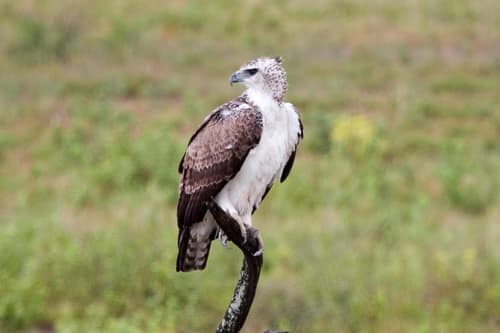
Predator (c) Dan Harville, some rights reserved (CC BY-SA), uploaded by Dan Harville · cc-by-sa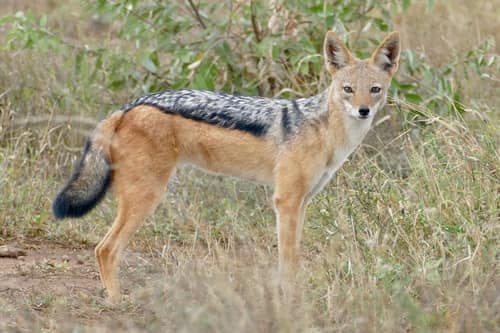
Predator (c) Bernard DUPONT, some rights reserved (CC BY-SA) · cc-by-sa
Prey (c) Nicola van Berkel, some rights reserved (CC BY-SA), uploaded by Nicola van Berkel · cc-by-sa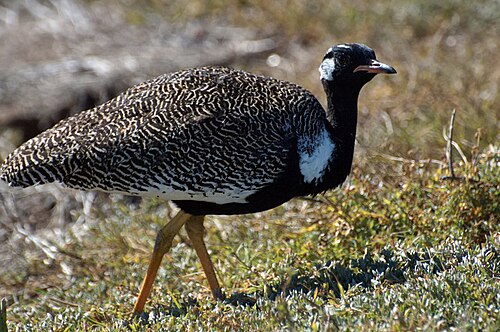
Close Relative andy carter / CC BY 2.0 · cc-by Image unavailable
Same Family
Help improve the field guideSomething wrong?
Checking your Fauna account…Report a name, category, or profile issue for review.