
Bird
Red-legged Partridge
Alectoris rufaAlso known as French Partridge
Red-legged partridges strut across sunny fields and dry scrublands, their bright coral-red bills and legs contrasting sharply with barred flanks and a distinctive black throat patch. When flushed, they launch into a sudden, noisy burst of low flight, preferred only after running swift paths through low cover. Breeding pairs nest on the ground, where females lay large clutches that both parents sometimes incubate in separate nests simultaneously.
GamebirdTerrestrialGround Nesting
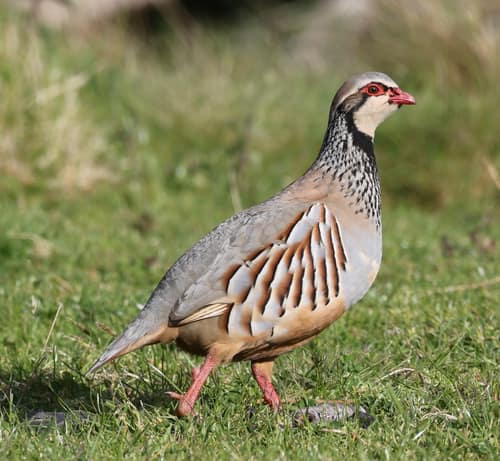
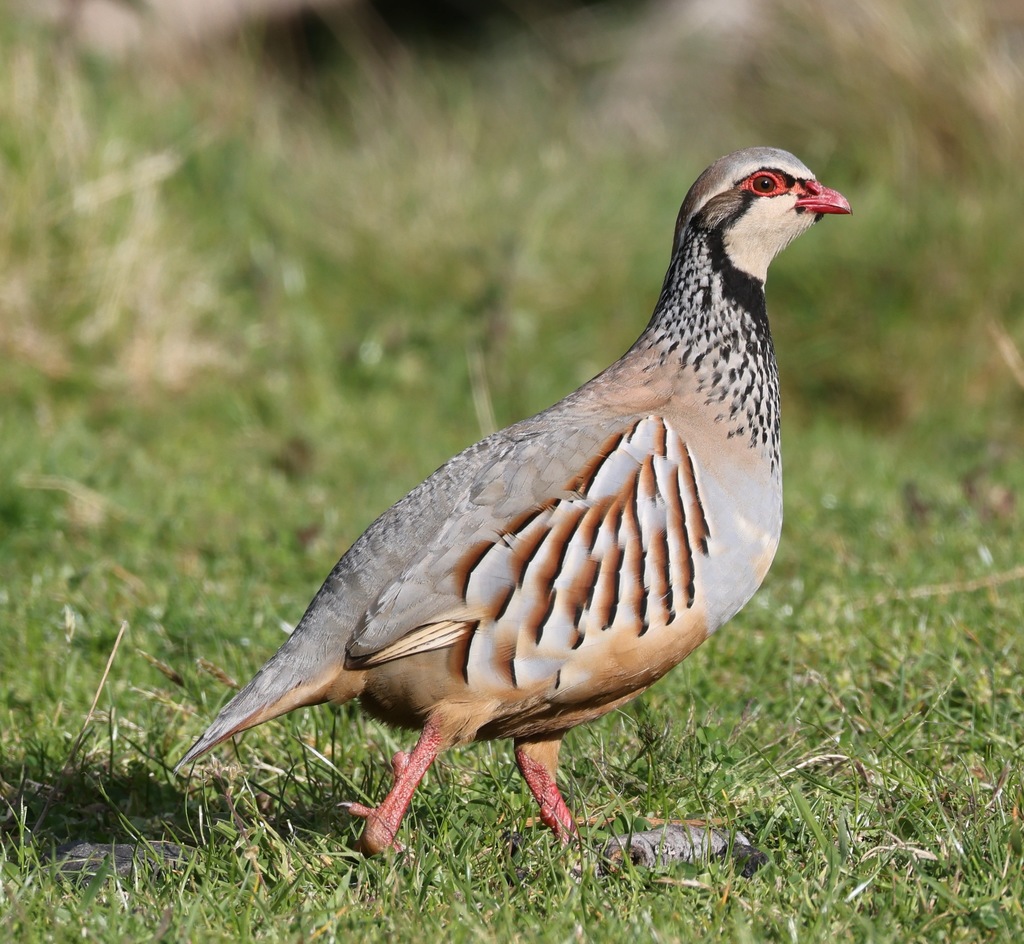
—observations
—countries
—peak records
Near ThreatenedConservation statusIUCN Red List categoriesLCNTVUENCREWEXNear ThreatenedRed List categories, explained →
Diet & preyGrass Seeds, Cereal Grains, Beetles
Predators
- Red Fox
- Eurasian Eagle-Owl
- Common Buzzard
ThreatsAgricultural intensification, habitat loss, and hybridization with introduced chukars
HabitatsOpen farmland, dry scrubland, heathland, and rocky hillsides
Life span3–6 years
Classification
- FamilyPhasianidae
- SpeciesAlectoris rufa
Range data is not available yet.
Interaction riskLow
- Low
- Moderate
- High
- Very high
- Why interaction risk is low
- Safe to observe at a normal distance.
- What to notice
- Look for a white throat framed by a black band, streaked flanks, and bright red legs and beak.
- Support conservation
- Stay on marked paths through farmland and keep dogs leashed during spring and summer nesting seasons.
Responsible observation
- Field Observation: Scan open field edges and dirt tracks early in the morning when birds emerge to forage.
- Flushing Caution: Keep a respectful distance to avoid scaring incubating birds off ground nests during spring.
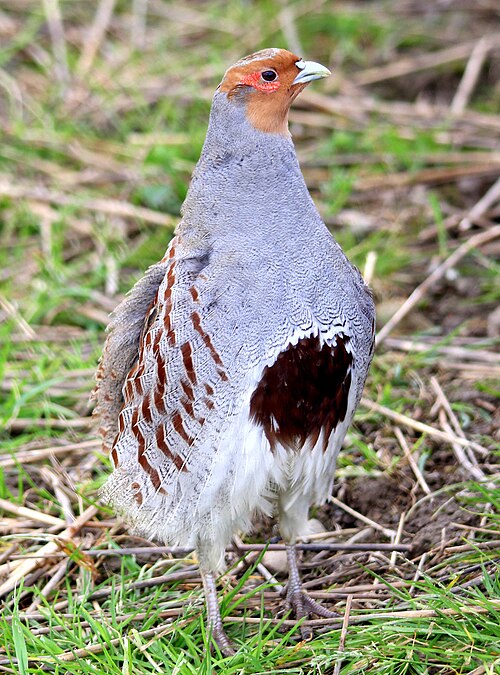
Co-occurring Species david galavan / CC BY 2.0 · cc-by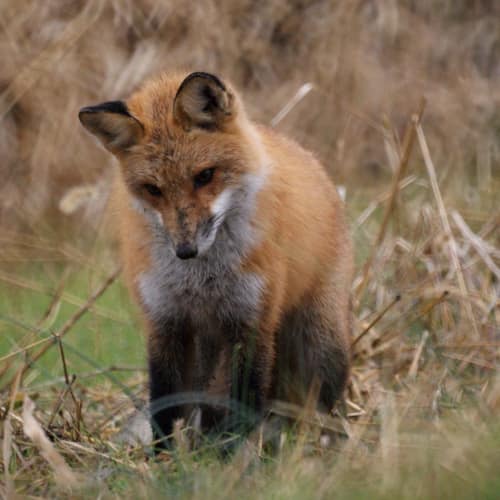
Predator "Red Fox" by Mike's Birds is licensed under CC BY-SA 2.0. To view a copy of this license, visit https://creativecommons.org/licenses/by-sa/2.0/. · cc-by-sa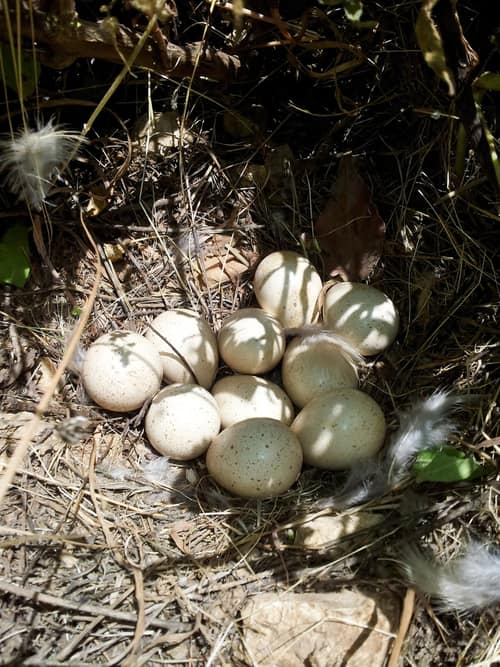
Close Relative (c) Nasser Halaweh, some rights reserved (CC BY), uploaded by Nasser Halaweh · cc-by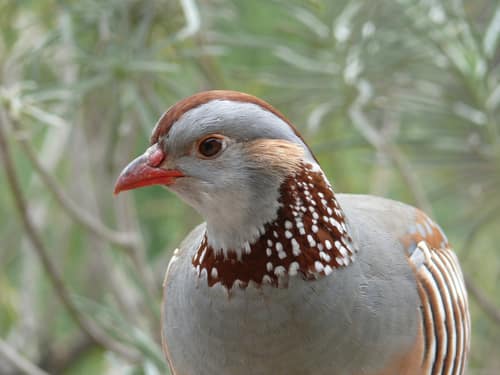
Close Relative (c) FritsM, some rights reserved (CC BY) · cc-by
Help improve the field guideSomething wrong?
Checking your Fauna account…Report a name, category, or profile issue for review.