
Bird · GBIF taxon 2473577
Western Capercaillie
Tetrao urogallusAlso known as Eurasian Capercaillie, Wood Grouse, Heather Cock, Cock-of-the-Woods
Western capercaillies are giant forest grouse famous for the dramatic spring lekking displays of dark, metallic-green males that whistle, click, and pop their bills to defend territory. Females are cryptically patterned in brown and buff, blending seamlessly into the woodland floor where they nest. During deep winter, these resilient birds shift their diet almost exclusively to tough pine needles harvested high in mature evergreen canopies.
Forest BirdLarge GrouseLek Display
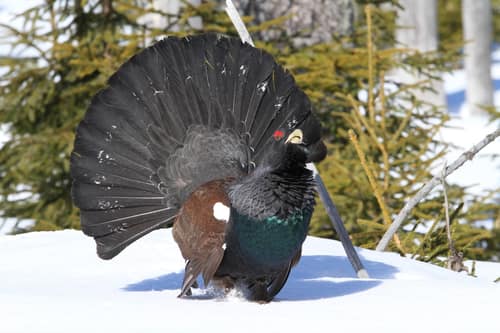
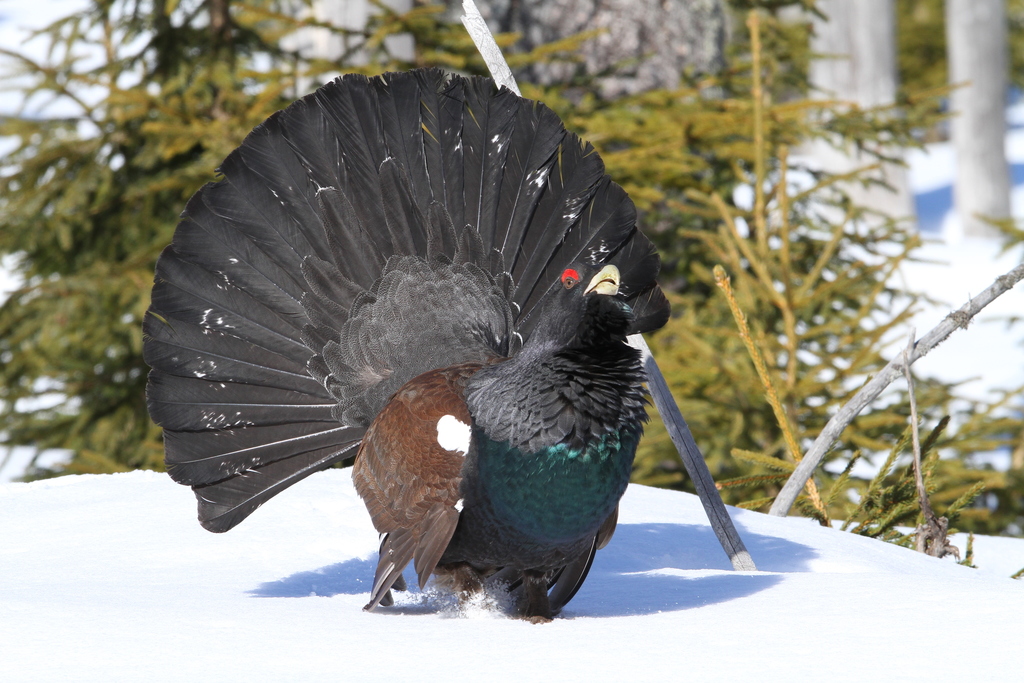 1 / 7
1 / 7—observations
—countries
—peak records
Least ConcernConservation statusIUCN Red List categoriesLCNTVUENCREWEXLeast ConcernRed List categories, explained →
Diet & prey
- Pine needles
- Bilberries
- Insects
Predators
- Red Fox
- Northern Goshawk
- Pine Marten
ThreatsHabitat fragmentation, forestry practices, deer fencing, and human disturbance
HabitatsOld-growth boreal forests and mature coniferous woodlands
Life span6–12 years
Size / weightNot available
Classification
- FamilyPhasianidae
- SpeciesTetrao urogallus
Range data is not available yet.
Interaction riskLow
- Low
- Moderate
- High
- Very high
- Why interaction risk is low
- Territorial males during spring display season can charge visitors; observe from a respectful distance.
- Why it is dangerous
- Aggressive solitary males known as rogue capercaillies can charge, peck, and scratch humans entering their territory in spring.
- How to recognize a risky encounter
- Recognizable by massive size, fan tail, heavy bill, and fearless approach toward humans on trailways.
- What to do
- Back away slowly if confronted by a displaying male, using a backpack or jacket as a barrier if needed.
- What to notice
- Recognize the turkey-sized profile and distinctive heavy white bill of mature males in dense forest.
- Support conservation
- Keep dogs strictly on leashes in boreal woodlands and give displaying or nesting birds a wide berth.
Responsible observation
- Display Season: Avoid visiting known lek sites in spring to prevent disturbing sensitive mating rituals.
- Habitat Cues: Look for large droppings full of pine needle fragments beneath mature evergreen roosts.
- Quiet Observation: Maintain a generous distance when encountering birds, especially aggressive territorial males.
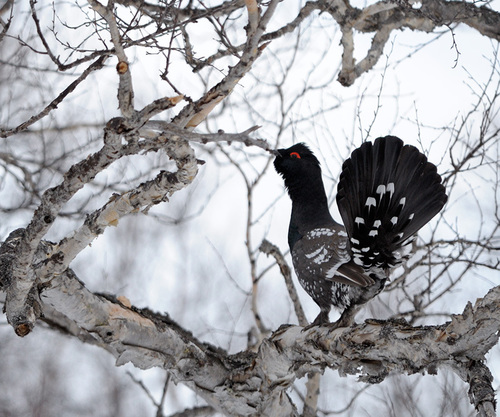
Sister Species (c) Русский:, some rights reserved (CC BY-SA) · cc-by-sa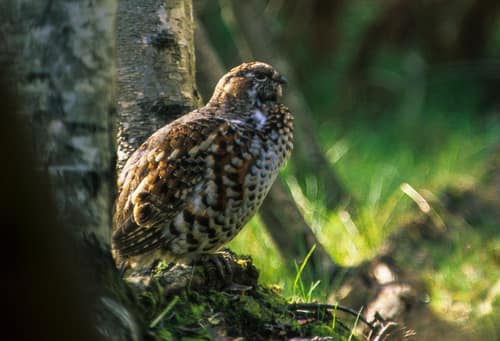
Co-occurring Grouse (c) Francesco Veronesi, some rights reserved (CC BY-SA) · cc-by-sa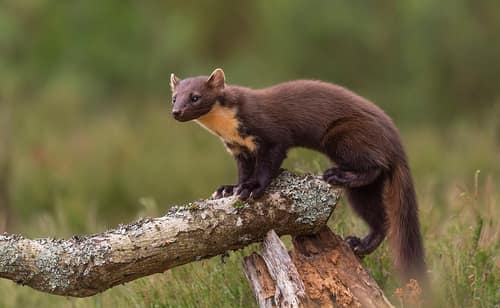
Predator caroline legg / CC BY 2.0 · cc-by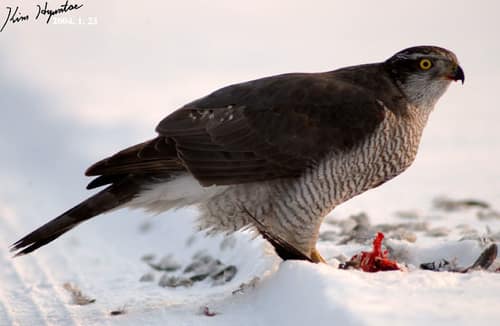
Predator (c) Kim, Hyun-tae, some rights reserved (CC BY), uploaded by Kim, Hyun-tae · cc-by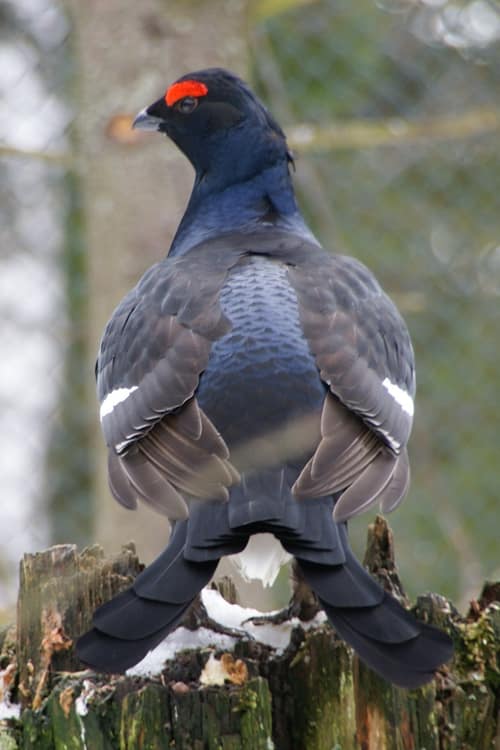
Close Relative Aconcagua (talk) / CC BY-SA 3.0 · cc-by-sa
Help improve the field guideSomething wrong?
Checking your Fauna account…Report a name, category, or profile issue for review.