
Bird
Vulturine Guineafowl
Acryllium vulturinumAlso known as Royal Guineafowl
Vulturine Guineafowl roam arid East African savannas in tightly coordinated groups, exhibiting a rare multi-level society where distinct family bands associate peacefully within larger collective flocks. Their unfeathered heads and cobalt hackles give them an imposing, prehistoric profile that contrasts with their high-pitched, metallic chattering calls. By night, flocks fly high into thorny acacia canopies to sleep safely above ground predators, returning to the dry soil at first light.
GregariousArid-adaptedColorful
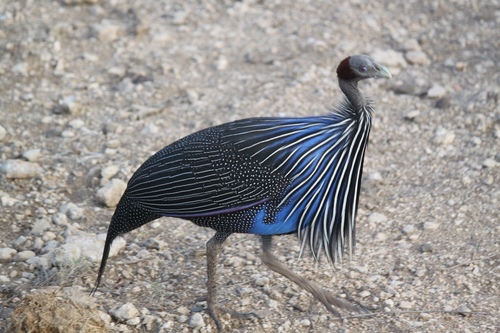
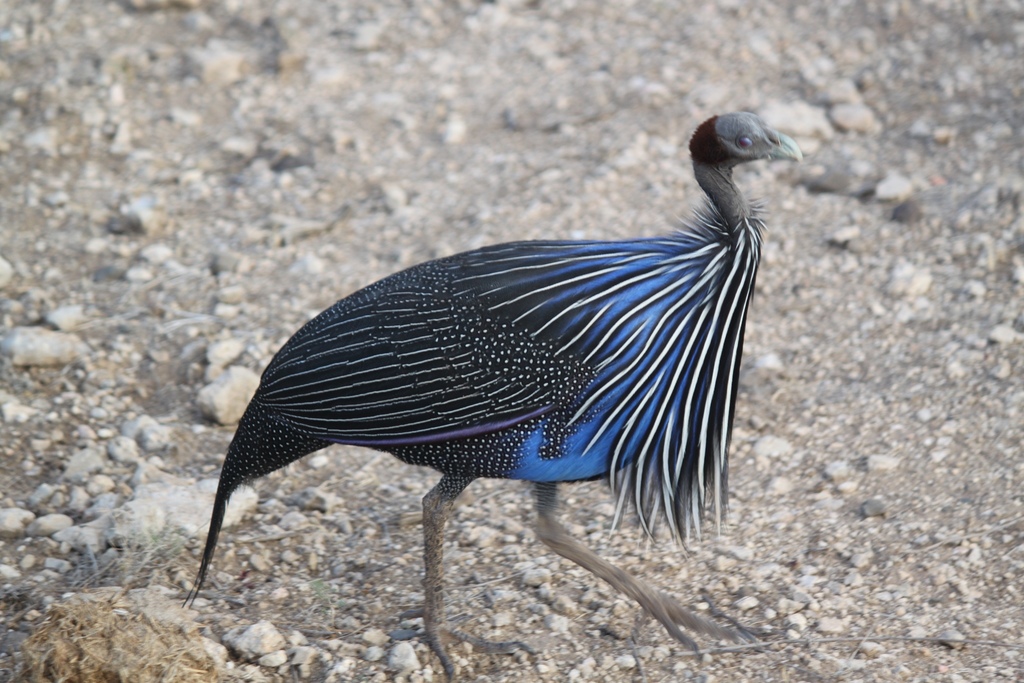
—observations
—countries
—peak records
Least ConcernConservation statusIUCN Red List categoriesLCNTVUENCREWEXLeast ConcernRed List categories, explained →
Diet & preyAcacia seeds, Termites, Grass roots
Predators
- Leopard
- Martial Eagle
- Caracal
ThreatsHabitat loss from overgrazing, regional bushmeat hunting
HabitatsArid scrubland, dry acacia savanna, semi-desert grasslands
Life span10–15 years
Classification
- FamilyNumididae
- SpeciesAcryllium vulturinum
Range data is not available yet.
Interaction riskLow
- Low
- Moderate
- High
- Very high
- Why interaction risk is low
- Safe to observe at a normal distance.
Responsible observation
- Observation Distance: Move slowly along savanna margins, as nervous coveys will scatter quickly into dense thornscrub.
- Listen for Calls: Listen for rhythmic, grating metallic rattle calls echoing across the brush during early morning.
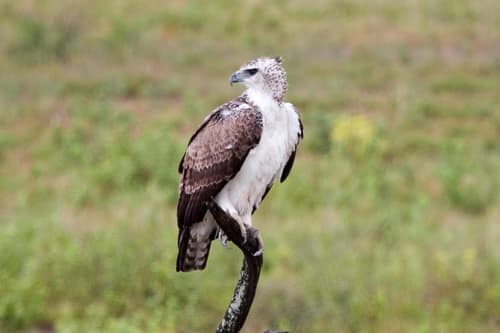
Predator (c) Dan Harville, some rights reserved (CC BY-SA), uploaded by Dan Harville · cc-by-sa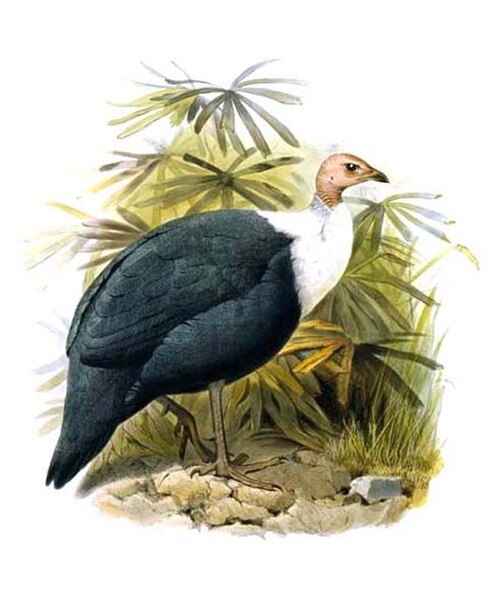
Close Relative Daniel Giraud Elliot / Public domain · cc0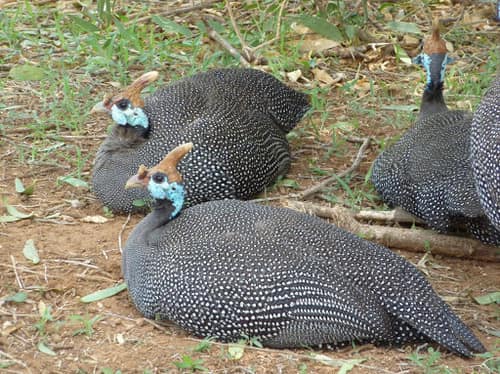
Same Family (c) 116916927065934112165, some rights reserved (CC BY), uploaded by 116916927065934112165 · cc-by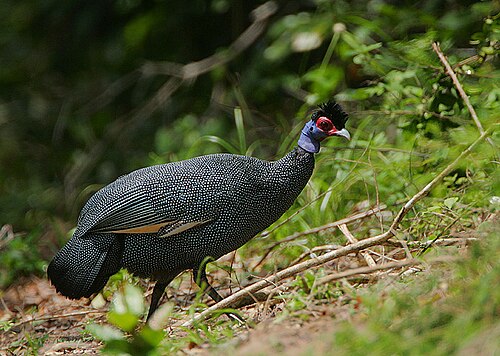
Same Family Steve Garvie from Dunfermline, Fife, Scotland / CC BY-SA 2.0 · cc-by-sa
Help improve the field guideSomething wrong?
Checking your Fauna account…Report a name, category, or profile issue for review.