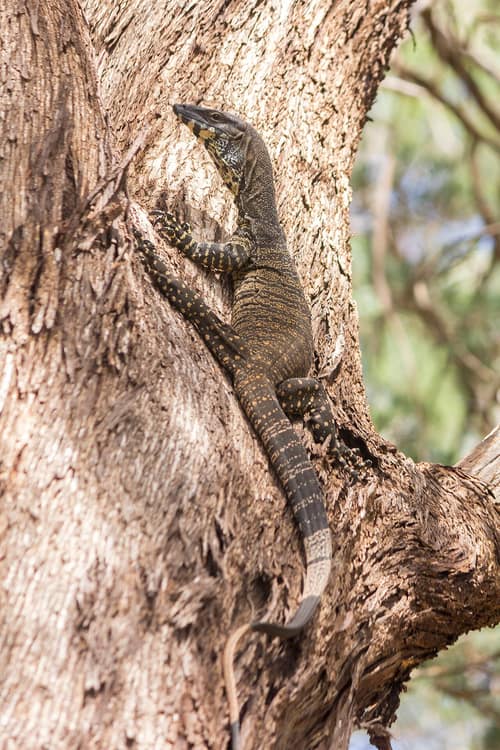
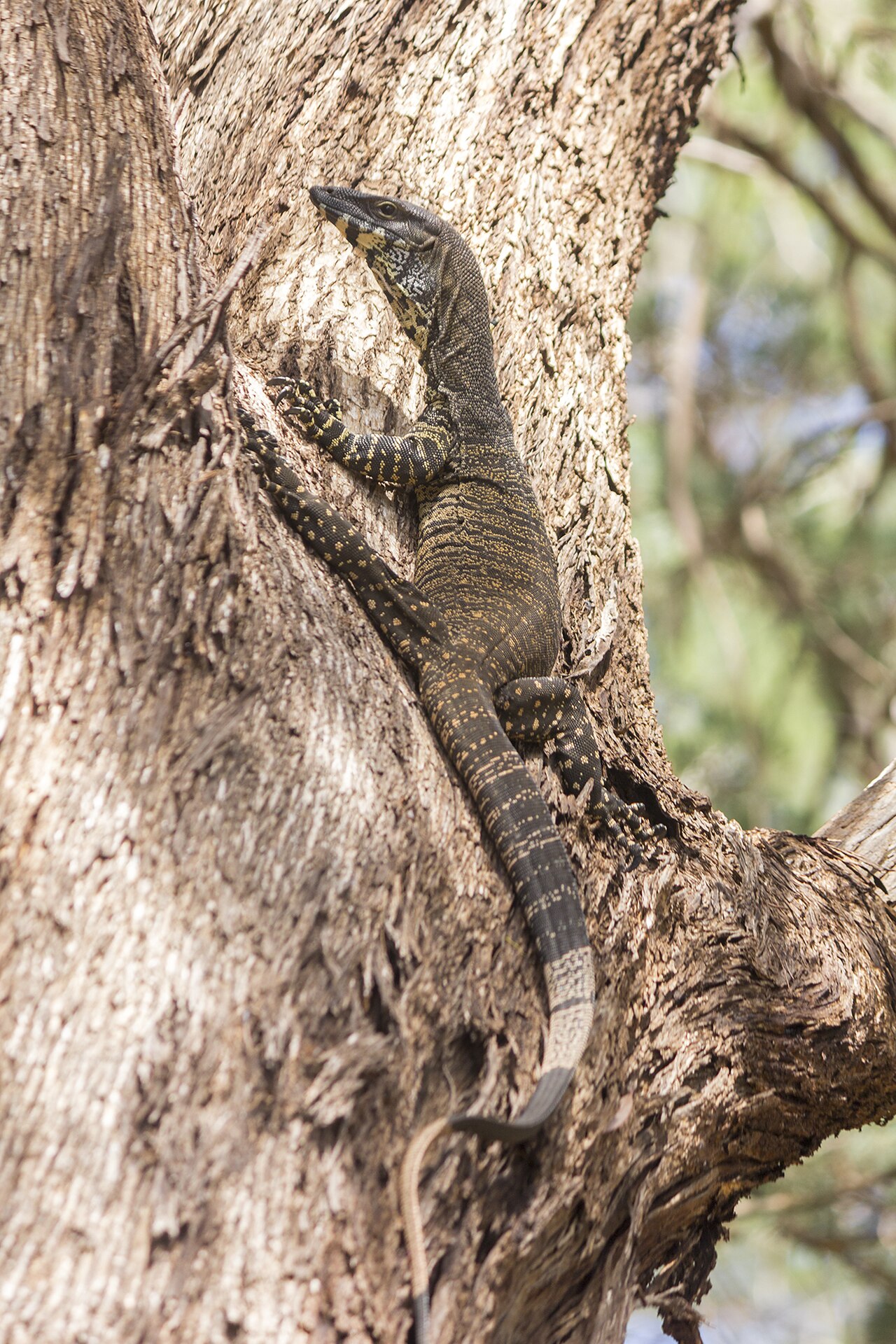
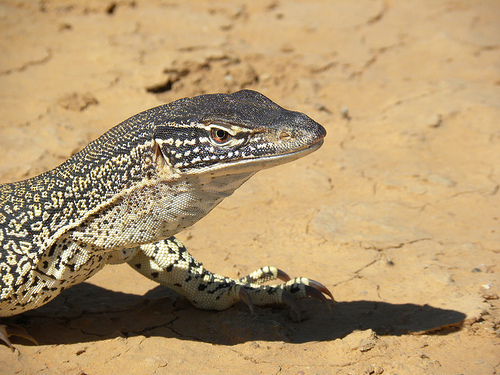
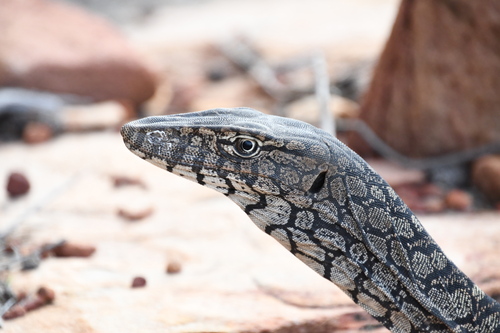
Lace monitors are Australia's second-largest lizard, spending much of their time foraging high in eucalyptus canopies or scouring the forest floor for carrion and small prey. Females lay clutches of up to twelve eggs inside active termite mounds, relying on the insects' climate-controlled nests to incubate the embryos over long winter months. When threatened on the ground, these formidable reptiles scramble up the nearest vertical trunk, spiraling around the wood to keep the bark between themselves and potential danger.
Diet & preyCommon Brushtail Possum, European Rabbit, Blue-tongued Skink
Predators
Dingo
Wedge-tailed Eagle
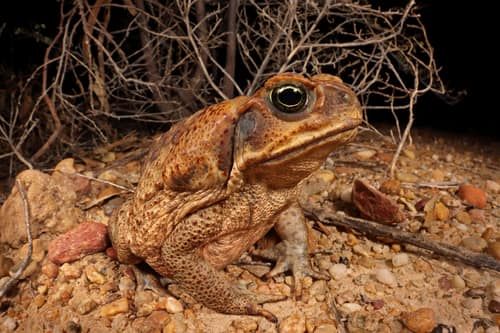
ThreatsHabitat clearance, vehicle strikes, and ingestion of toxic invasive cane toads
HabitatsEucalypt forests, woodlands, coastal forests, and open scrublands
Life span15–20 years in the wild
Classification
FamilyVaranidae
SpeciesVaranus varius
Range & activity
Range data is not available yet.
Safe observation
Interaction riskLow
Low
Moderate
High
Very high
Why interaction risk is low
Sharp claws and powerful jaws can inflict serious lacerations; maintain a safe distance and never corner or feed.
Why it is dangerous
Powerful jaws, sharp curved teeth, and long climbing claws can deliver deep lacerations with severe bleeding and risk of bacterial infection.
How to recognize a risky encounter
Look for a heavy-bodied lizard reaching up to two meters with dark charcoal scales patterned with cream or yellow bands, or broad dark and light bands in the bellii morph.
What to do
Give the lizard a clear escape route toward trees, never attempt to touch or hand-feed, and seek immediate medical care for any bite or claw wound.
Responsible observation
Distance: Keep at least five meters away, as an alarmed monitor may mistake a nearby person for a tree and attempt to climb.
Food management: Secure all camping provisions and trash, since bold individuals readily scavenge human scraps at picnic grounds.