
Reptile · GBIF taxon 2470685
Common Water Monitor
Varanus salvatorAlso known as Asian Water Monitor
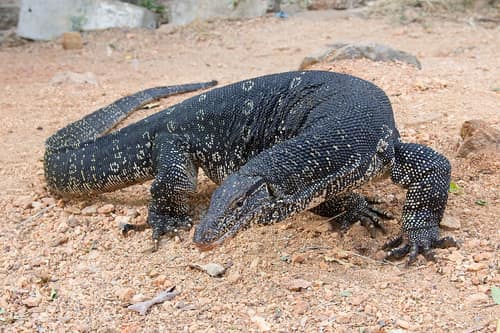
The Common Water Monitor is a very large, muscular lizard with a long compressed tail, powerful claws, and pale spots or bands on a dark body. It swims readily, scavenges along waterways, and also hunts a broad range of animal prey.
Large LizardStrong SwimmerWetland Scavenger

—observations
—countries
—peak records
Least ConcernConservation statusIUCN Red List categoriesLCNTVUENCREWEXLeast ConcernRed List categories, explained →
Diet & prey
- Fish
- Crabs
- Frogs
Predators
- Large crocodiles
- Pythons
- Humans
ThreatsHunting, skin and pet trade, wetland loss, road mortality, pollution, and persecution
HabitatsRivers, mangroves, swamps, lakes, canals, tropical forest, farmland, and urban waterways
Life spanOften 10 to 15 years, with longer lives possible under favorable conditions
Size / weightNot available
Classification
- FamilyVaranidae
- GenusVaranus
- SpeciesVaranus salvator
Range data is not available yet.
Interaction riskHigh
- Low
- Moderate
- High
- Very high
- Why interaction risk is high
- Cornered monitors can bite, claw, or lash with the tail and require substantial space.
- Why it is dangerous
- A large defensive monitor can inflict deep bites, claw wounds, or forceful tail strikes when cornered or fed.
- How to recognize a risky encounter
- Recognize a large dark lizard with pale spotting, a long muscular tail, powerful limbs, and a forked tongue.
- What to do
- Do not approach, feed, block, or capture it; back away and contact trained responders if conflict persists.
Responsible observation
- Distance: Stay at least several meters away and preserve an escape route.
- Feeding: Never offer food or leave refuse accessible.
- Pets: Keep small animals close and leashed near waterways.
Help improve the field guideSomething wrong?
Checking your Fauna account…Report a name, category, or profile issue for review.