
Reptile · GBIF taxon 2470669
Bengal Monitor
Varanus bengalensisAlso known as Indian Monitor, Common Indian Monitor
Bengal monitors are adaptable ground-dwelling predators that actively forage across grasslands, forests, and agricultural edges using their keen sense of smell. Adults climb trees with ease using powerful claws and often seek refuge in hollow trunks or burrows when threatened. Females dig flask-shaped nest chambers in soils or termite mounds to lay and protect their eggs.
ReptileSolitaryDiurnal
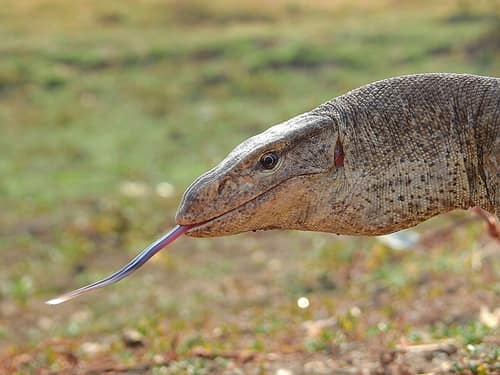
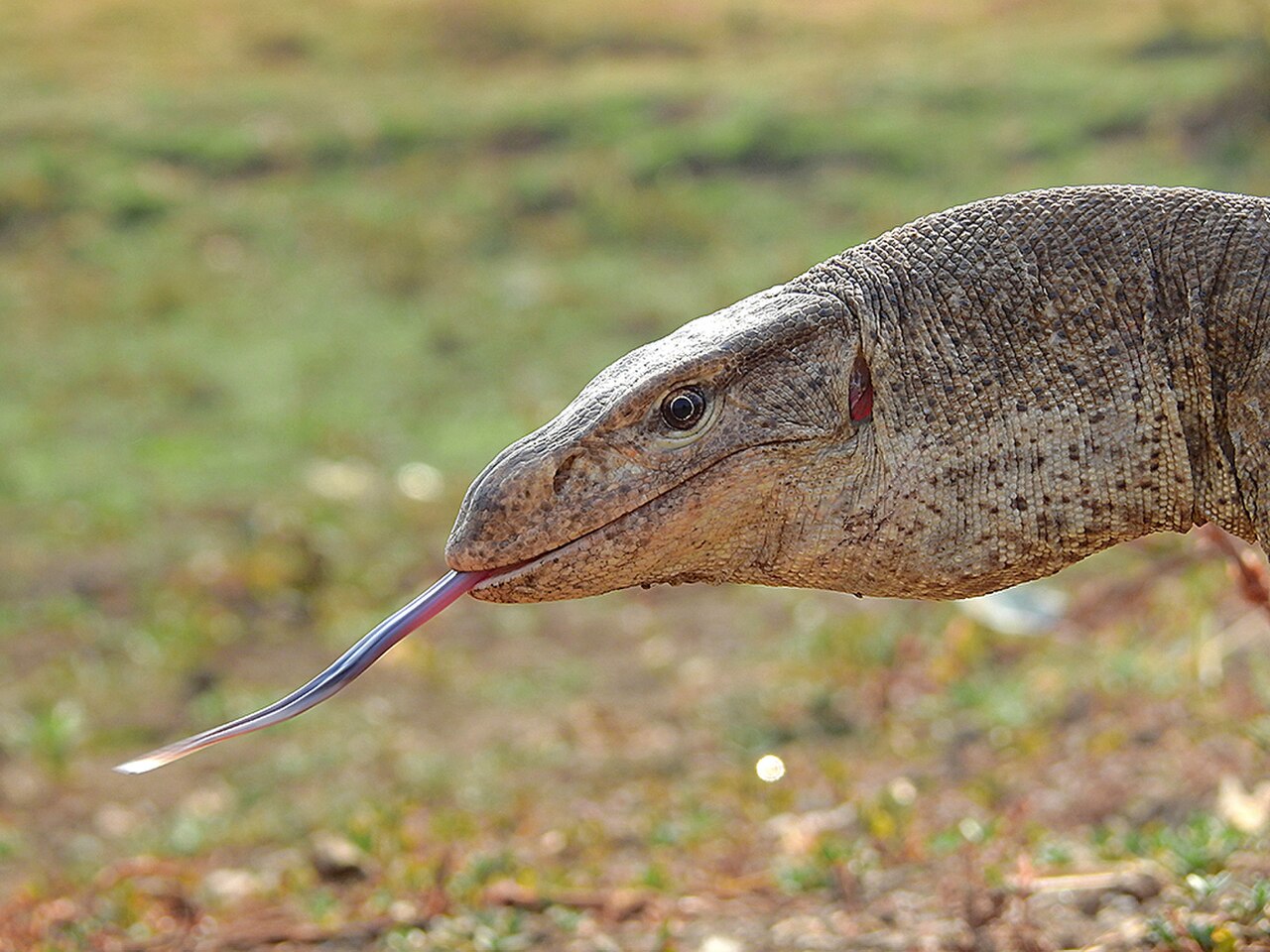
—observations
—countries
—peak records
Near ThreatenedConservation statusIUCN Red List categoriesLCNTVUENCREWEXNear ThreatenedRed List categories, explained →
Diet & prey
- Insects
- Rodents
- Bird Eggs
Predators
- Pythons
- Leopards
- Eagles
ThreatsPoaching for skin and meat, habitat loss, road mortality
HabitatsForests, scrublands, agricultural areas, wetlands
Life span10–20 years
Size / weightNot available
Classification
- FamilyVaranidae
- SpeciesVaranus bengalensis
Range data is not available yet.
Interaction riskLow
- Low
- Moderate
- High
- Very high
- Why interaction risk is low
- May deliver powerful bites, scratches, or tail whips if cornered; maintain a respectful distance.
- Why it is dangerous
- Sharp claws, strong jaws, and powerful tail lashes can cause serious lacerations and puncture wounds.
- How to recognize a risky encounter
- Identified by its brownish-grey pattern, long pointed snout, and long slender tail exceeding body length.
- What to do
- Observe from several meters away; do not attempt to corner, handle, or touch wild individuals.
- What to notice
- Look for a large, terrestrial dark yellow-brown lizard actively tongue-flicking along field margins or tree bases.
- Support conservation
- Keep a quiet distance and never disturb nesting burrows or termite mounds occupied by monitors.
Responsible observation
- Safe Distance: Remain at least 3 to 5 meters away to prevent stressing the lizard or triggering a tail-whip response.
- Observe Foraging: Watch from a distance as it flicks its long, blue-black forked tongue to sample airborne scents.
- Tree Spotting: Scan lower tree trunks and hollows where individuals frequently rest during warm afternoons.
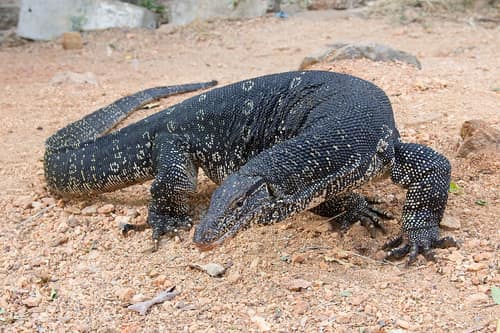
Close Relative Carlos Delgado / CC BY-SA 4.0 · cc-by-sa Image unavailable
Close Relative 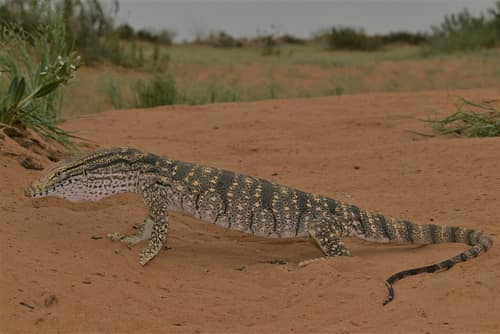
Close Relative Marius Burger / CC0 · cc0
Help improve the field guideSomething wrong?
Checking your Fauna account…Report a name, category, or profile issue for review.