
Reptile · GBIF taxon 2470616
Eastern Collared Lizard
Crotaphytus collarisAlso known as Common Collared Lizard, Oklahoma Collared Lizard, Mountain Boomer, Yellow-Headed Collared Lizard
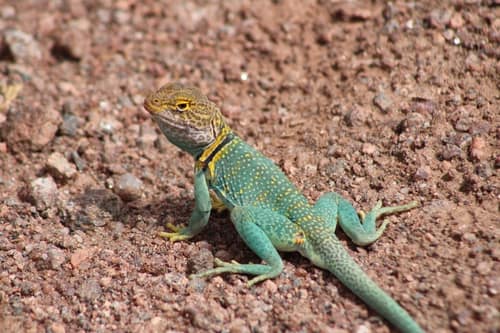
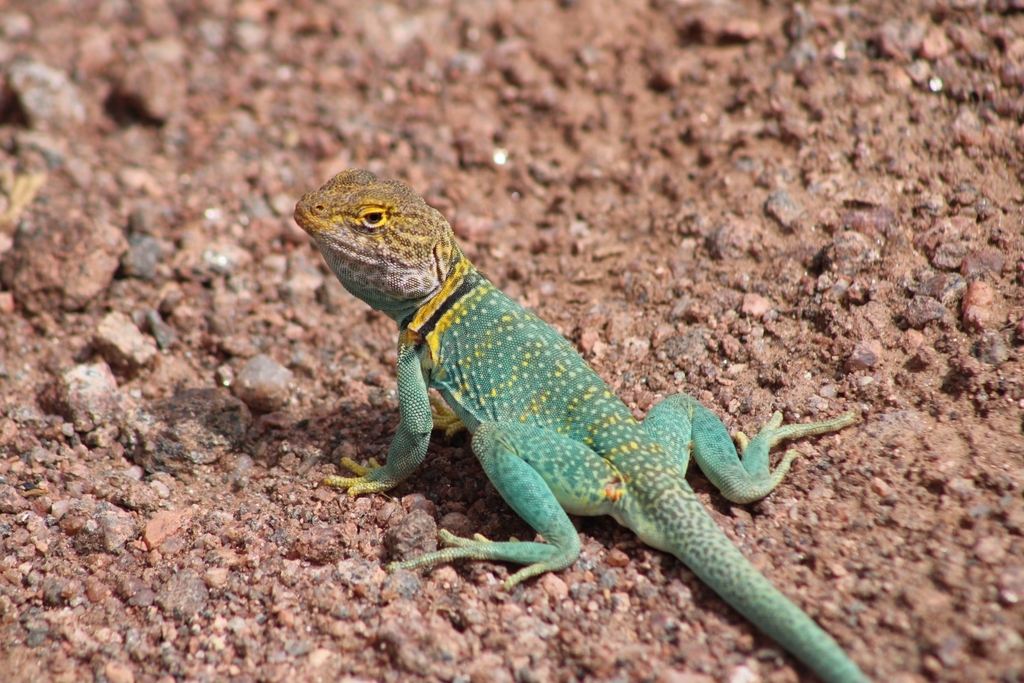
Eastern collared lizards are athletic, rock-dwelling reptiles famous for sprinting on their hind legs at high speeds across sunlit glades and desert canyons. Dominant males showcase striking turquoise-blue bodies with bright yellow heads, using elevated boulders as lookout posts to survey territory and watch for rivals. When threatened, they display broad, gaping jaws capable of delivering a formidable defense against potential predators.
ReptileDiurnalDesert
 1 / 7
1 / 7—observations
—countries
—peak records
Least ConcernConservation statusIUCN Red List categoriesLCNTVUENCREWEXLeast ConcernRed List categories, explained →
Diet & prey
- Grasshoppers
- Beetles
- Small Lizards
Predators
- Hawks
- Roadrunners
- Coachwhip Snakes
ThreatsHabitat fragmentation, fire suppression overgrown glades, and local pet collection
HabitatsRocky outcrops, limestone glades, desert canyons, and arid scrublands
Life span5–8 years
Size / weightNot available
Classification
- FamilyCrotaphytidae
- GenusCrotaphytus
- SpeciesCrotaphytus collaris
Range data is not available yet.
Interaction riskLow
- Low
- Moderate
- High
- Very high
- Why interaction risk is low
- Can deliver a painful bite if handled; observe quietly from a short distance.
- Why it is dangerous
- Possesses unusually powerful jaw muscles capable of delivering a painful, skin-breaking bite when cornered or seized.
- How to recognize a risky encounter
- Recognized by two bold black collar bands on the neck paired with a broad, bulky head.
- What to do
- Maintain a respectful distance of a few paces and never attempt to grab or corner wild individuals.
Responsible observation
- Basking Spots: Scan prominent, sunlit rock ledges during warm mid-morning hours.
- Shadow Avoidance: Approach without casting direct shadows over perches to prevent quick flight.
- Territory Displays: Watch for male push-up displays and head-bobbing sequences on elevated rocks.
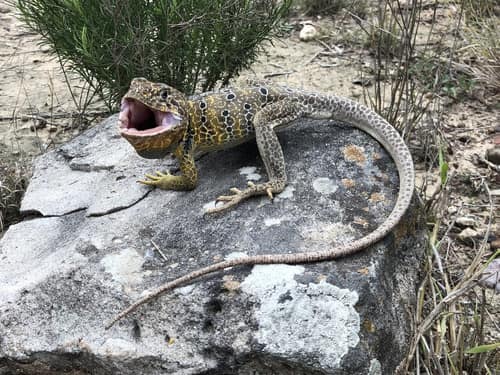
Close Relative Neil Balchan / CC BY 4.0 · cc-by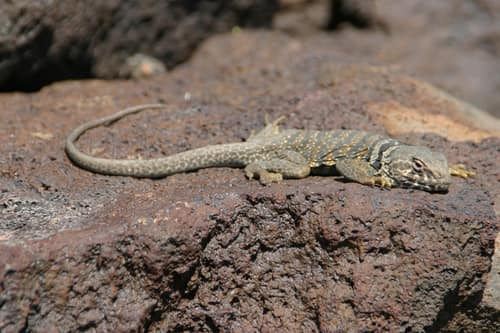
Close Relative (c) Joe Decruyenaere, some rights reserved (CC BY-SA) · cc-by-sa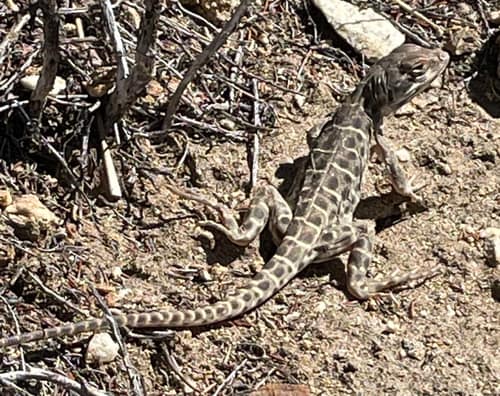
Close Relative no rights reserved · cc0
Help improve the field guideSomething wrong?
Checking your Fauna account…Report a name, category, or profile issue for review.