
Reptile
Monocled Cobra
Naja kaouthiaAlso known as Monocellate Cobra, Indian Spitting Cobra
Monocled cobras are adaptable elapids that thrive in wet grasslands, rice paddies, and forest edges across South and Southeast Asia, frequently venturing into agricultural fields to hunt rodents. While primarily nocturnal or crepuscular, they often bask during cool mornings near rodent burrows or termite mounds that serve as daytime refuges. When threatened, they rear up to display a broad hood with a single circular eye marking, hissing loudly and striking defensively if escape is cut off.
VenomousNocturnalReptile
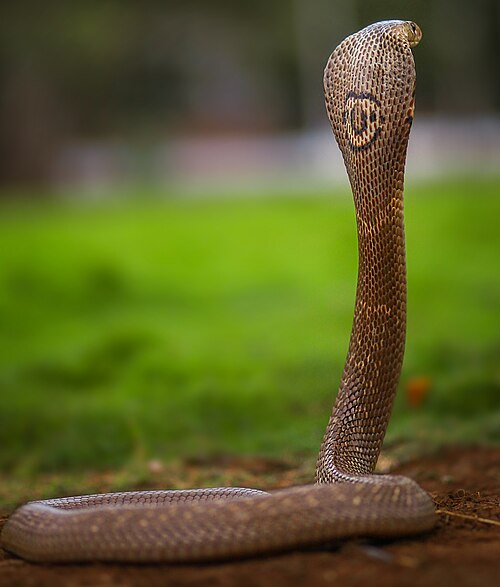
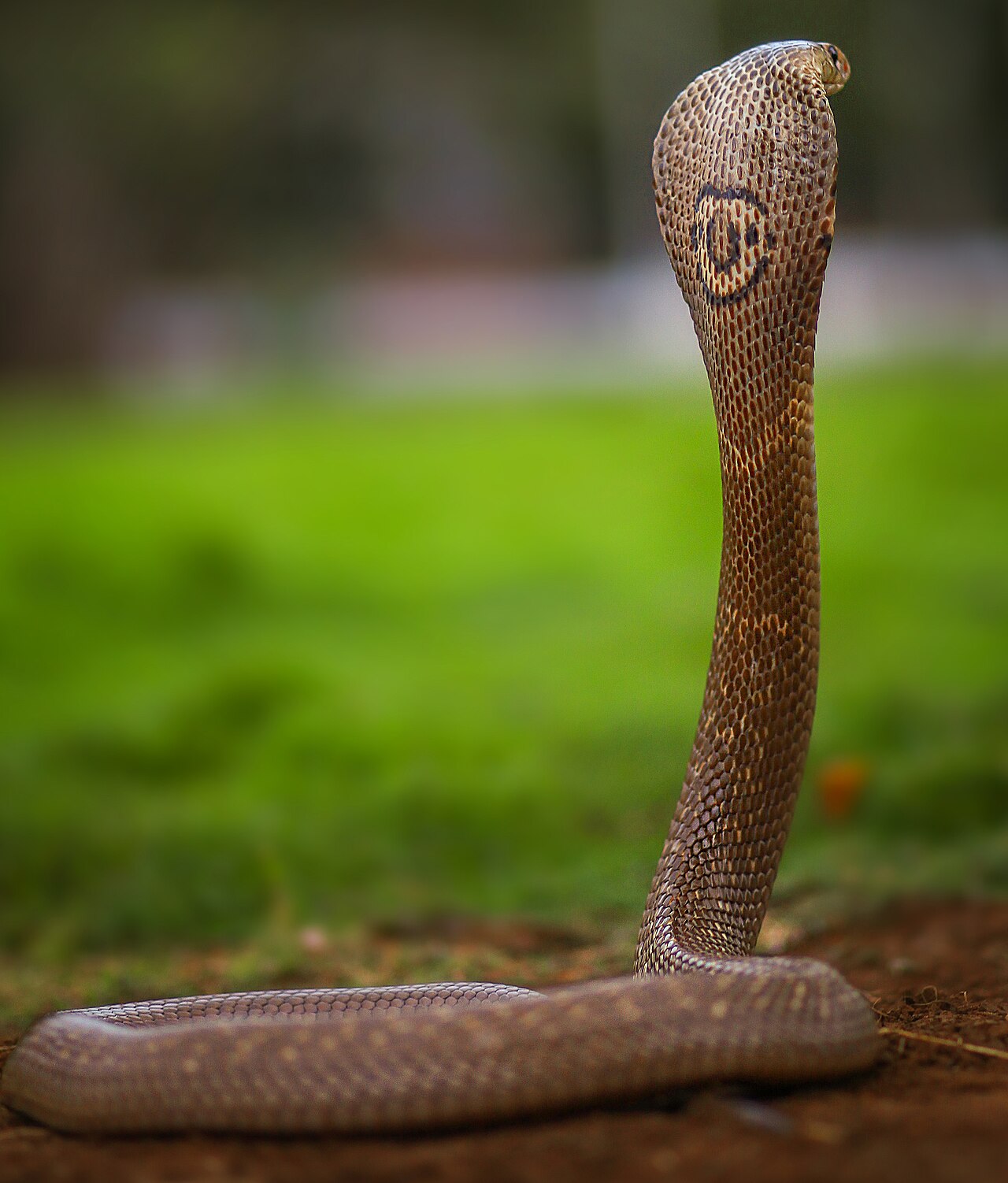
—observations
—countries
—peak records
Least ConcernConservation statusIUCN Red List categoriesLCNTVUENCREWEXLeast ConcernRed List categories, explained →
Diet & preyBlack rat, Asian common toad, Rice field frog
Predators
- King cobra
- Indian grey mongoose
- Crested serpent eagle
ThreatsDirect persecution, vehicle collisions, skin trade, and use in traditional medicine
HabitatsLowland rainforests, swamps, rice paddies, agricultural lands, and human settlements
Life span15–20 years
Classification
- FamilyElapidae
- SpeciesNaja kaouthia
Range data is not available yet.
Interaction riskVery high
- Low
- Moderate
- High
- Very high
- Why interaction risk is very high
- Delivers potentially fatal neurotoxic venom; maintain a distance of several meters and never attempt handling.
- Why it is dangerous
- Produces potent postsynaptic neurotoxins and cardiotoxins that cause rapid flaccid paralysis, respiratory failure, and severe local tissue necrosis.
- How to recognize a risky encounter
- Look for a yellowish-brown to dark grey body with a hood bearing an elliptical, O-shaped marking on its dorsal surface.
- What to do
- Never corner, harass, or attempt to handle; slowly back away if a snake rears up with an expanded hood.
Responsible observation
- Distance: Maintain a clearance of at least five meters, as some individuals can accurately spit venom into the eyes.
- Flashlights: Use a bright torch when walking after dark through farmland or village paths where cobras forage.
- Footwear: Wear tall leather boots and loose trousers to mitigate accidental strikes in dense vegetation.
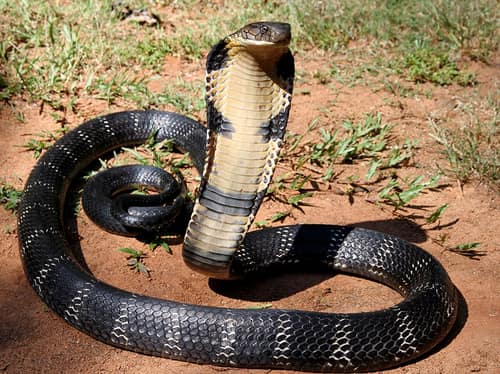
Predator Michael Allen Smith from Seattle, USA / CC BY-SA 2.0 · cc-by-sa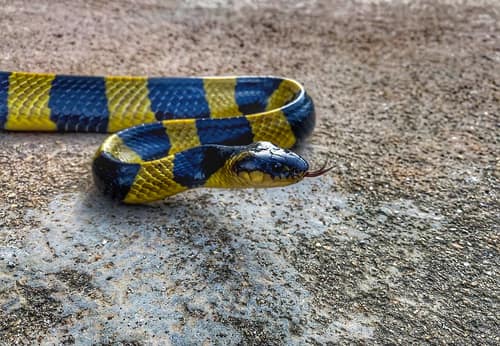
Competitor Arup2602 / CC BY-SA 4.0 · cc-by-sa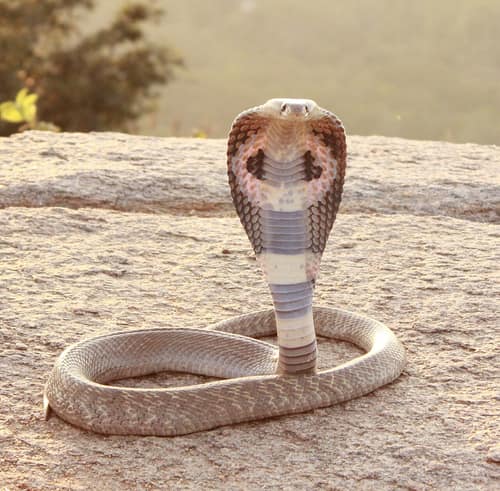
Close Relative Pavan Kumar N / CC BY-SA 3.0 · cc-by-sa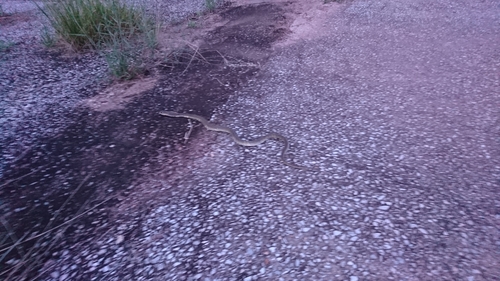
Close Relative (c) Navapol Komanasin, some rights reserved (CC BY), uploaded by Navapol Komanasin · cc-by
Help improve the field guideSomething wrong?
Checking your Fauna account…Report a name, category, or profile issue for review.