
Reptile · GBIF taxon 2469850
King Cobra
Ophiophagus hannahAlso known as Hamadryad
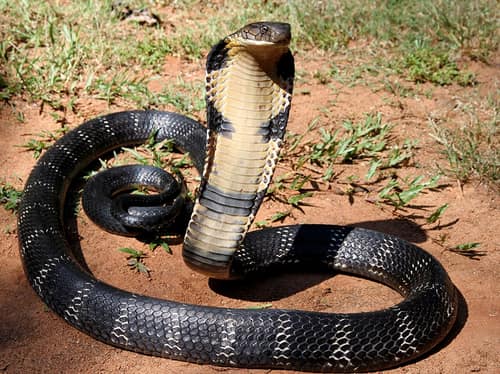
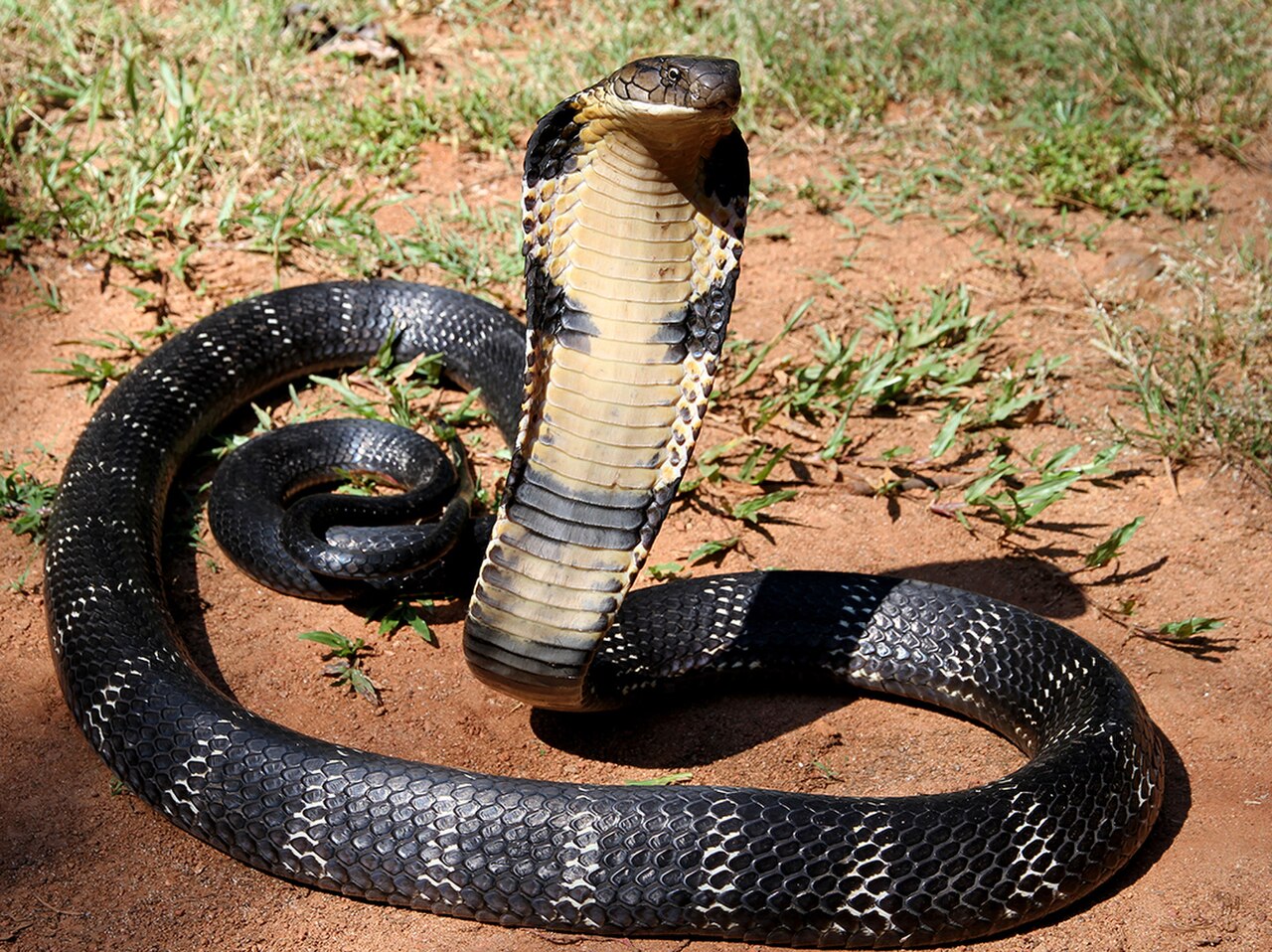
King cobras reign as apex reptilian predators across Asian forests, hunting other snakes with keen vision and specialized scent detection. Female cobras construct elaborate leaf nests to insulate their eggs, guarding the clutch aggressively until hatching approaches. When threatened, an adult can raise a third of its body length off the ground, flare a narrow hood, and produce a deep growl-like hiss.
VenomousReptilePredator
—observations
—countries
—peak records
VulnerableConservation statusIUCN Red List categoriesLCNTVUENCREWEXVulnerableRed List categories, explained →
Diet & prey
- Indian Cobra
- Banded Krait
- Rat Snakes
Predators
- Humans
- Asian Crested Serpent Eagle
- Mongoose
ThreatsDeforestation, habitat fragmentation, illegal wildlife trade, and direct human persecution
HabitatsDense primary rainforests, bamboo thickets, swamps, and agricultural edges near water
Life span20–25 years
Size / weightNot available
Classification
- FamilyElapidae
- SpeciesOphiophagus hannah
Range data is not available yet.
Interaction riskVery high
- Low
- Moderate
- High
- Very high
- Why interaction risk is very high
- Injects lethal neurotoxic venom in massive quantities; observe from a wide distance and never approach.
- Why it is dangerous
- Toxin is a potent neurotoxin that attacks the central nervous system, leading to rapid respiratory failure and death if untreated.
- How to recognize a risky encounter
- Look for massive length up to four meters, narrow neck hood with subtle pale chevrons, and deep resonant hiss.
- What to do
- Freeze immediately upon sighting, then back away slowly without making sudden movements or cornering the animal.
- What to notice
- Large olive or brownish body with faint yellow bands, active mostly in undisturbed primary forest corridors.
- Support conservation
- Keep exact location details private and notify local wildlife rescue organizations if encountered near human dwellings.
Responsible observation
- Safe Distance: Maintain at least ten meters of space if encountering an active snake.
- Defensive Posture: Freeze immediately and back away slowly if the snake raises its hood or hisses.
- Nesting Caution: Avoid thick leaf litter piles in dense forests during spring breeding months.
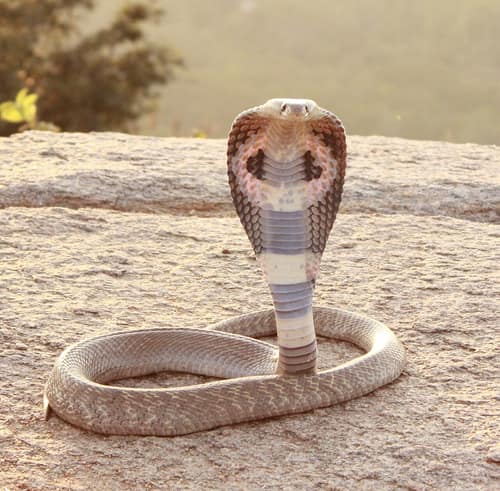
Prey Pavan Kumar N / CC BY-SA 3.0 · cc-by-sa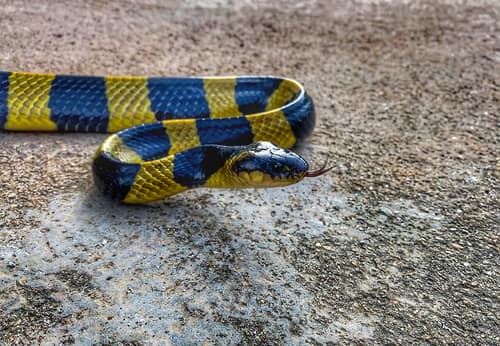
Prey Arup2602 / CC BY-SA 4.0 · cc-by-sa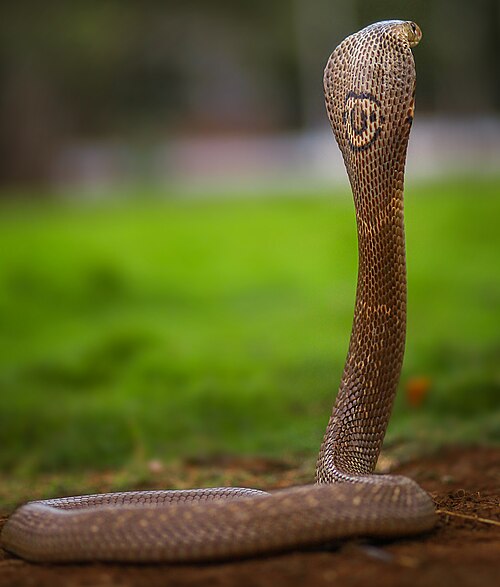
Prey Akash M. Deshmukh / CC BY-SA 4.0 · cc-by-sa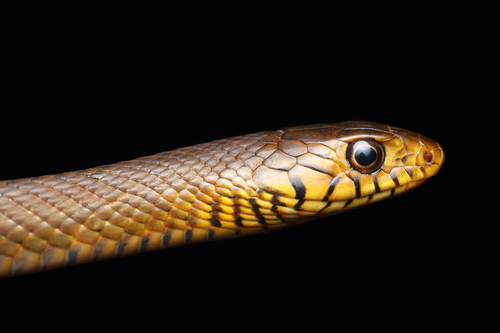
Prey (c) Arun Kumar Thyadi, some rights reserved (CC BY-SA) · cc-by-sa
Help improve the field guideSomething wrong?
Checking your Fauna account…Report a name, category, or profile issue for review.