
Reptile · GBIF taxon 2468542
Ocellated Lizard
Timon lepidusAlso known as Jewelled Lizard, Eyed Lizard, Jeweled Lizard
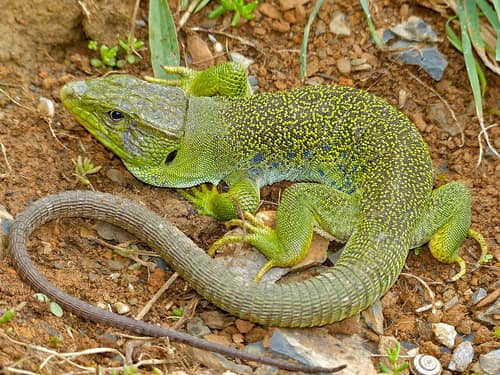
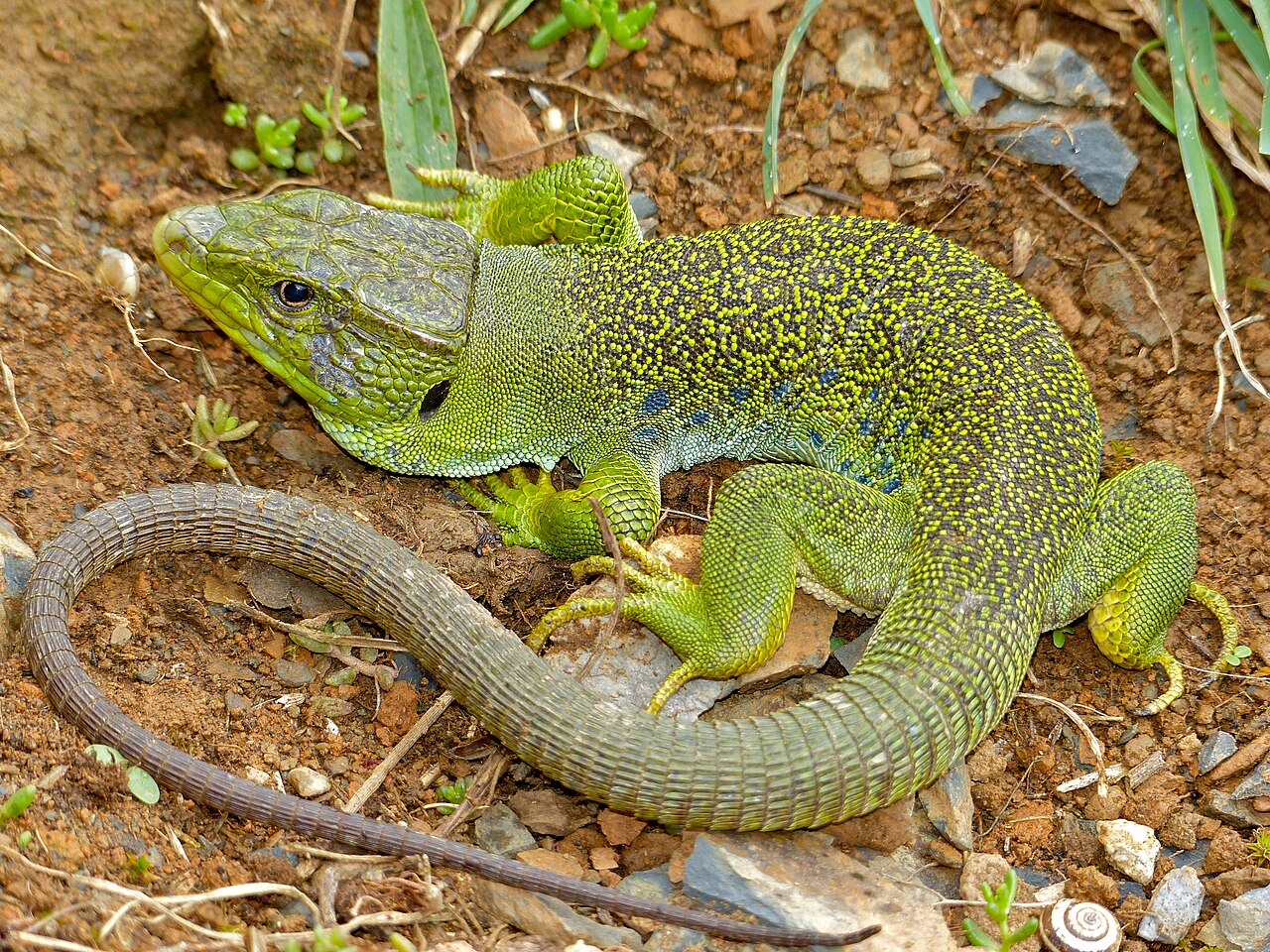
Ocellated lizards are Europe's largest lacertids, instantly recognizable by the striking rows of bright blue rosettes adorning their emerald flanks. Dominant males aggressively defend territories around dry stone walls, sunny rock piles, and open oak woodlands by gaping their powerful yellow-lined jaws. Active during warm days, they hunt insects, small mammals, and wild berries before retreating into deep subterranean burrows.
ReptileColorfulDiurnal
—observations
—countries
—peak records
Least ConcernConservation statusIUCN Red List categoriesLCNTVUENCREWEXLeast ConcernRed List categories, explained →
Diet & prey
- Beetles
- Snails
- Small Rodents
Predators
- Raptors
- Snakes
- Mammalian Carnivores
ThreatsHabitat loss, agricultural expansion, road mortality, feral predators
HabitatsMediterranean scrub, rocky hillsides, vineyards, oak woodlands
Life span10–20 years
Size / weightNot available
Classification
- FamilyLacertidae
- SpeciesTimon lepidus
Range data is not available yet.
Interaction riskLow
- Low
- Moderate
- High
- Very high
- Why interaction risk is low
- Delivers a painful bite if cornered or handled; observe quietly from a safe distance.
- Why it is dangerous
- Possesses exceptionally powerful jaw muscles capable of breaking skin and inflicting painful puncture wounds when grabbed.
- How to recognize a risky encounter
- Look for a robust green lizard with conspicuous blue flank spots and a broad, heavy head.
- What to do
- Never attempt to catch or corner an individual; enjoy views from at least two meters away.
- What to notice
- Recognized by its bright emerald body, yellow-spotted back, and rows of cobalt rosettes.
- Support conservation
- Refrain from dismantling rock piles or stone walls, which serve as crucial shelter.
Responsible observation
- Approach Slowly: Walk cautiously around stone walls where individuals bask in full sun.
- Listen Carefully: Rustling in dry leaf litter often betrays their location before sightings.
- Maintain Distance: Avoid cornering them to prevent defensive jaw gaping or flight.
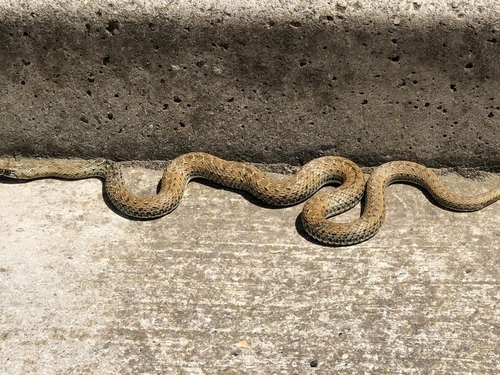
Predator (c) Samuel GUIRAUDOU, some rights reserved (CC BY) · cc-by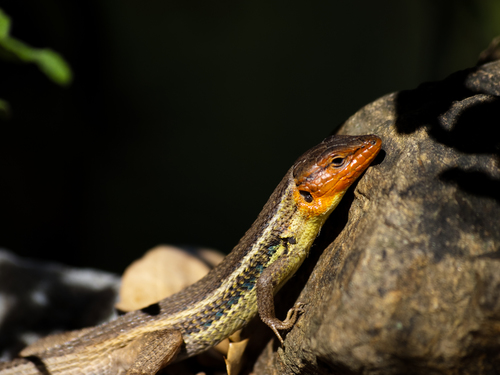
Habitat Competitor (c) hhhalberto, some rights reserved (CC BY) · cc-by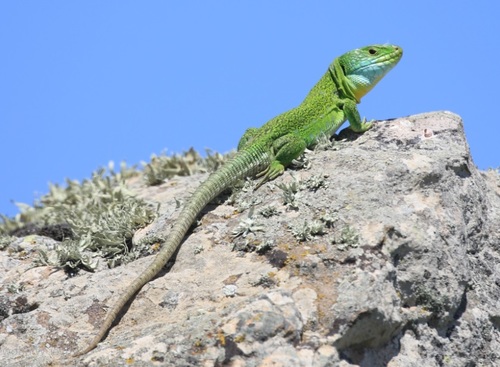
Close Relative (c) Karim Haddad, some rights reserved (CC BY), uploaded by Karim Haddad · cc-by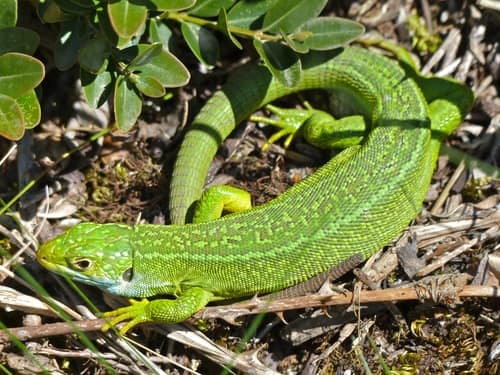
Co-Occurring Relative (c) Bernard DUPONT, some rights reserved (CC BY-SA) · cc-by-sa
Help improve the field guideSomething wrong?
Checking your Fauna account…Report a name, category, or profile issue for review.