Also known as Sheltopusik, Pallas's Glass Lizard, European Legless Lizard
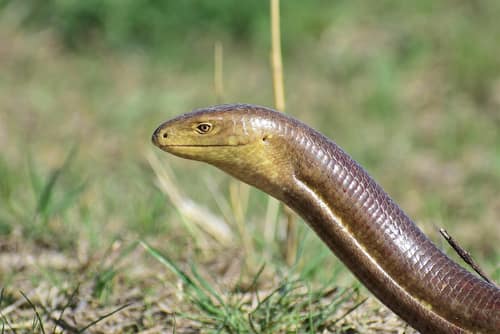
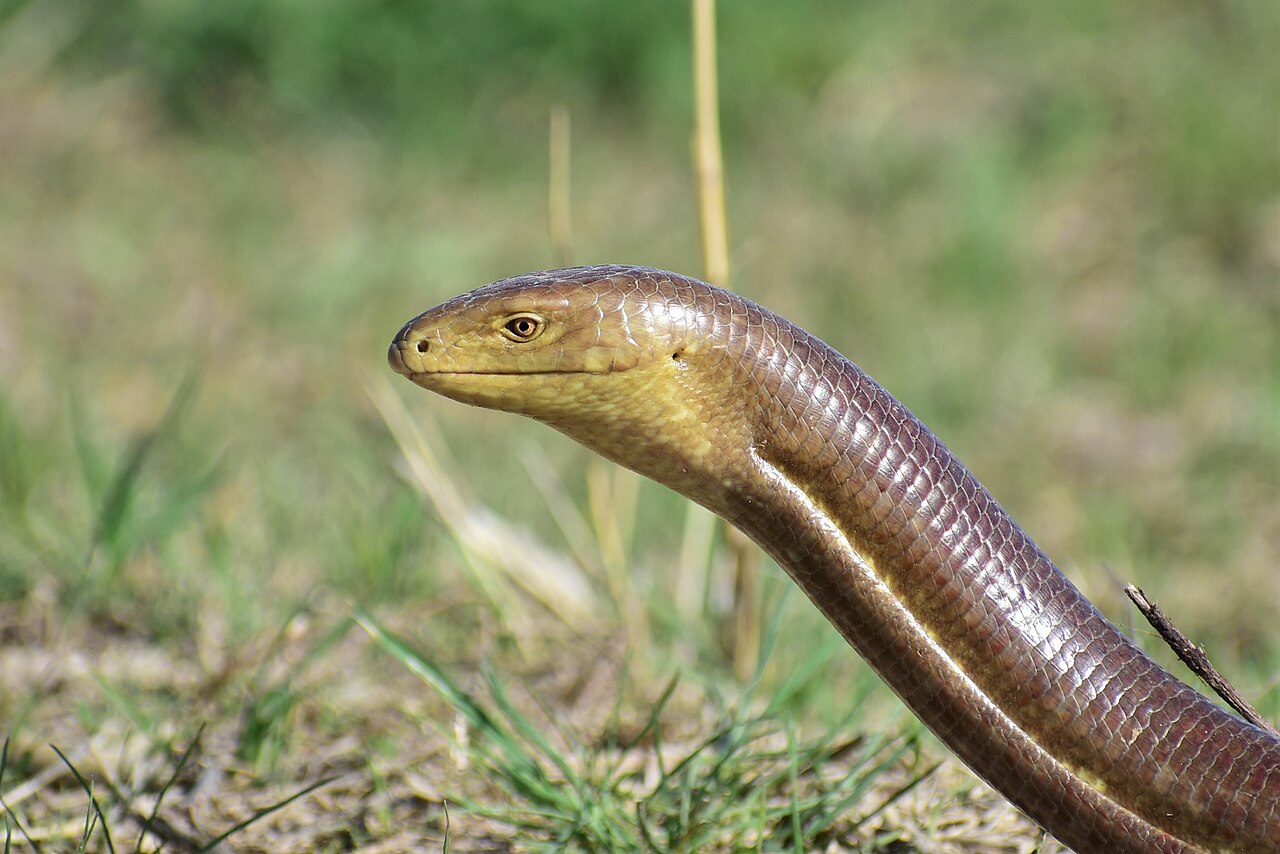
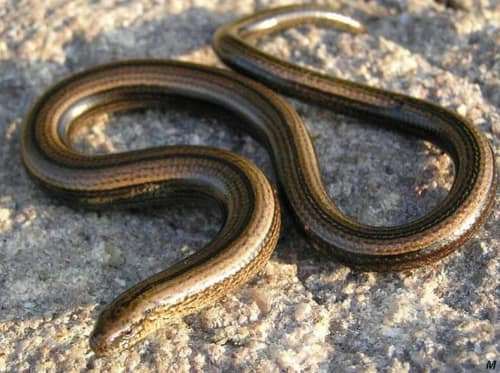
Reaching over a meter in length, this massive legless lizard moves with stiff, measured sweeps of its muscular body rather than the fluid serpentine undulations of true snakes. Prominent lateral grooves along its flanks allow its armored, osteoderm-reinforced body to expand after a heavy meal of snails or during egg development. Often mistaken for a snake, it reveals its lizard ancestry through visible ear openings, moveable eyelids, and a blunt head built for crushing hard-shelled prey.
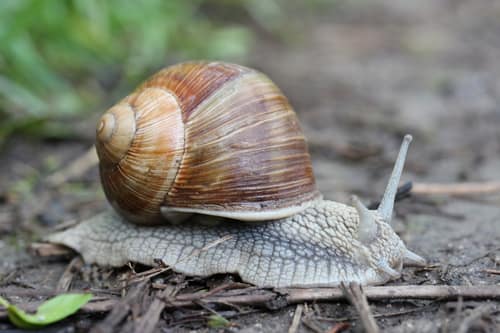
Diet & preyHelix Snails, Field Crickets, Wood Mice
Predators
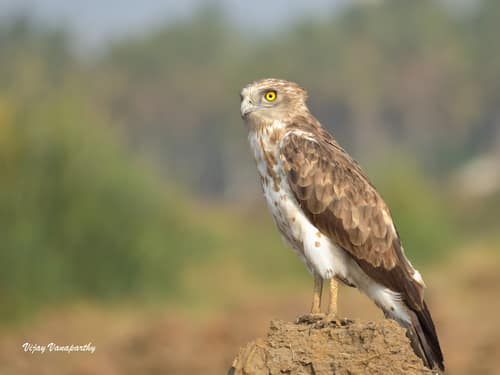
Short-toed Snake Eagle
Red Fox
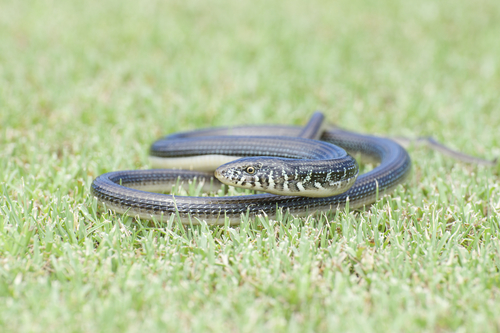
Caspian Whipsnake
ThreatsVehicle strikes, agricultural intensification, and persecution due to being mistaken for snakes
HabitatsDry open hillsides, rocky scrubland, open oak woodlands, and agricultural field edges
Life span20–30 years in the wild; over 50 years in captivity
Classification
FamilyAnguidae
GenusPseudopus
SpeciesPseudopus apodus
Range & activity
Range data is not available yet.
Safe observation
Interaction riskLow
Low
Moderate
High
Very high
Why interaction risk is low
Powerful jaws can deliver a painful pinch if handled; safe to observe from a step back.
Why it is dangerous
Possesses remarkably strong jaw muscles and blunt crushing teeth adapted for hard snail shells, capable of delivering a painful, bruising bite to bare hands.
How to recognize a risky encounter
Look for visible eyelids, clear circular ear openings behind the jaw, and a longitudinal skin groove running along each flank, distinct from any true snake.
What to do
Never attempt to grab, pin, or restrain; allow the lizard to move freely off paths or roads on its own accord.
Responsible observation
Look Along Edges: Search sunny stone walls, roadside verges, and bramble thickets in mid-morning.
Listen for Rustling: Heavy bodies make distinct, loud crackling noises moving through dry leaf litter.
Do Not Catch: Avoid restraining by the tail, which fractures easily and regenerates only as a short stump.