
Reptile
Sudan Mastigure
Uromastyx disparAlso known as Sudan Spiny-tailed Lizard, Sahelian Spiny-tailed Lizard, Dispar Spiny-tailed Lizard
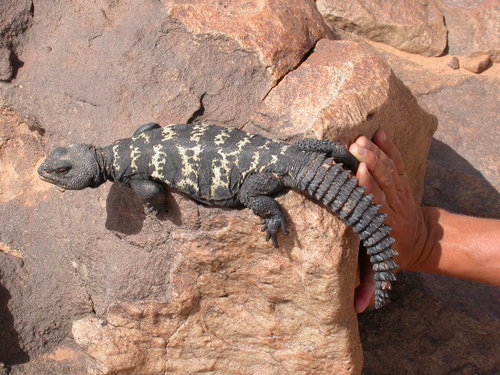
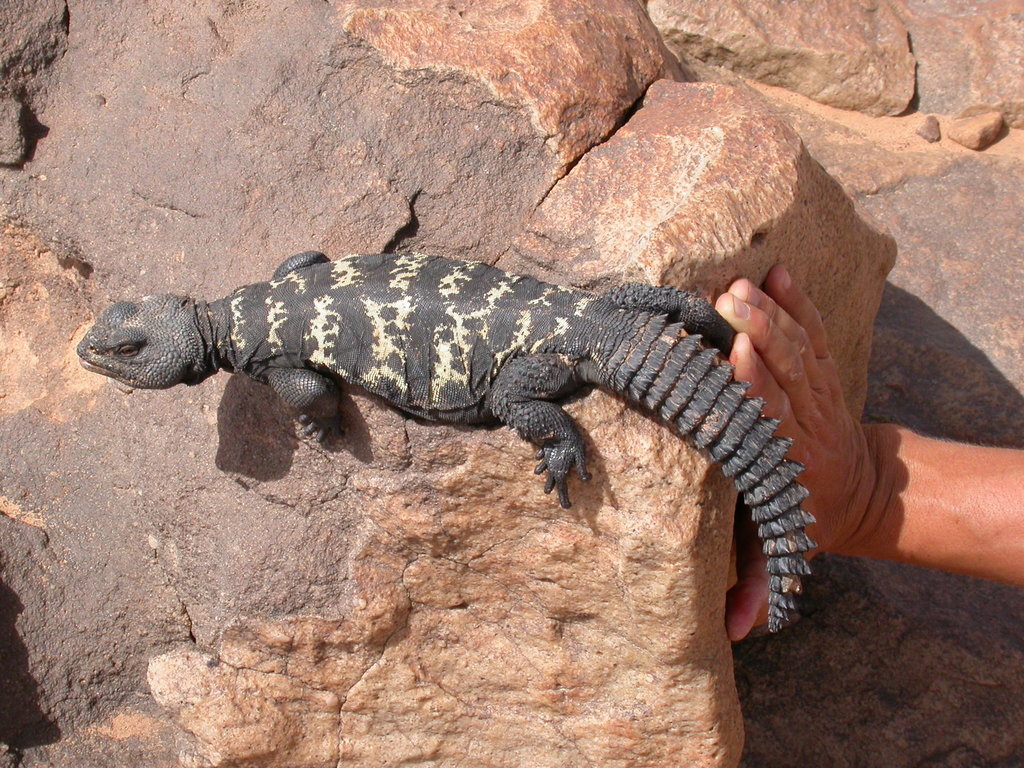
Sudan mastigures spend the hottest hours of the day foraging for tough desert vegetation, possessing specialized hindguts that ferment fibrous scrub. To regulate body heat, they emerge at dawn with dark slate-gray skin that gradually lightens to sandy yellow or olive as solar basking warms their core. When threatened, an individual dashes headfirst into an underground crevice, wedge-blocking the entrance and lashing violently with its heavily armored, spiny tail.
ReptileDiurnalHerbivore
—observations
—countries
—peak records
Least ConcernConservation statusIUCN Red List categoriesLCNTVUENCREWEXLeast ConcernRed List categories, explained →
Diet & preyAcacia leaves and flowers, Desert grasses, Desert seeds
Predators
- Desert monitor
- Raptors
- Golden jackal
ThreatsOvercollection for the international pet trade, local hunting, and overgrazing
HabitatsArid rocky plateaus, stony desert hammadas, and Sahelian shrublands
Life span15–25 years
Classification
- FamilyAgamidae
- GenusUromastyx
- SpeciesUromastyx dispar
Range data is not available yet.
Interaction riskLow
- Low
- Moderate
- High
- Very high
- Why interaction risk is low
- May whip with its spiny tail or deliver a forceful bite if handled; observe from a distance.
- Why it is dangerous
- Crushing jaw pressure and a muscular tail ringed with rigid, sharp scales can cause lacerations and deep bruising if handled.
- How to recognize a risky encounter
- Look for a flat, stout body and a thick tail lined with prominent, thorny whorls of scales.
- What to do
- Maintain a respectful distance and avoid attempting to pull lizards out of rock crevices or deep burrows.
Responsible observation
- Burrow Patience: Sit quietly near burrow entrances during mid-morning when lizards emerge to absorb morning sun.
- Binocular Scanning: Scan elevated rock cairns and stony rises from several meters away to avoid spooking them underground.
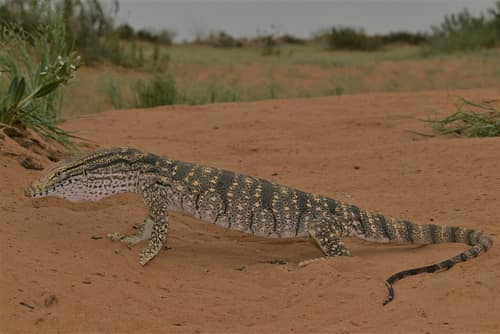
Predator Marius Burger / CC0 · cc0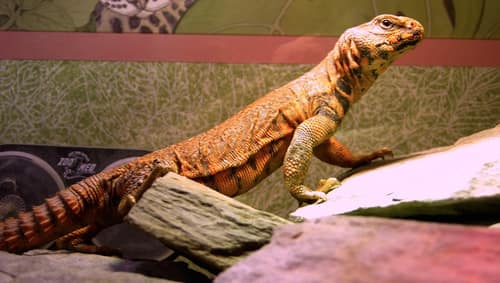
Close Relative (c) Squamata55, some rights reserved (CC BY) · cc-by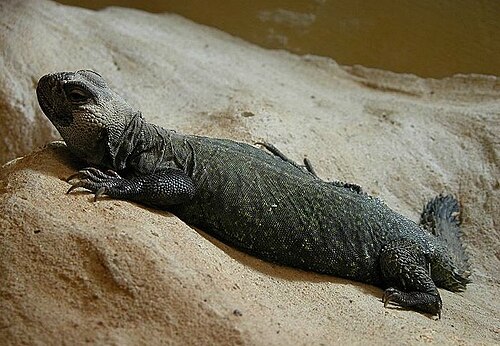
Close Relative Wikimedia Commons / CC BY-SA 2.0 de · cc-by-sa
Help improve the field guideSomething wrong?
Checking your Fauna account…Report a name, category, or profile issue for review.