
Reptile · GBIF taxon 2465219
Puerto Rican Boa
Chilabothrus inornatusAlso known as Culebron, Puerto Rican Tree Boa
Puerto Rican boas are stealthy, powerful constrictors endemic to the lush forests and karst topography of Puerto Rico. They are famous for hanging upside down near cave entrances at dusk to snag bats straight out of the air with strike precision. Females give live birth to up to two dozen neonates following a summer gestation period.
EndemicNight HunterNon-Venomous
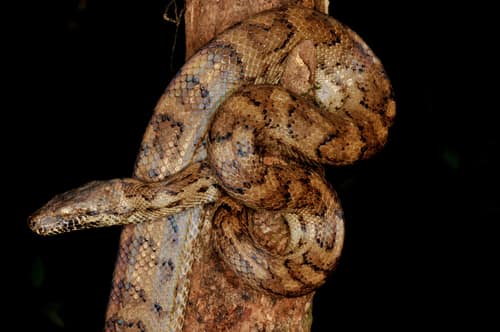
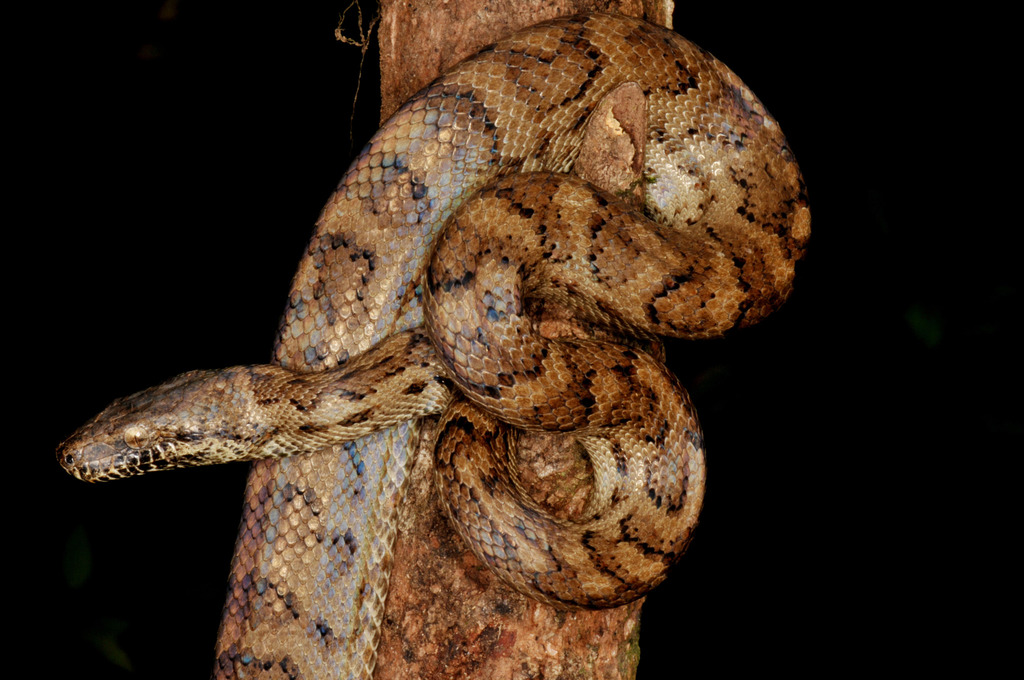 1 / 4
1 / 4—observations
—countries
—peak records
Least ConcernConservation statusIUCN Red List categoriesLCNTVUENCREWEXLeast ConcernRed List categories, explained →
Diet & prey
- Bats
- Rodents
- Anoles
Predators
- Mongooses
- Feral cats
- Red-tailed hawks
ThreatsHabitat loss, introduced predators (mongooses, feral cats), vehicle strikes
HabitatsKarst forests, caves, dense woodlands, plantations
Life span20–30 years
Size / weightNot available
Classification
- FamilyBoidae
- SpeciesChilabothrus inornatus
Range data is not available yet.
Interaction riskLow
- Low
- Moderate
- High
- Very high
- Why interaction risk is low
- Non-venomous but can bite defensively if cornered; observe from a safe distance.
- Why it is dangerous
- Backward-curved teeth can inflict deep puncture wounds that carry a risk of bacterial infection.
- How to recognize a risky encounter
- Recognized by its long, brown, iridescent body up to two meters long with subtle dark blotches.
- What to do
- Maintain a respectful distance and avoid touching or cornering the snake.
- What to notice
- Look for a robust brown snake resting in karst trees or near limestone cave openings.
- Support conservation
- Never disclose precise cave roost coordinates online and avoid bright spotlighting.
Responsible observation
- Cave Observation: Scan cave entrances at dusk to catch them hunting bats suspended in mid-air.
- Give Space: Keep a distance of at least two meters so the snake moves unhindered.
- Night Driving: Slow down on forest roads after rain when snakes cross.
 Image unavailable
Close Relative 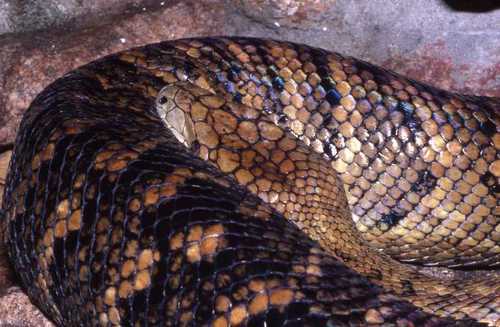
Close Relative (c) 2012 Simon J. Tonge, some rights reserved (CC BY) · cc-by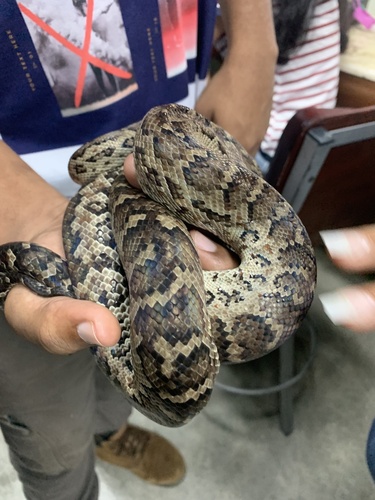
Close Relative (c) Dairon Cuevas Riveras, some rights reserved (CC BY-SA) · cc-by-sa
Help improve the field guideSomething wrong?
Checking your Fauna account…Report a name, category, or profile issue for review.