
Reptile
Dumeril's Boa
Acrantophis dumeriliAlso known as Dumeril's Ground Boa, Southern Madagascar Ground Boa
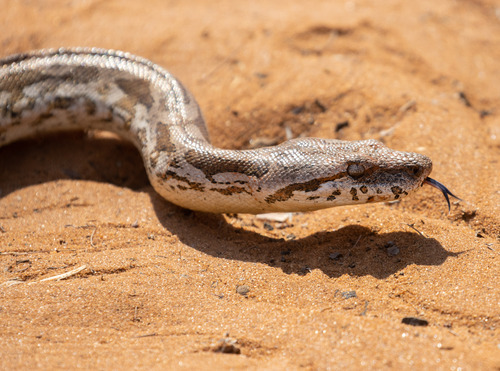
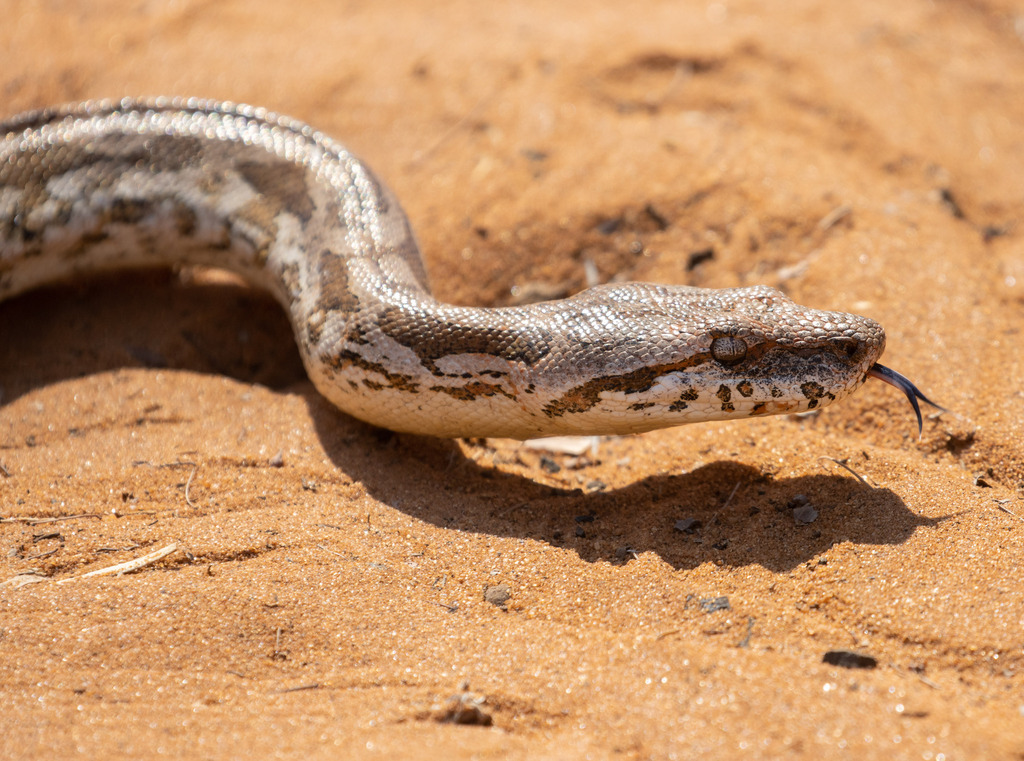
Dumeril's boas spend daytime hours coiled motionless beneath dry forest leaf litter, relying on intricate geometric camouflage to ambush passing rodents and ground birds. Females give birth to live young after an eight-month gestation, producing up to two dozen well-developed neonates equipped to hunt immediately. While remarkably resilient in arid climates, populations face persistent localized pressure from agricultural clearing and charcoal production across southwestern Madagascar.
ConstrictorNocturnalCamouflaged
—observations
—countries
—peak records
Least ConcernConservation statusIUCN Red List categoriesLCNTVUENCREWEXLeast ConcernRed List categories, explained →
Diet & preyTenrecs, Small rodents, Ground-nesting birds
Predators
- Fossa
- Birds of prey
- Feral dogs
ThreatsHabitat loss from charcoal production, agricultural clearing, human persecution
HabitatsDry deciduous forests, spiny thickets, semi-arid scrub
Life span20–30 years
Classification
- FamilyBoidae
- GenusAcrantophis
- SpeciesAcrantophis dumerili
Range data is not available yet.
Interaction riskLow
- Low
- Moderate
- High
- Very high
- Why interaction risk is low
- Non-venomous but delivers a painful defensive bite; keep a safe distance and do not attempt handling.
- Why it is dangerous
- Possesses powerful jaws lined with numerous sharp, recurved teeth that cause substantial lacerations and potential bacterial infection if provoked.
- How to recognize a risky encounter
- Recognized by a heavy body and distinctive earthy rosettes of tan, copper, and dark brown mimicking dead leaves.
- What to do
- Never reach toward or attempt to corner a wild boa, as threatened snakes will hiss loudly and strike defensively.
- What to notice
- Identified by robust terrestrial girth, slow movements, and fine blotched camouflage in southwestern Malagasy scrub.
- Support conservation
- Leave resting snakes undisturbed and refrain from moving rocks or fallen wood that provide critical microclimate shelter.
Responsible observation
- Observation Distance: Maintain at least two meters of space to watch undisturbed natural behavior.
- Footing Awareness: Watch each step carefully among dry leaves where its pattern makes it nearly invisible.
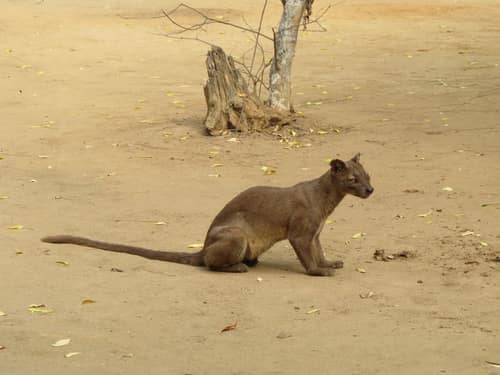
Predator (c) Micha Baum, some rights reserved (CC BY-SA), uploaded by Micha Baum · cc-by-sa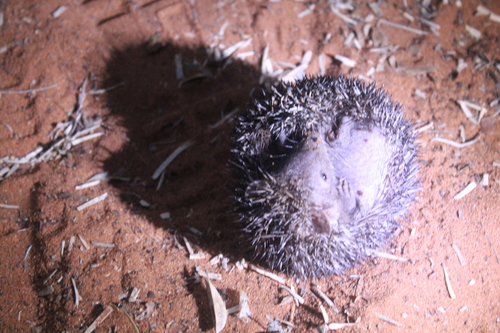
Prey (c) Michael A. Alcorn, some rights reserved (CC BY), uploaded by Michael A. Alcorn · cc-by Image unavailable
Close Relative 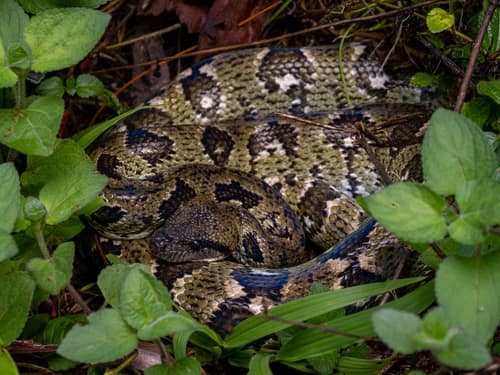
Same Family (c) Piotr Lukasik, some rights reserved (CC BY), uploaded by Piotr Lukasik · cc-by
Help improve the field guideSomething wrong?
Checking your Fauna account…Report a name, category, or profile issue for review.