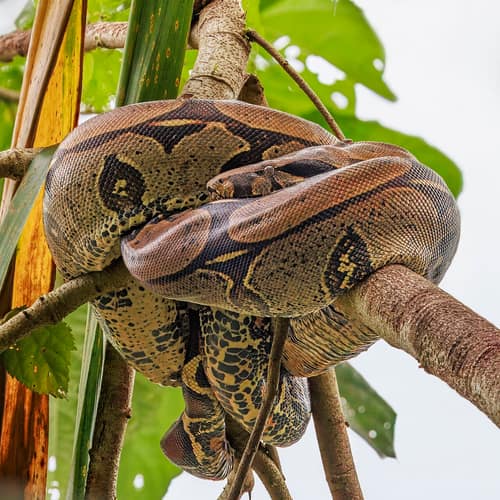
Also known as Amazon Tree Boa, Common Tree Boa, Macabrel
Garden tree boas exhibit extraordinary color polymorphism, displaying vibrant shades of yellow, orange, red, grey, brown, or patterned combinations across the Neotropics. Their slender, laterally compressed bodies and strong prehensile tails allow them to balance effortlessly on slender branches while hunting with specialized heat-sensing pit organs. Active mainly at night, these arboreal constrictors rely on lightning-fast defensive strikes to deter potential threats in the forest canopy.
Non-venomous but extremely quick to strike defensively; maintain a safe viewing distance.
Why it is dangerous
Equipped with long, curved teeth designed to pierce bird feathers, this non-venomous snake inflicts deep, painful defensive wounds if cornered or handled.
How to recognize a risky encounter
Look for a slender body, a broad triangle-shaped head distinctly wider than the neck, deep heat-sensing lip pits, and striking color variations.
What to do
Observe quietly from at least one meter away and never reach into tree foliage or attempt to hold a wild snake.
Responsible observation
Night Spotting: Look along low to mid-canopy branches near streams or forest openings after dusk.
Safe Distances: Keep hands away from low branches where snakes may be coiled in a hunting posture.

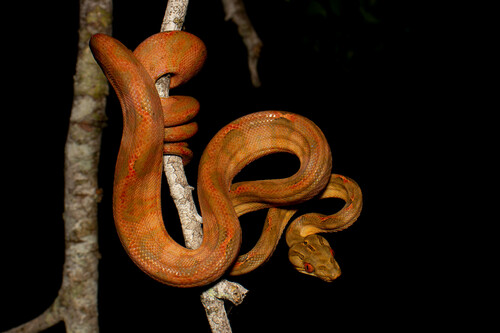
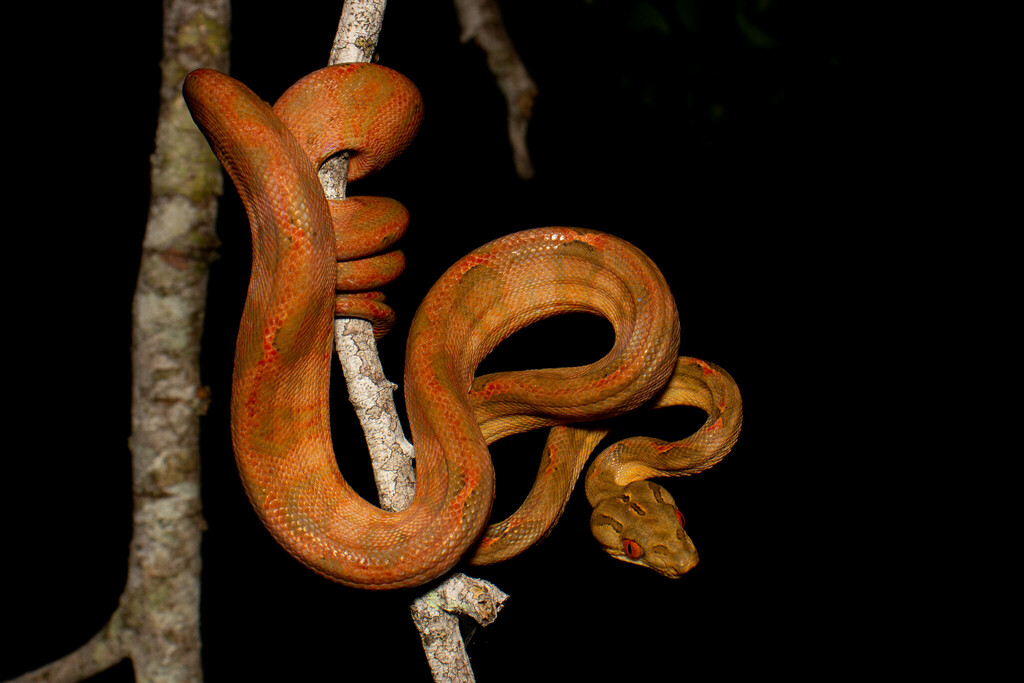
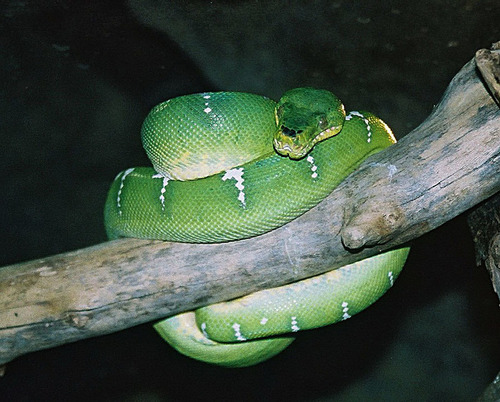
 Image unavailable