
Reptile · GBIF taxon 2462515
Giant Bluetongue
Tiliqua gigasAlso known as Indonesian Blue-Tongued Skink, Giant Blue-Tongued Skink, New Guinea Blue-Tongued Skink
Giant bluetongue skinks navigate the humid floor and low branches of tropical rainforests across New Guinea and surrounding islands. Distinctive for their vibrant cobalt-blue tongue used in striking threat displays, these lean reptiles rely on omnivorous habits, feeding on fruit, fungi, invertebrates, and small animals. Their long, tapered tails and bold dark band patterns distinguish them from their Australian relatives.
ReptileRainforestOmnivore
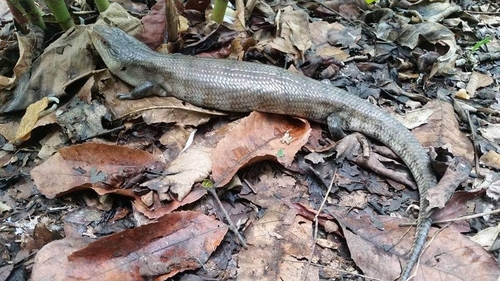
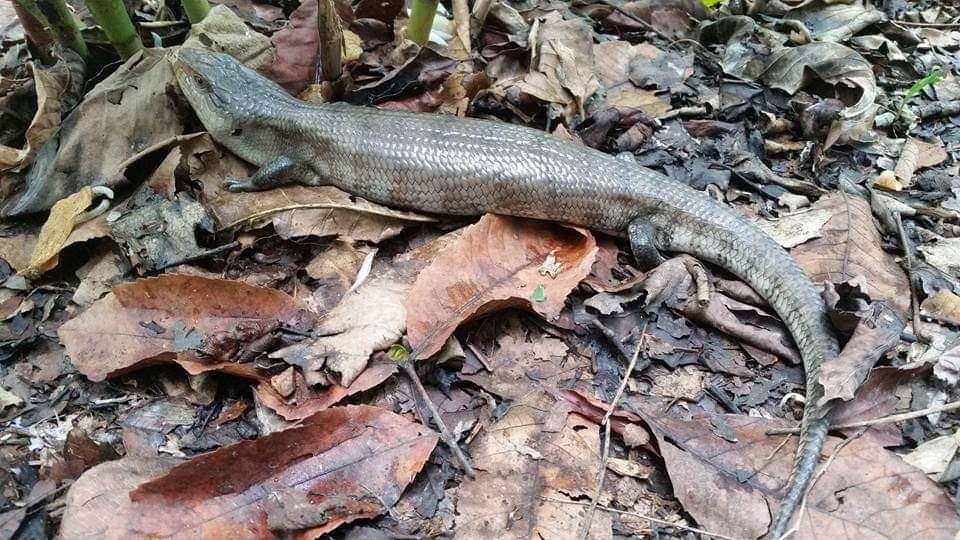
—observations
—countries
—peak records
Least ConcernConservation statusIUCN Red List categoriesLCNTVUENCREWEXLeast ConcernRed List categories, explained →
Diet & prey
- Snails
- Insects
- Fallen fruit
Predators
- Snakes
- Birds of prey
- Monitor lizards
ThreatsDeforestation, habitat fragmentation, and collection for the pet trade
HabitatsTropical rainforests, moist lowland forests, and coastal woodlands
Life span15–20 years
Classification
- FamilyScincidae
- GenusTiliqua
- SpeciesTiliqua gigas
Range data is not available yet.
Interaction riskLow
- Low
- Moderate
- High
- Very high
- Why interaction risk is low
- Non-venomous but delivers a painful bite if cornered; observe quietly without grabbing.
- Why it is dangerous
- Powerful jaw muscles and small sharp teeth deliver a crushing bite that breaks skin and risks severe infection.
- How to recognize a risky encounter
- Look for a slender body with a long tail, dark crossbands, and a flashing bright blue tongue when threatened.
- What to do
- Never attempt to grab or corner wild individuals; give them space to retreat safely into forest cover.
Responsible observation
- Look Low: Search among fallen logs, leaf litter, and low vegetation during warm daylight hours.
- Watch the Tongue: If threatened, they gape wide to display a bright blue tongue as a warning display.
- Keep Distance: Maintain a respectful distance to avoid stress or triggering a defensive posture.
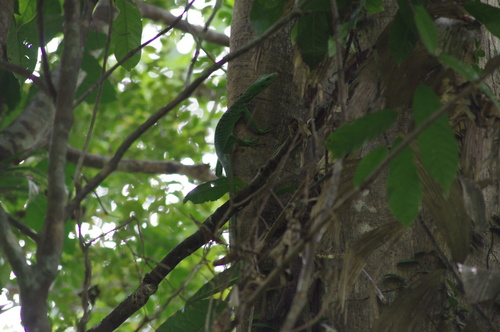
Co-inhabitant (c) coenobita, some rights reserved (CC BY), uploaded by coenobita · cc-by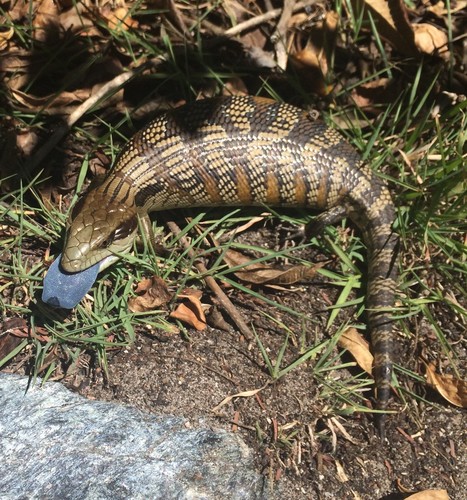
Close Relative (c) Thomas Mesaglio, some rights reserved (CC BY), uploaded by Thomas Mesaglio · cc-by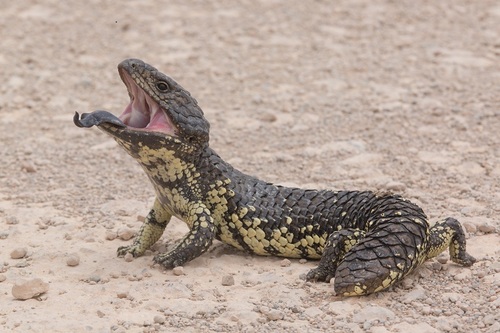
Close Relative (c) dhfischer, some rights reserved (CC BY), uploaded by dhfischer · cc-by
Help improve the field guideSomething wrong?
Checking your Fauna account…Report a name, category, or profile issue for review.