Beaded lizards spend much of their lives hidden inside underground burrows, emerging primarily during twilight and rainy periods to forage on the ground and high in trees. Unlike venomous snakes that inject toxins via hollow fangs, these stout reptiles chew toxic saliva into wounds through grooved teeth on their lower jaw. Their bead-like osteoderms offer armored defense against predators while they raid arboreal bird nests and mammal burrows.
ThreatsHabitat fragmentation, road mortality, illegal collection, and persecution
HabitatsTropical deciduous forests, dry thorn scrub, and pine-oak woodlands
Life span20–30 years
Classification
FamilyHelodermatidae
SpeciesHeloderma horridum
Range & activity
Range data is not available yet.
Safe observation
Interaction riskVery high
Low
Moderate
High
Very high
Why interaction risk is very high
Delivers a painful, toxic bite when threatened; maintain distance and never attempt to handle.
Why it is dangerous
Venom glands along the lower jaw produce toxins and kallikrein-like enzymes that cause intense pain, rapid swelling, dizziness, and acute drops in blood pressure.
How to recognize a risky encounter
Recognized by its heavy body covered in rounded, bead-like osteoderms with a dark brown or black base patterned by dull yellow bands.
What to do
Give the animal ample space to crawl away, and never place hands under rocks or into tree hollows without looking.
Responsible observation
Safe Distance: Maintain a buffer of several meters to prevent defensive posturing.
No Handling: Never corner or grab this lizard, as it clamps down tenaciously when striking.
Twilight Observation: Search lower tree branches and rocky outcrops around dusk during the summer wet season.


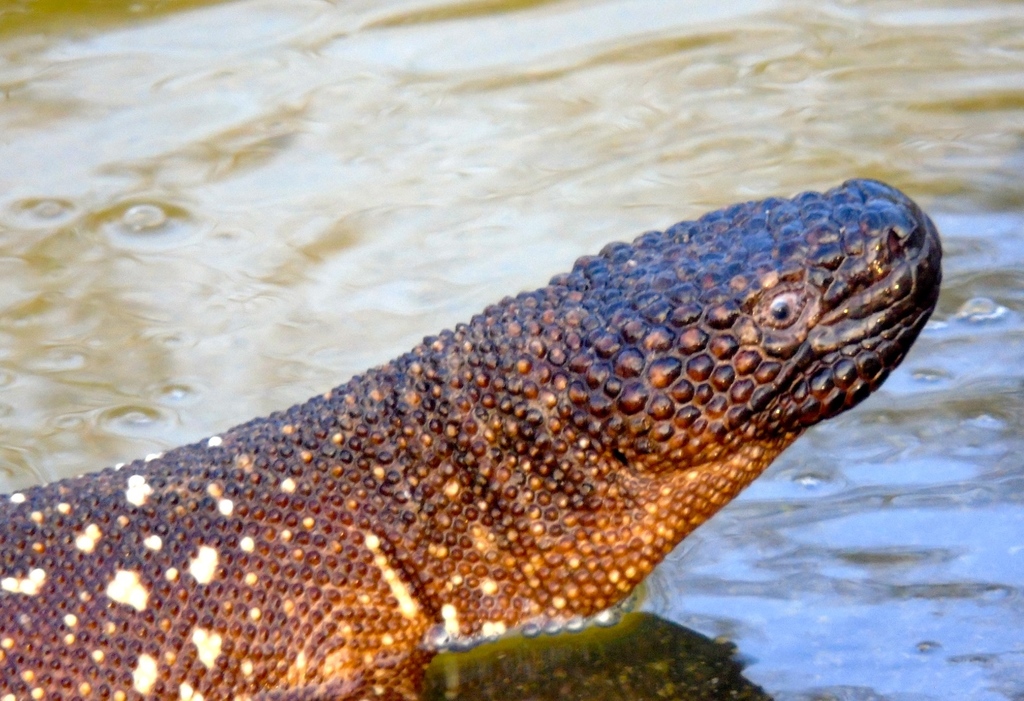

 Image unavailable