
Reptile · GBIF taxon 2458438
Amur Rat Snake
Elaphe schrenckiiAlso known as Russian Rat Snake, Siberian Rat Snake, Schrenck's Rat Snake
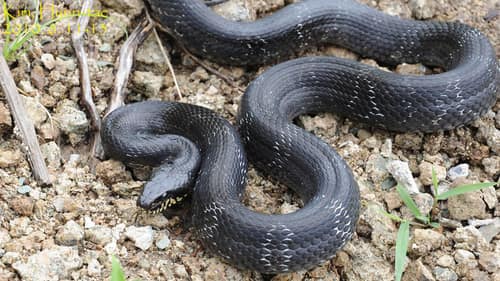
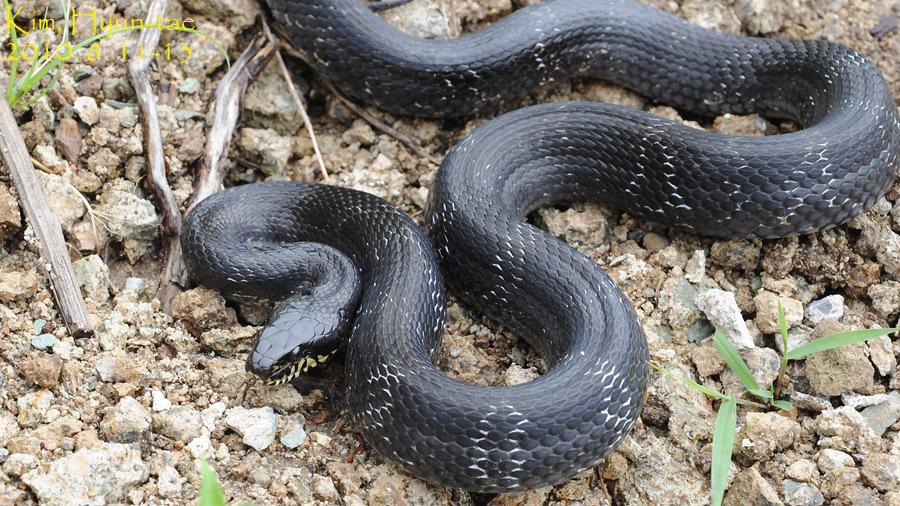
Amur rat snakes navigate the chilly forests and river valleys of Northeast Asia with impressive agility, frequently climbing trees in search of roosting birds and nestling eggs. Their striking black bodies feature bold yellow crossbands, providing effective camouflage among sun-dappled woodland understory. Adaptable and hardy, these proficient constrictors often venture near human agricultural lands to hunt farm pests.
ConstrictorArborealPatterned
 1 / 3
1 / 3—observations
—countries
—peak records
Least ConcernConservation statusIUCN Red List categoriesLCNTVUENCREWEXLeast ConcernRed List categories, explained →
Diet & prey
- Rodents
- Small birds
- Bird eggs
Predators
- Birds of prey
- Badgers
- Foxes
ThreatsHabitat destruction, road mortality, pet trade collection
HabitatsTemperate forests, scrublands, river valleys
Life span15–20 years
Size / weightNot available
Classification
- FamilyColubridae
- SpeciesElaphe schrenckii
Range data is not available yet.
Interaction riskLow
- Low
- Moderate
- High
- Very high
- Why interaction risk is low
- Non-venomous and docile, but may strike or bite if cornered or handled.
- Why it is dangerous
- Lacks venom, but possesses sharp, backward-curving teeth that can deliver a painful bite if grabbed or provoked.
- How to recognize a risky encounter
- Identified by a dark brown to black body patterned with bright yellow or cream crossbands and a pale belly.
- What to do
- Observe from a step back and avoid picking up wild snakes to prevent defensive strikes.
Responsible observation
- Observation: Watch for them basking on sun-warmed rocks or resting low in branches during sunny mornings.
- Safety: Give cornered snakes space to move away safely without restraint.
 Image unavailable
Close Relative 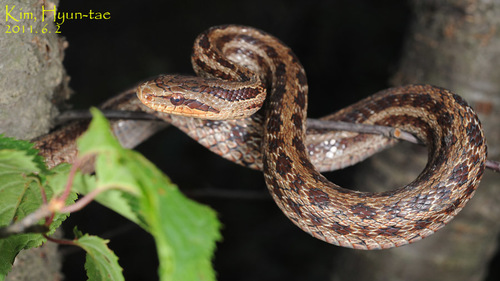
Co-occurring Relative (c) Kim, Hyun-tae, some rights reserved (CC BY), uploaded by Kim, Hyun-tae · cc-by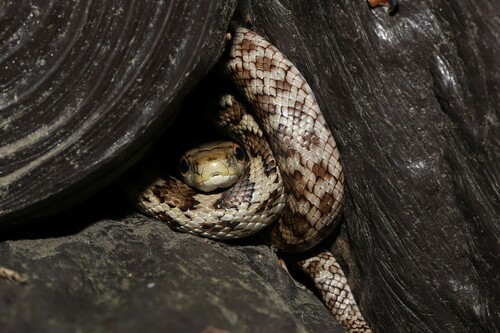
Regional Relative (c) Se Lena, some rights reserved (CC BY) · cc-by
Help improve the field guideSomething wrong?
Checking your Fauna account…Report a name, category, or profile issue for review.