
Reptile · GBIF taxon 2455676
Western Ratsnake
Pantherophis obsoletusAlso known as Western Rat Snake, Black Rat Snake
Western Ratsnakes are large nonvenomous constrictors that become mostly dark with age, often retaining pale skin between the scales. They climb readily and may kink their bodies or vibrate the tail when alarmed.
constrictorwoodlandskilled climber
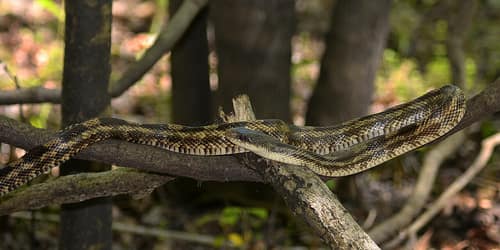
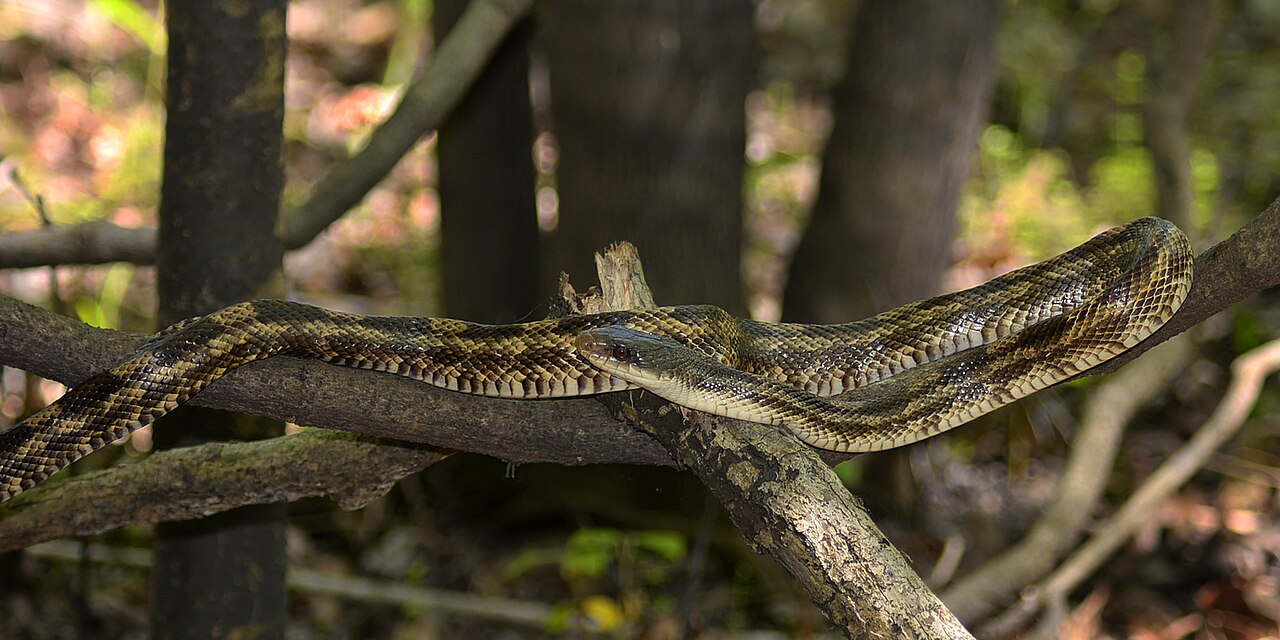
—observations
—countries
—peak records
Least ConcernConservation statusIUCN Red List categoriesLCNTVUENCREWEXLeast ConcernRed List categories, explained →
Diet & prey
- mice
- small birds
- frogs
Predators
- hawks
- owls
- larger snakes
ThreatsRoad mortality, deliberate killing, habitat fragmentation, and illegal collection
HabitatsForests, rocky hillsides, farmland edges, barns, and wooded stream corridors
Life spanOften ten to fifteen years in the wild and potentially longer under protected conditions
Size / weightNot available
Classification
- FamilyColubridae
- GenusPantherophis
- SpeciesPantherophis obsoletus
Range data is not available yet.
Interaction riskLow
- Low
- Moderate
- High
- Very high
- Why interaction risk is low
- Nonvenomous ratsnakes may still bite repeatedly when grabbed or cornered.
- Why it is dangerous
- A frightened ratsnake can deliver multiple defensive bites even though it lacks venom.
- How to recognize a risky encounter
- Confirm a large dark snake with a pale chin, keeled scales, and climbing ability.
- What to do
- Do not capture, pin, or pick up the snake; clean any bite and seek care if needed.
Responsible observation
- Watch: Give the snake an open route and observe its climbing behavior from afar.
- Identify: Look for a robust dark body with a pale chin and weakly patterned sides.
Help improve the field guideSomething wrong?
Checking your Fauna account…Report a name, category, or profile issue for review.