
Reptile · GBIF taxon 2455654
Eastern Foxsnake
Pantherophis vulpinusAlso known as Foxsnake
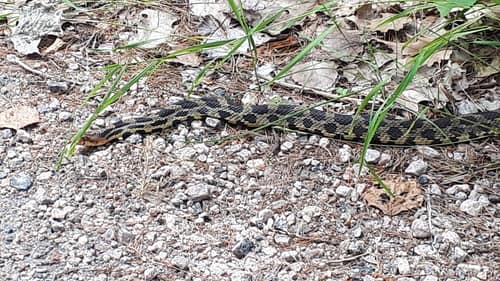
Eastern Foxsnakes are heavy-bodied nonvenomous constrictors patterned with dark saddles on a yellow-tan background and often a coppery head. They move through Great Lakes wetlands, prairies, and floodplains to hunt rodents and use sunny openings for thermoregulation.
wetland snakeblotched constrictorcoppery head

—observations
—countries
—peak records
Least ConcernConservation statusIUCN Red List categoriesLCNTVUENCREWEXLeast ConcernRed List categories, explained →
Diet & prey
- mice
- voles
- bird eggs
Predators
- hawks
- raccoons
- foxes
ThreatsWetland drainage, road mortality, shoreline development, illegal collection, and deliberate killing after mistaken identification
HabitatsCoastal marshes, wet prairies, river floodplains, field edges, dunes, and nearby uplands
Life spanMay live for more than 15 years when suitable wetlands and overwintering sites remain connected
Size / weightNot available
Classification
- FamilyColubridae
- SpeciesPantherophis vulpinus
Range data is not available yet.
Interaction riskLow
- Low
- Moderate
- High
- Very high
- Why interaction risk is low
- A cornered or handled foxsnake may strike and bite, despite lacking venom.
- Why it is dangerous
- Restraint can provoke repeated defensive strikes, and any bite can introduce bacteria into broken skin.
- How to recognize a risky encounter
- Confirm a thick yellow-tan snake with chocolate saddles, a coppery head, and no tail rattle.
- What to do
- Do not pick up or corner the snake; back away and contact a trained local responder if removal is necessary.
- What to notice
- Look for the coppery head and bold dark saddles while avoiding confusion with locally occurring venomous snakes.
- Support conservation
- Leave the snake and its shelter undisturbed, record the location from a distance, and never move it between habitats.
Responsible observation
- Identify: From a safe distance, note the coppery head and bold dark saddles on a yellow-tan body.
- Protect: Stop traffic only when safe and let the snake cross without touching or relocating it.
Help improve the field guideSomething wrong?
Checking your Fauna account…Report a name, category, or profile issue for review.