Also known as Sri Lankan Green Vine Snake, Long-nosed Tree Snake
Sri Lankan green vine snakes are master ambush hunters that blend seamlessly into foliage, using horizontal keyhole pupils to achieve binocular vision and pinpoint agile lizards among the leaves. They freeze when approached, swaying rhythmically like a branch in the wind to deceive prey and predators alike. Females give birth to live young rather than laying eggs, producing miniature, fully independent replicas after a gestation period of several months.
Rear fangs inject mild venom that causes localized swelling; observe from a respectful distance without handling.
Why it is dangerous
Enlarged rear fangs deliver a mild colubrid venom that causes localized pain, numbness, and moderate swelling, though it is not medically dangerous to humans.
How to recognize a risky encounter
Look for an exceptionally slender emerald-green body, a prominent pointed snout, and horizontal, keyhole-shaped pupils.
What to do
Never attempt to grab, corner, or handle the snake; step back slowly if it puffs its neck and gapes defensively.
Responsible observation
Spotting Strategy: Scan eye-level shrubs and low branches in sunny forest clearings during the morning.
Observation Distance: Stay at least 1 meter away to prevent the snake from gaping or adopting a defensive posture.

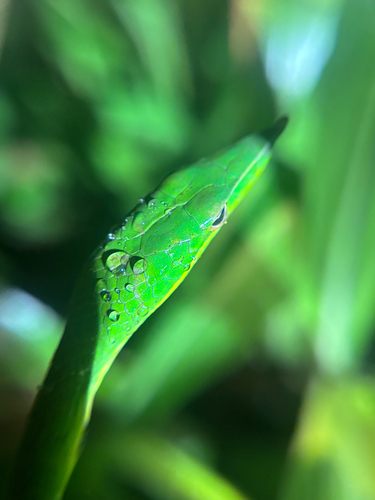
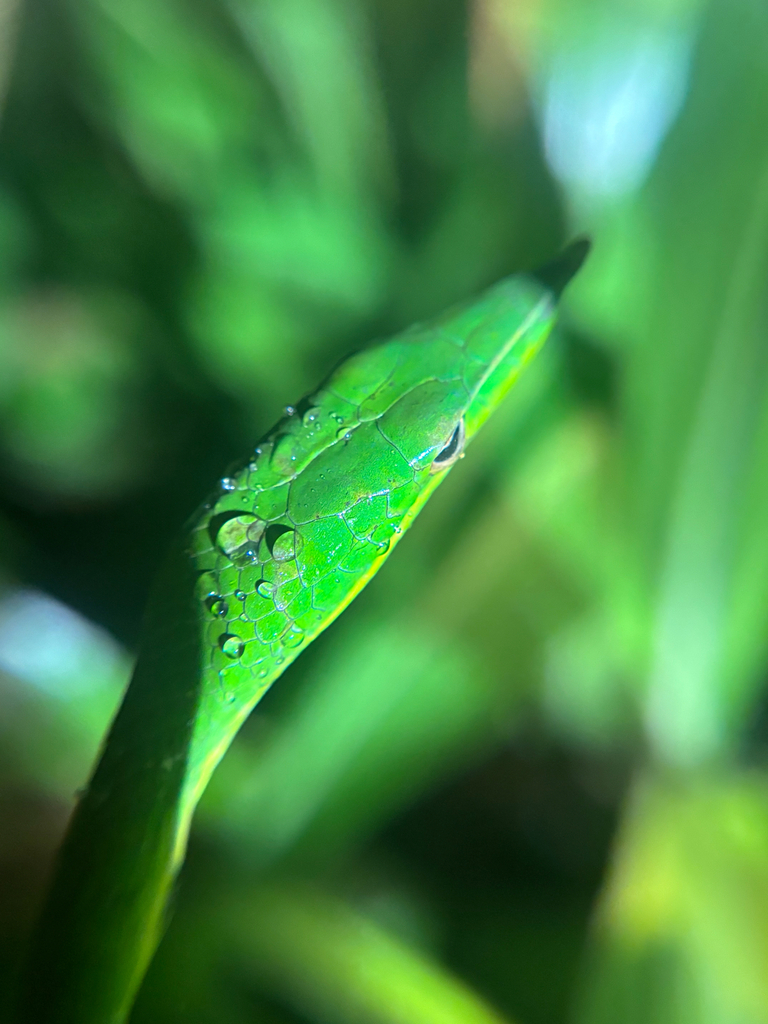
 Image unavailable