
Reptile
Desert Death Adder
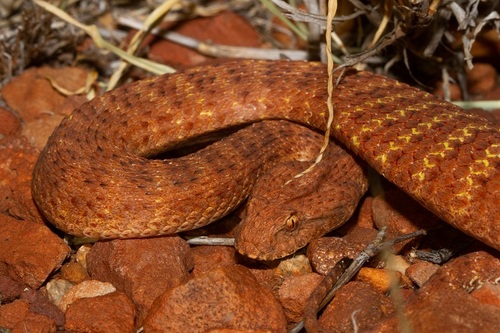
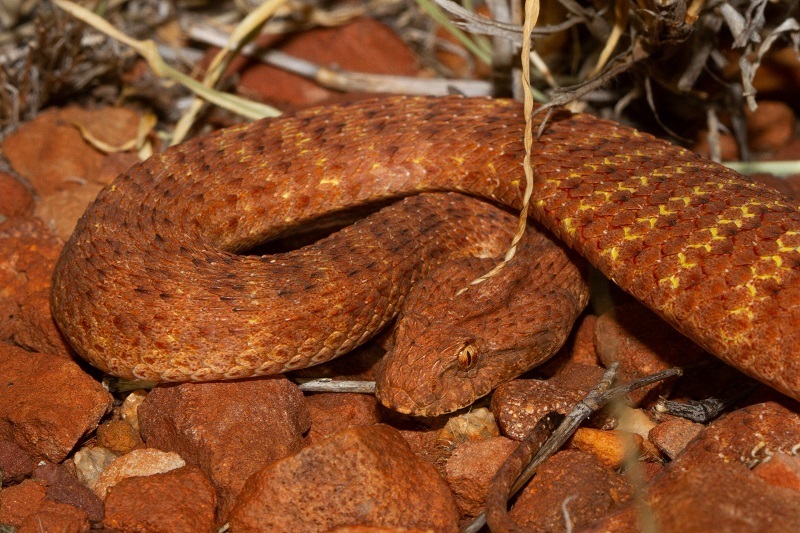
Acanthophis pyrrhusDesert death adders are stout, ambush predators superbly camouflaged against the red sands and spinifex tussocks of arid inland Australia. They conceal their bodies beneath loose soil or leaf litter, leaving only the head and a slender, worm-like tail tip exposed to lure small reptiles and mammals within striking distance. Unlike many active elapids that flee when approached, they rely strictly on crypsis and can unleash one of the fastest strikes in the reptile world.
VenomousNocturnalCamouflaged
—observations
—countries
—peak records
Least ConcernConservation statusIUCN Red List categoriesLCNTVUENCREWEXLeast ConcernRed List categories, explained →
Diet & preyGeckos, Skinks, Small rodents
Predators
- Birds of prey
- Monitor lizards
- Dingoes
ThreatsHabitat alteration and ingestion of invasive cane toads
HabitatsArid sandy deserts, stony ranges, and spinifex grasslands
Life span10–15 years
Classification
- FamilyElapidae
- SpeciesAcanthophis pyrrhus
Range data is not available yet.
Interaction riskVery high
- Low
- Moderate
- High
- Very high
- Why interaction risk is very high
- Possesses potent neurotoxic venom; observe strictly from a safe distance and never attempt to handle.
- Why it is dangerous
- Produces potent postsynaptic neurotoxins that cause rapid flaccid paralysis and potential respiratory failure without urgent antivenom therapy.
- How to recognize a risky encounter
- Look for a stocky, brick-red to yellow body with pale crossbands, a broad triangular head, and a thin, yellowish tail tip.
- What to do
- Freeze immediately upon spotting one, step backwards slowly, and never prod sandy leaf litter or spinifex clumps with bare hands.
Responsible observation
- Watch your step: Use a strong flashlight when walking through spinifex or dunes at night.
- Maintain distance: Give any discovered individual several meters of space, as its strike is exceptionally rapid.
- Leave handling to experts: Never attempt to poke, move, or capture this highly venomous snake.
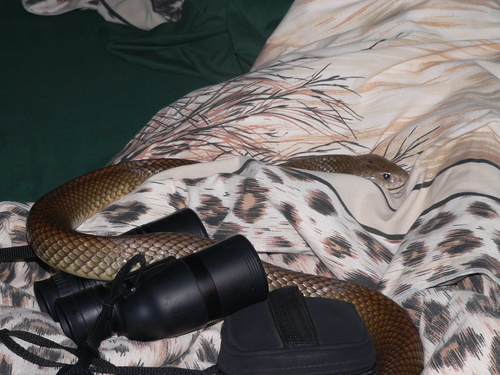
Competitor (c) Belinda Forbes, some rights reserved (CC BY) · cc-by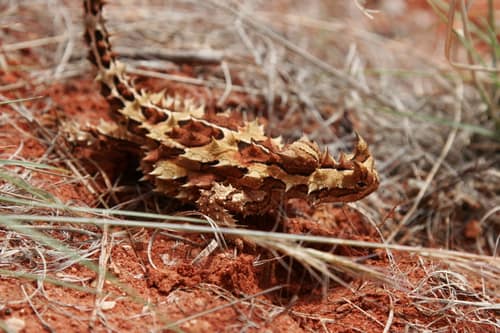
Neighbor (c) Steve Shattuck, some rights reserved (CC BY) · cc-by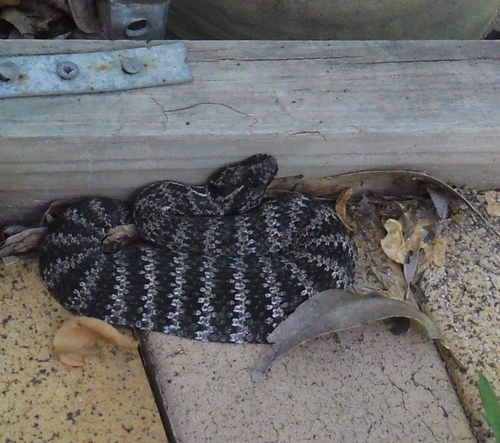
Close Relative no rights reserved · cc0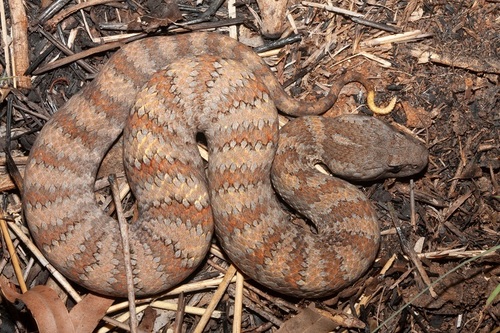
Close Relative (c) dhfischer, some rights reserved (CC BY), uploaded by dhfischer · cc-by
Help improve the field guideSomething wrong?
Checking your Fauna account…Report a name, category, or profile issue for review.