
Reptile · GBIF taxon 2447558
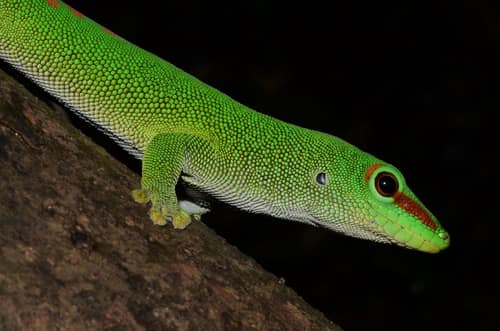
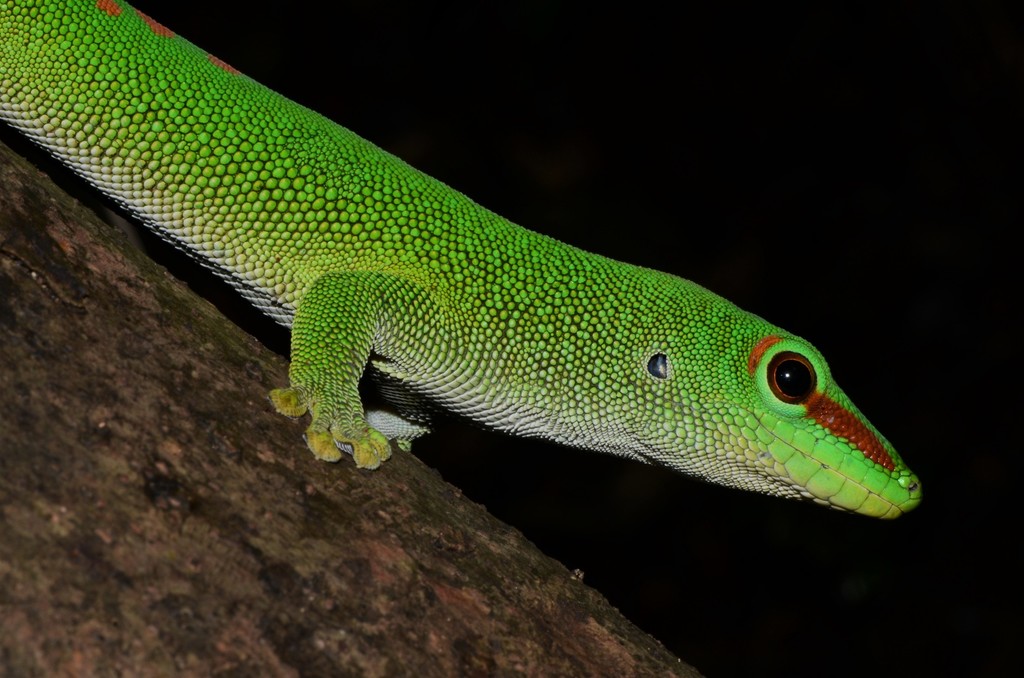
Madagascar Giant Day Gecko
Phelsuma grandisAlso known as Giant Day Gecko, Crimson Day Gecko
Madagascar giant day geckos patrol sunlit tree canopies and building walls with agile precision, gripping smooth leaves using microscopic adhesive toe pads called lamellae. Unlike most geckos, they are strictly diurnal and rely on keen vision under bright sunlight to hunt insects and lap sweet nectar. Territorial males assert dominance through rapid head-bobbing displays and vocal croaks, defending prime feeding and basking branches from rivals.
DiurnalArborealColorful
—observations
—countries
—peak records
Least ConcernConservation statusIUCN Red List categoriesLCNTVUENCREWEXLeast ConcernRed List categories, explained →
Diet & prey
- Moths and flies
- Beetles
- Floral nectar
Predators
- Birds of prey
- Snakes
- Feral domestic cats
ThreatsHabitat fragmentation, local over-collection for the exotic pet trade, and severe tropical storms
HabitatsTropical rainforests, humid coastal woodlands, banana groves, and suburban gardens
Life span8–15 years
Size / weightNot available
Classification
- FamilyGekkonidae
- GenusPhelsuma
- SpeciesPhelsuma grandis
Range data is not available yet.
Interaction riskLow
- Low
- Moderate
- High
- Very high
- Why interaction risk is low
- Harmless to humans; safe to observe from a normal distance.
Responsible observation
- Observation Distance: Watch quietly from a meter or two away while they bask on broad palm leaves or fence posts.
- Do Not Handle: Avoid grabbing them, as their delicate skin tears easily as an anti-predator defense mechanism.
- Pest Control Value: Allow them to forage undisturbed around exterior house walls where they eat roaches and flies.
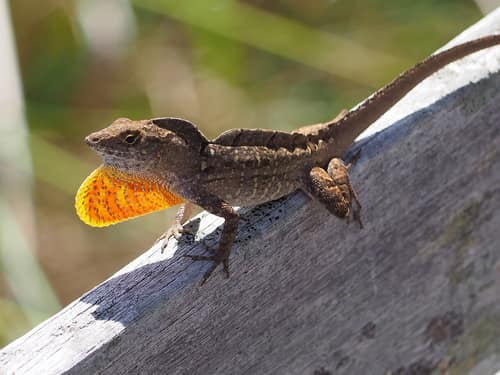
Competitor Nosferattus / CC0 · cc0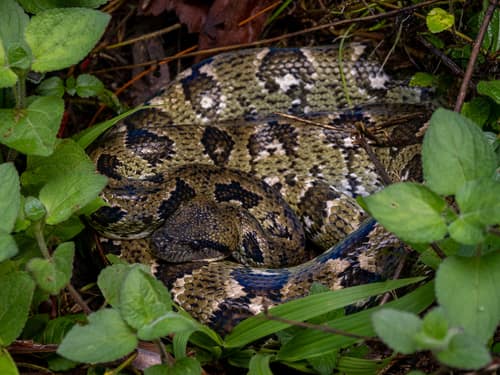
Predator (c) Piotr Lukasik, some rights reserved (CC BY), uploaded by Piotr Lukasik · cc-by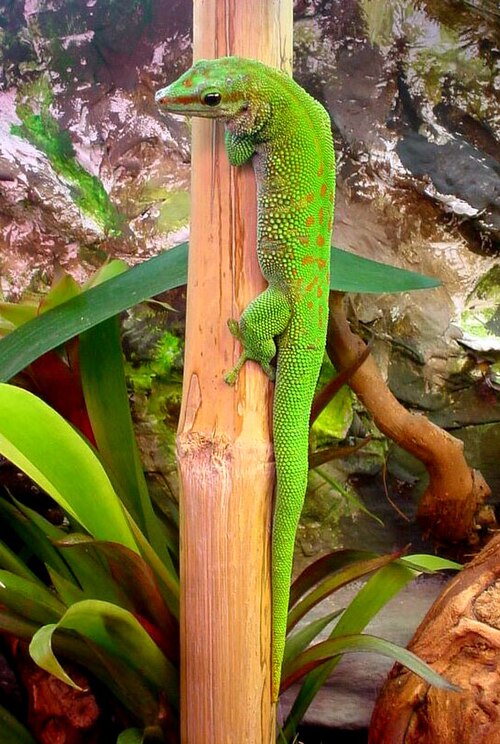
Close Relative Manuel Werner, Nürtingen, Germany / CC BY-SA 2.0 · cc-by-sa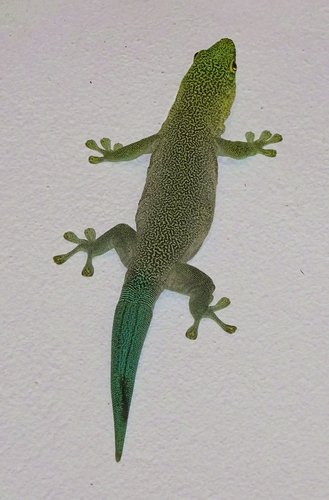
Close Relative (c) Margaret Stevens, some rights reserved (CC BY) · cc-by
Keep collecting in Fauna
Found in Collections
Species set Pro
Emerald Kingdom
Madagascar Giant Day Gecko is found in this collection. Identify it in Fauna to fill this slot and continue your progress.
Unlock to track progress
Help improve the field guideSomething wrong?
Checking your Fauna account…Report a name, category, or profile issue for review.