
Reptile · GBIF taxon 2445758
Giant Leaf-tailed Gecko
Uroplatus fimbriatusAlso known as Common Flat-Tail Gecko, Madagascar Leaf-Tailed Gecko, Fringed Leaf-Tailed Gecko
Giant leaf-tailed geckos spend their days motionless on tree trunks, resting head-down while dermal flaps along their body flatten to erase any shadow on the bark. When disturbed at night, they open their bright yellow mouths wide and utter a startling, high-pitched scream to deter predators. Females lay pairs of spherical, hard-shelled eggs in leafy litter on the rainforest floor.
NocturnalCamouflagedArboreal
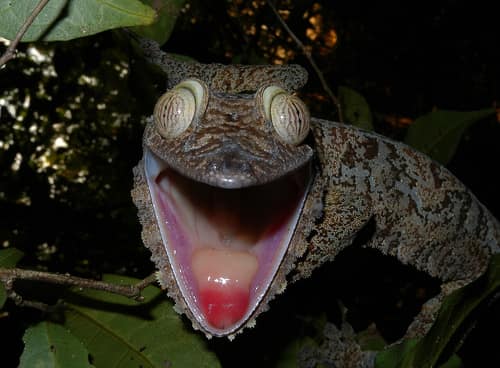
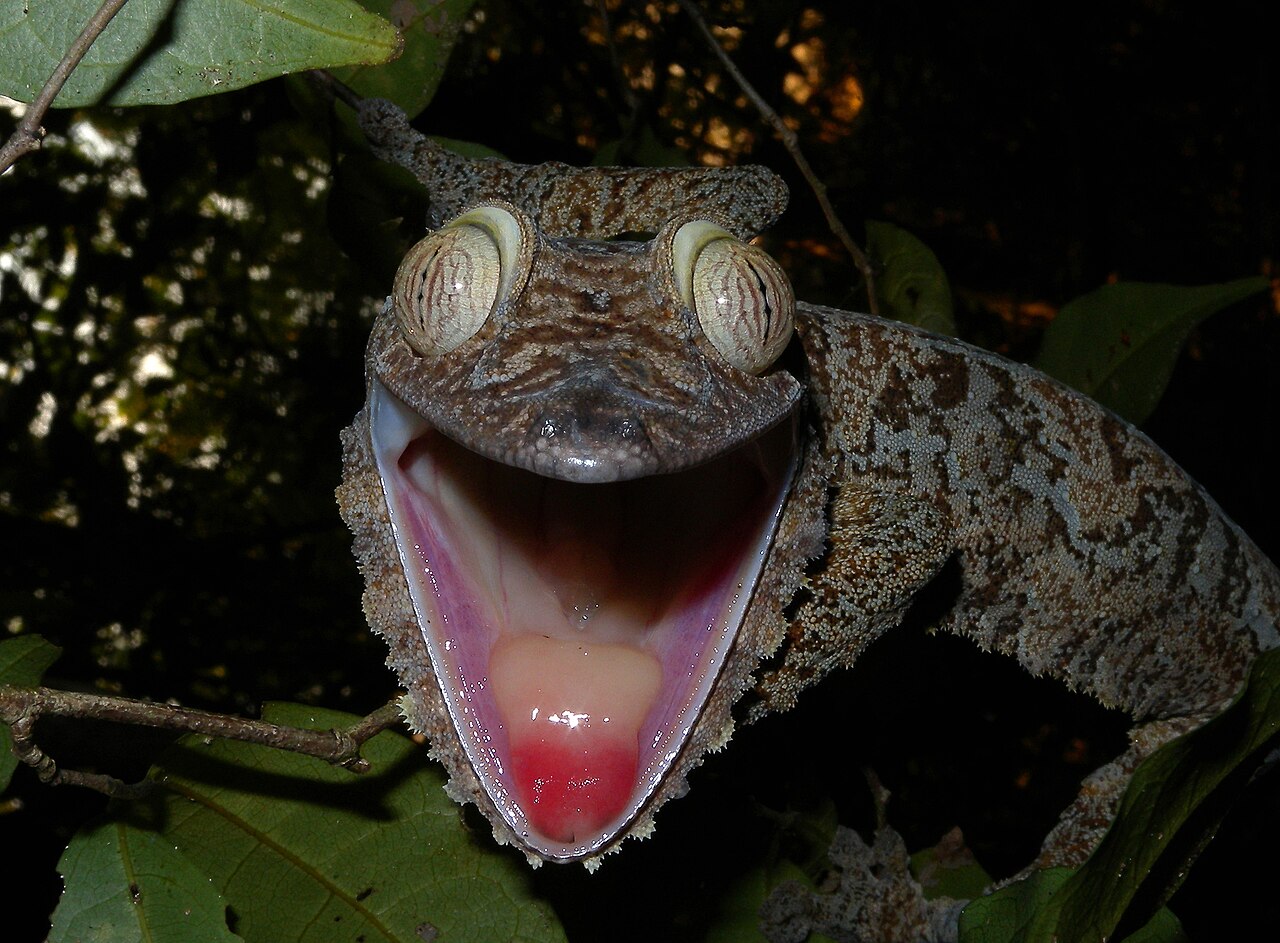
Licensed referenceFrank Vassen / CC BY 2.0 · cc-by
—observations
—countries
—peak records
Least ConcernConservation statusIUCN Red List categoriesLCNTVUENCREWEXLeast ConcernRed List categories, explained →
Diet & prey
- Crickets
- Moths
- Land snails
Predators
- Tree snakes
- Owls
- Large arboreal mammals
ThreatsDeforestation, habitat degradation, and illegal collection for the pet trade
HabitatsLowland and mid-elevation tropical rainforests
Life span10–15 years
Size / weightNot available
Classification
- FamilyGekkonidae
- SpeciesUroplatus fimbriatus
Range data is not available yet.
Interaction riskLow
- Low
- Moderate
- High
- Very high
- Why interaction risk is low
- Capable of a painful defensive bite if cornered; observe quietly from a safe distance.
- Why it is dangerous
- Possesses strong jaws and sharp teeth capable of breaking human skin during a defensive strike.
- How to recognize a risky encounter
- Recognized by its broad flat tail, mossy skin patterning, and wide mouth with a bright yellow lining.
- What to do
- Avoid touching or grabbing the gecko, as cornering it triggers a gaping vocal threat display and bite.
- What to notice
- Identified by a moss-like bark pattern and broad, notched tail flattened against rainforest trunks.
- Support conservation
- Keep light beams brief when observing at night and leave the surrounding vegetation undisturbed.
Responsible observation
- Night spotting: Search vertical tree trunks in primary rainforest using a soft flashlight after dark.
- Observe camouflage: Keep a respectful distance to watch how the skin fringe blends with lichens.
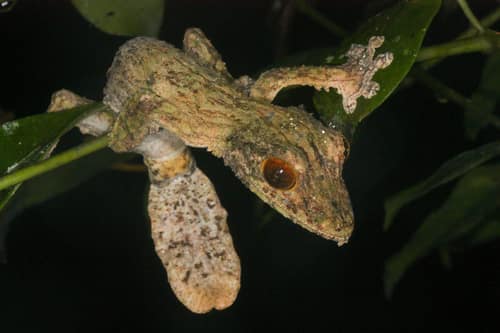
Close Relative no rights reserved, uploaded by Scott Loarie · cc0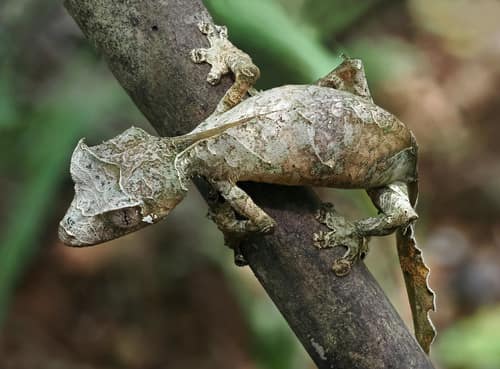
Close Relative "Satanic leaf-tailed gecko (Uroplatus phantasticus), Maromizaha reserve, Madagascar" by Frank.Vassen is licensed under CC BY 2.0. To view a copy of this license, visit https://creativecommons.org/licenses/by/2.0/. · cc-by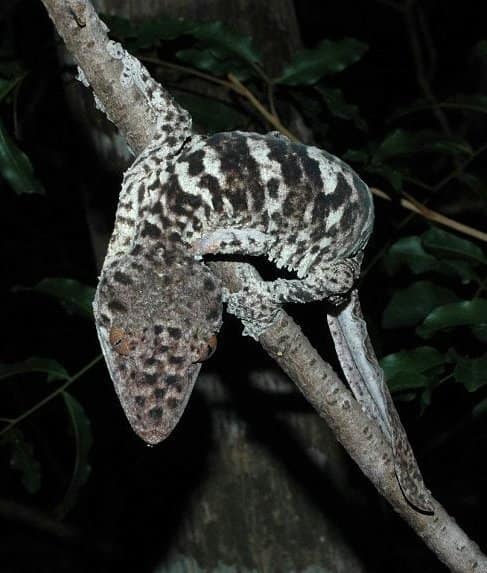
Close Relative (c) Nick Block, some rights reserved (CC BY), uploaded by Nick Block · cc-by
Help improve the field guideSomething wrong?
Checking your Fauna account…Report a name, category, or profile issue for review.