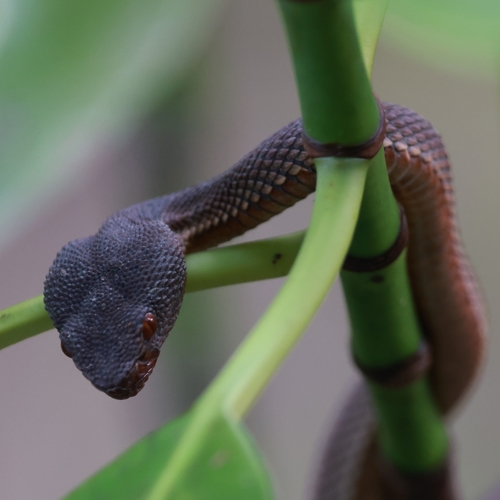
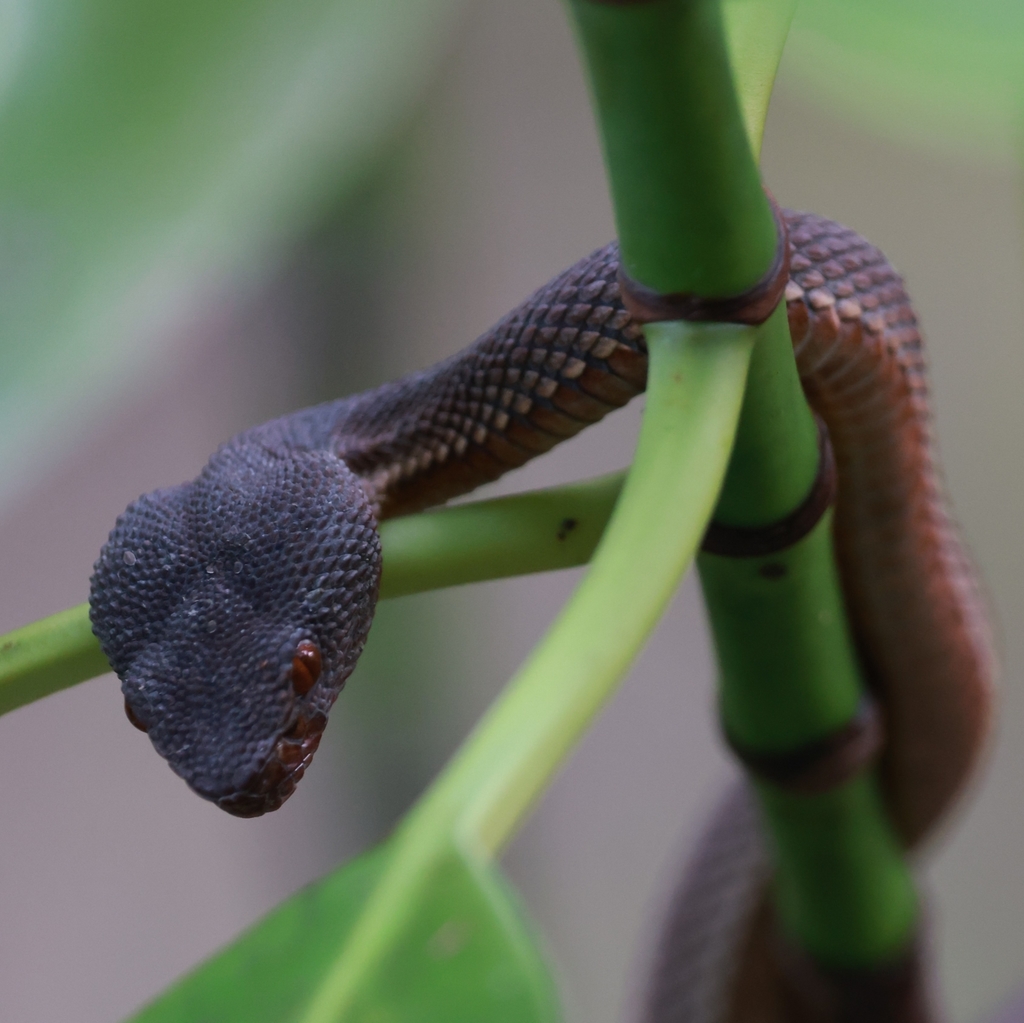
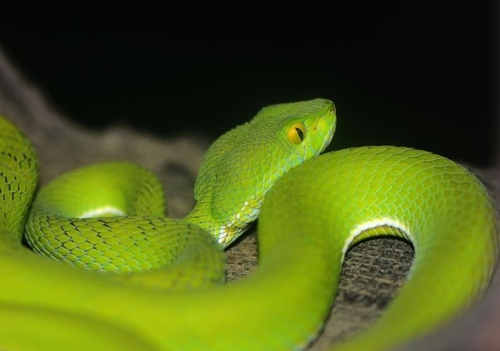
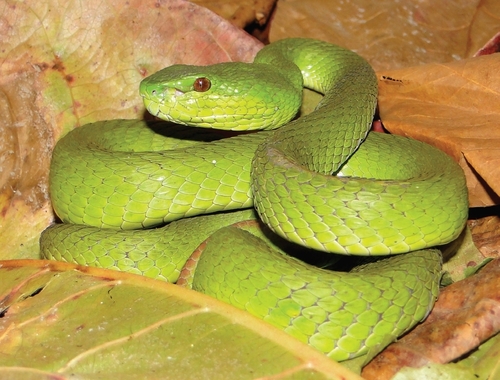
Also known as Mangrove Viper, Shore Pit Viper, Purple-Spotted Pit Viper
Mangrove pit vipers are highly adaptable arboreal snakes heavily associated with coastal mangrove forests and tidal swamps across South and Southeast Asia. Highly variable in color, individuals range from uniform dark purple-brown to olive green or yellow-gold, featuring distinctive heat-sensing pit organs between their eyes and nostrils. They spend daytime hours coiled tightly in mangrove branches or root networks before descending to ambush prey at night.
Possesses potent hemotoxic venom causing severe pain and swelling; maintain a safe distance.
Why it is dangerous
Delivers hemotoxic venom that causes severe local tissue swelling, intense pain, hemorrhage, and potential tissue necrosis requiring urgent antivenom treatment.
How to recognize a risky encounter
Recognizable by its broad triangular head, heat-sensing facial pits, keeled scales, and preference for low branches in mangrove swamps.
What to do
Never attempt to handle or poke this snake; step away slowly if spotted and maintain at least two body lengths of clearance.
Responsible observation
Safe Distance: Maintain a clearance of at least two meters when observing snakes in low mangrove branches.
Watch Overhead: Scan low-hanging branches carefully before walking under dense mangrove canopy.
Night Spotting: Use a bright flashlight to reveal coiled body shapes after dark without disturbing them.