
Reptile · GBIF taxon 2444376
Speckled Rattlesnake
Crotalus mitchelliiAlso known as Mitchell's Rattlesnake, White Rattlesnake, Granite Rattlesnake
Speckled rattlesnakes excel at camouflage, matching the exact coloration and texture of the granite, basalt, or limestone rocks in their rugged desert habitats. They rely on specialized heat-sensing pit organs located between their nostrils and eyes to locate warm-blooded prey in total darkness. During hot desert summers, these pit vipers remain inactive underground or in deep rock crevices by day, emerging at dusk to stalk rocky ledges and dry wash beds.
VenomousReptileDesert

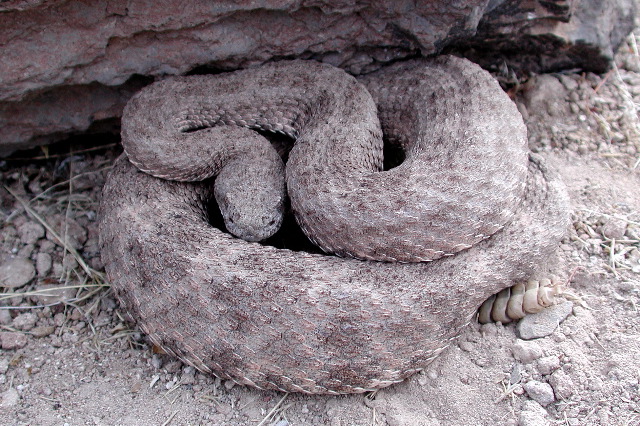
Licensed referenceMarshal Hedin / CC BY-SA 2.5 · cc-by-sa
—observations
—countries
—peak records
Least ConcernConservation statusIUCN Red List categoriesLCNTVUENCREWEXLeast ConcernRed List categories, explained →
Diet & prey
- Kangaroo rats
- Mice
- Lizards
Predators
- Hawks
- Roadrunners
- Kingsnakes
ThreatsHabitat fragmentation, road mortality, intentional human persecution
HabitatsArid deserts, rocky canyon slopes, granite outcrops
Life span15–20 years
Size / weightNot available
Classification
- FamilyViperidae
- SpeciesCrotalus mitchellii
Range data is not available yet.
Interaction riskVery high
- Low
- Moderate
- High
- Very high
- Why interaction risk is very high
- Venomous pit viper capable of delivering a dangerous bite; maintain a distance of several meters.
- Why it is dangerous
- Venom contains tissue-destroying enzymes and toxins that cause extreme pain, severe local swelling, and tissue necrosis.
- How to recognize a risky encounter
- Look for a mottled white, grey, or tan body flecked with fine dark speckles that mimic local granite, plus a rattle.
- What to do
- Freeze if a rattle sounds nearby, locate the snake visually, and step back slowly to give it plenty of space.
Responsible observation
- Safe Distance: Maintain at least two body lengths of distance when observing or photographing.
- Attentiveness: Watch hand and foot placement around rock ledges and crevice openings.
- Footwear: Wear high-top leather boots and thick pants when hiking through rocky desert canyons.
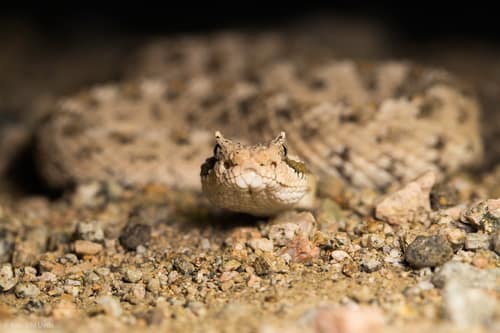
Competitor (c) Ken-ichi Ueda, some rights reserved (CC BY) · cc-by Image unavailable
Predator Close Relative 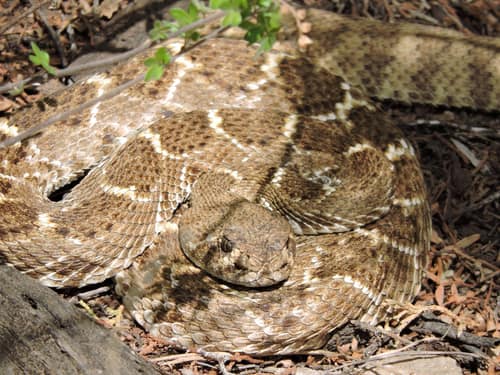
Close Relative (c) Sam Kieschnick, some rights reserved (CC BY), uploaded by Sam Kieschnick · cc-by
Help improve the field guideSomething wrong?
Checking your Fauna account…Report a name, category, or profile issue for review.