
Reptile · GBIF taxon 2444339
Asp Viper
Vipera aspisAlso known as Asp, European Asp, Aspic Viper
Asp vipers spend their mornings basking on sun-warmed rocks and stone walls before hunting small mammals and lizards in surrounding brush. Females reproduce viviparously, giving birth to live young every two to three years depending on food availability. During cold winter months, these thick-bodied vipers retreat into underground crevices and rodent burrows for hibernation.
VenomousBaskingViviparous
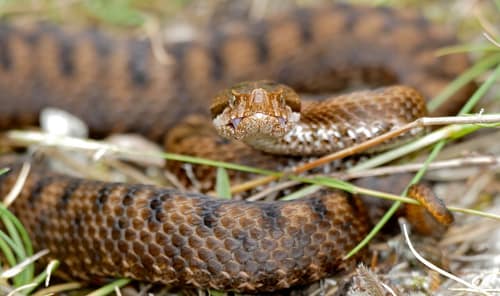
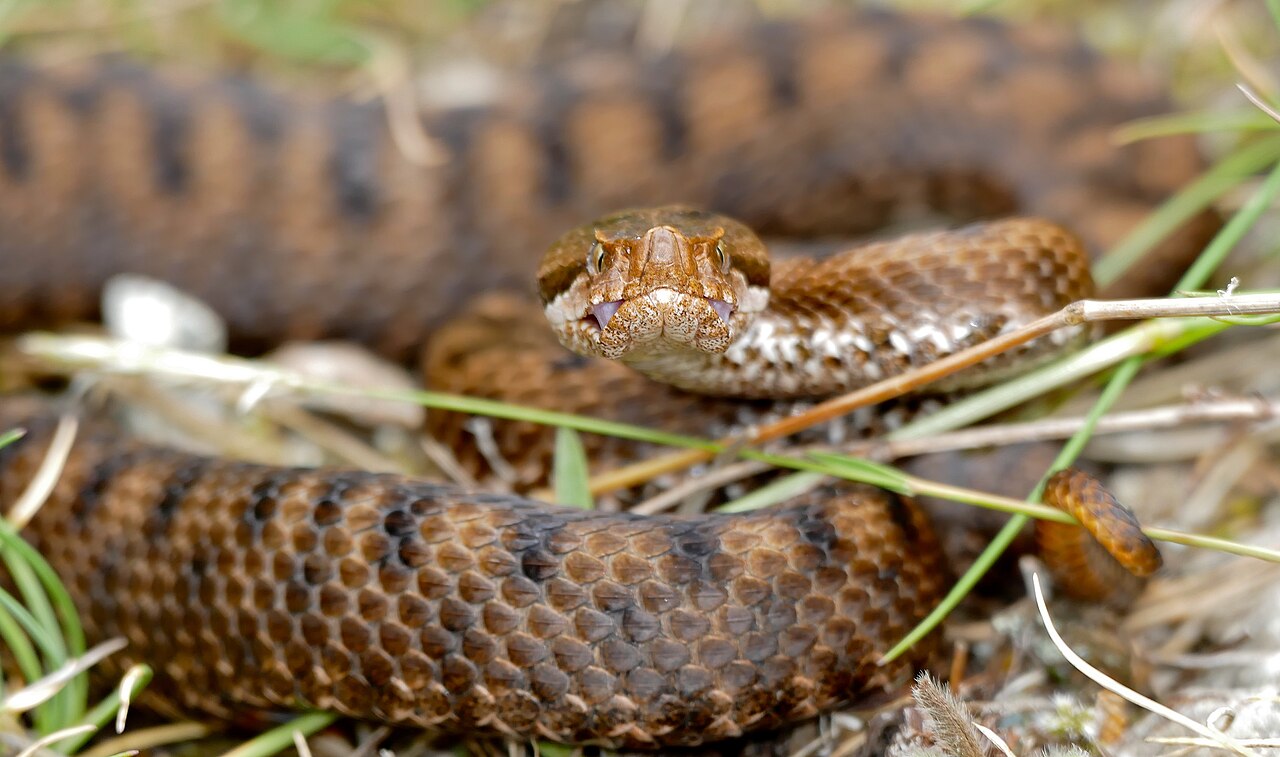
—observations
—countries
—peak records
VulnerableConservation statusIUCN Red List categoriesLCNTVUENCREWEXVulnerableRed List categories, explained →
Diet & prey
- Field Voles
- Wall Lizards
- Mice
Predators
- Short-Toed Snake Eagle
- Wild Boar
- Hedgehog
ThreatsHabitat loss, agricultural expansion, road mortality, human persecution
HabitatsSunny hillsides, rocky slopes, scrubland, forest edges
Life span15–20 years
Size / weightNot available
Classification
- FamilyViperidae
- SpeciesVipera aspis
Range data is not available yet.
Interaction riskVery high
- Low
- Moderate
- High
- Very high
- Why interaction risk is very high
- Venomous bite requires urgent medical attention; observe strictly from a safe distance.
- Why it is dangerous
- Cytotoxic and neurotoxic venom causes severe pain, rapid swelling, tissue breakdown, and potential cardiac complications if untreated.
- How to recognize a risky encounter
- Recognized by an upturned snout tip, broad triangular head, vertical pupils, and a dark zigzag or banded dorsal pattern.
- What to do
- Freeze upon seeing the snake, then back away slowly while keeping at least two meters of distance.
- What to notice
- Look for a stocky viper resting on sunlit stone walls, dry scree, or sunny woodland paths in southwestern Europe.
- Support conservation
- Keep a respectful distance, refrain from disturbing basking sites, and never corner or attempt to move the snake.
Responsible observation
- Observation Distance: Keep at least two meters of space from any snake found basking or sheltering.
- Proper Footwear: Wear sturdy boots and long trousers when hiking through dense brush or rocky slopes.
- Basking Behavior: Watch quiet stone walls and south-facing ledges early in the morning.
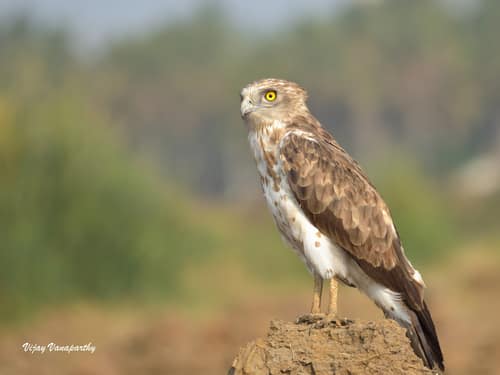
Predator (c) Vijay Vanaparthy, some rights reserved (CC BY), uploaded by Vijay Vanaparthy · cc-by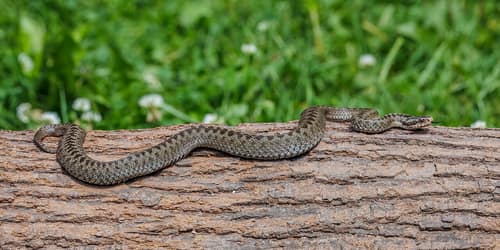
Close Relative Charles J. Sharp / CC BY-SA 4.0 · cc-by-sa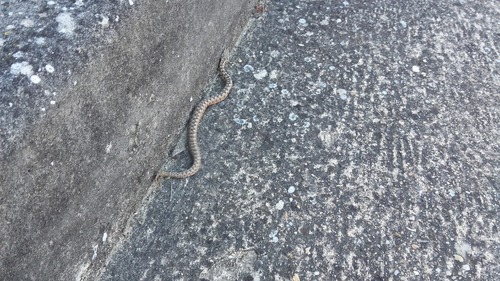
Close Relative (c) Cenaida, some rights reserved (CC BY) · cc-by
Help improve the field guideSomething wrong?
Checking your Fauna account…Report a name, category, or profile issue for review.