
Reptile · GBIF taxon 2444308
Nose-horned Viper
Vipera ammodytesAlso known as Horned Viper, Long-nosed Viper
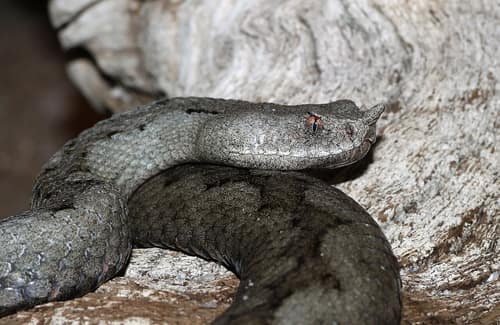
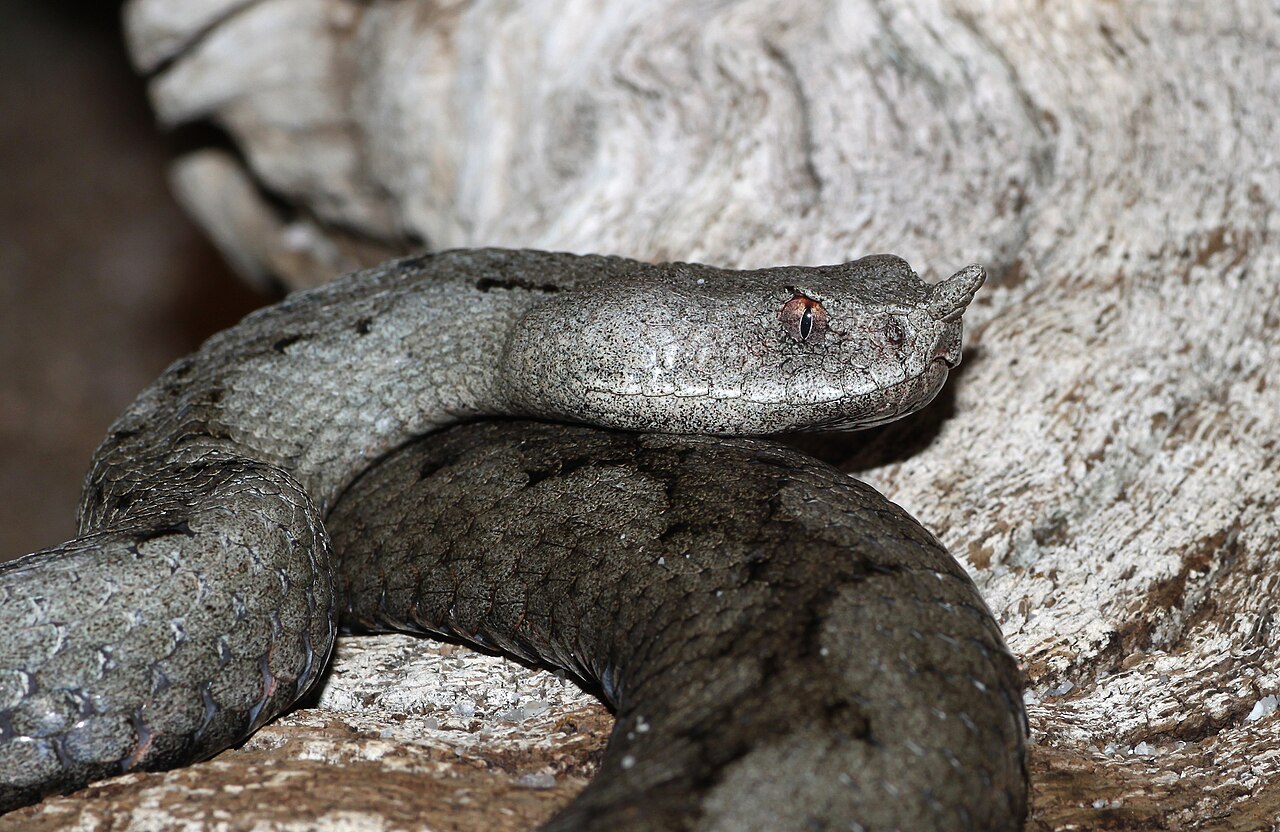
The Nose-horned Viper is a stout venomous snake with a dark dorsal zigzag and a soft upright scale-covered projection on the snout. It basks around rocky slopes and stone walls, relying on camouflage before striking small vertebrate prey.
venomous vipersnout hornrocky-slope predator
—observations
—countries
—peak records
Least ConcernConservation statusIUCN Red List categoriesLCNTVUENCREWEXLeast ConcernRed List categories, explained →
Diet & prey
- mice
- lizards
- small birds
Predators
- short-toed snake eagles
- mongooses
- wild boar
ThreatsPersecution, road mortality, habitat loss, quarrying, fires, and illegal collection
HabitatsRocky slopes, scrub, dry woodland, stone walls, grassland, scree, and forest edges
Life spanOften 15 to 20 years
Size / weightNot available
Classification
- FamilyViperidae
- SpeciesVipera ammodytes
Range data is not available yet.
Interaction riskVery high
- Low
- Moderate
- High
- Very high
- Why interaction risk is very high
- A bite can cause severe systemic illness; keep far away and obtain emergency medical treatment immediately.
- Why it is dangerous
- Long fangs deliver potent venom that can cause severe pain, swelling, tissue injury, bleeding, and systemic illness.
- How to recognize a risky encounter
- Confirm only from a safe distance: a stout viper with a scale-covered snout horn and dark dorsal zigzag.
- What to do
- Never touch, move, trap, or corner it; back away slowly and seek immediate medical care after a bite.
- What to notice
- Confirm the distinctive snout horn and continuous dorsal zigzag from well beyond striking distance.
- Support conservation
- Leave the snake undisturbed, keep pets close, and avoid publishing precise den or basking locations.
Responsible observation
- Distance: Remain several meters away and never reach toward rocky crevices.
- Identify: Use the snout horn and dorsal zigzag only from a safe distance.
- Emergency: After a bite, limit movement and contact emergency services immediately.
Help improve the field guideSomething wrong?
Checking your Fauna account…Report a name, category, or profile issue for review.