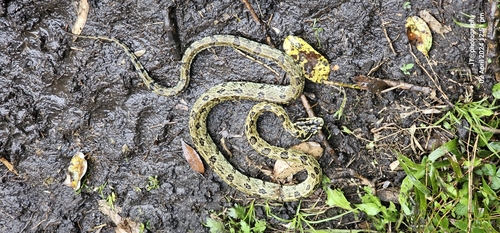
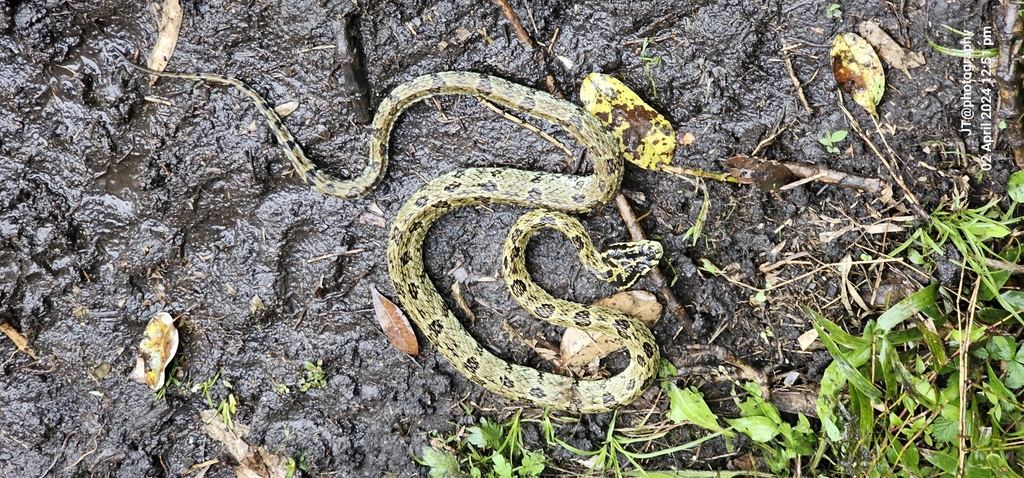
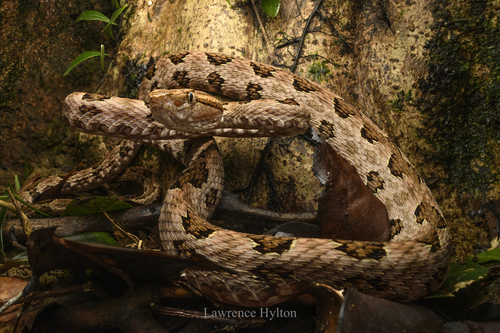
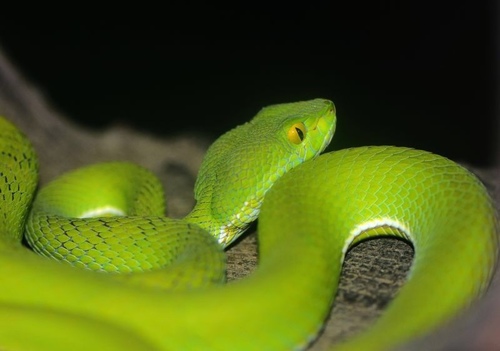
Also known as Yellow-speckled Pit Viper, Oriental Pit Viper
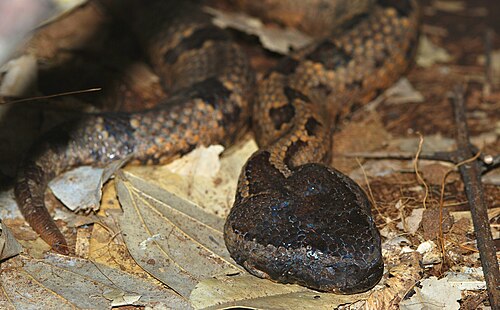
Jerdon's pitvipers are nocturnal montane predators known for their intricate geometric markings, which break up their outline against mossy rocks and forest leaf litter. Using sensitive loreal heat pits situated between their eyes and nostrils, they detect minute temperature variations to strike warm-blooded prey in absolute darkness. By day, they remain coiled motionless beneath fallen logs or stone piles, relying on cryptic camouflage to avoid detection.
ThreatsHabitat loss from road development, agricultural expansion, and persecution by local residents.
HabitatsMontane forests, rocky stream valleys, bamboo thickets, and agricultural borders at high elevations.
Life span10–15 years
Classification
FamilyViperidae
SpeciesProtobothrops jerdonii
Range & activity
Range data is not available yet.
Safe observation
Interaction riskVery high
Low
Moderate
High
Very high
Why interaction risk is very high
Possesses medically significant hemotoxic venom; keep a safe distance and do not handle.
Why it is dangerous
Bites deliver powerful hemotoxic and tissue-destructive venom that causes severe pain, swelling, local necrosis, and systemic coagulation failure requiring antivenom therapy.
How to recognize a risky encounter
Look for a triangular head distinct from the neck, yellow-and-black speckled patterning, and deep sensory pits between the eyes and nostrils.
What to do
Maintain several meters of distance; if spotted, stop moving, allow the snake a clear escape route, and step away steadily.
Responsible observation
Footwear caution: Wear sturdy boots and look down carefully when walking through montane forest trails.
Nocturnal watching: Use a focused flashlight to scan stone walls and stream banks without approaching within strike range.
Safe perimeter: Never attempt to catch, corner, or prod a resting snake with sticks or walking poles.