
Reptile
Sumatran Pit Viper
Trimeresurus sumatranusAlso known as Sumatran Tree Viper
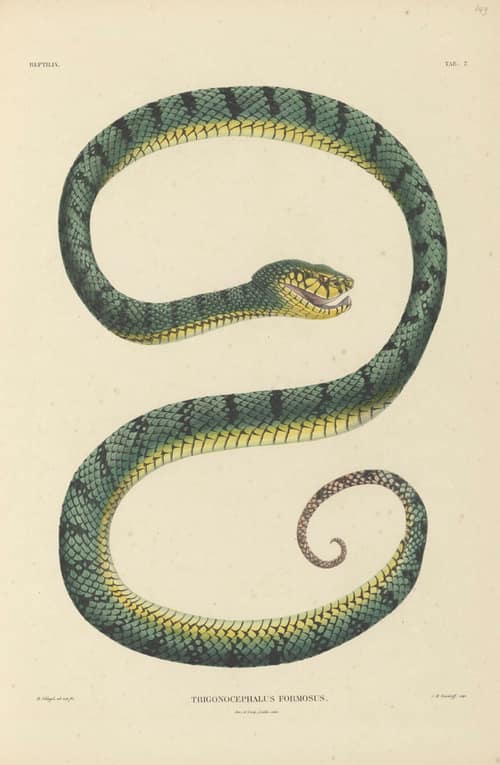
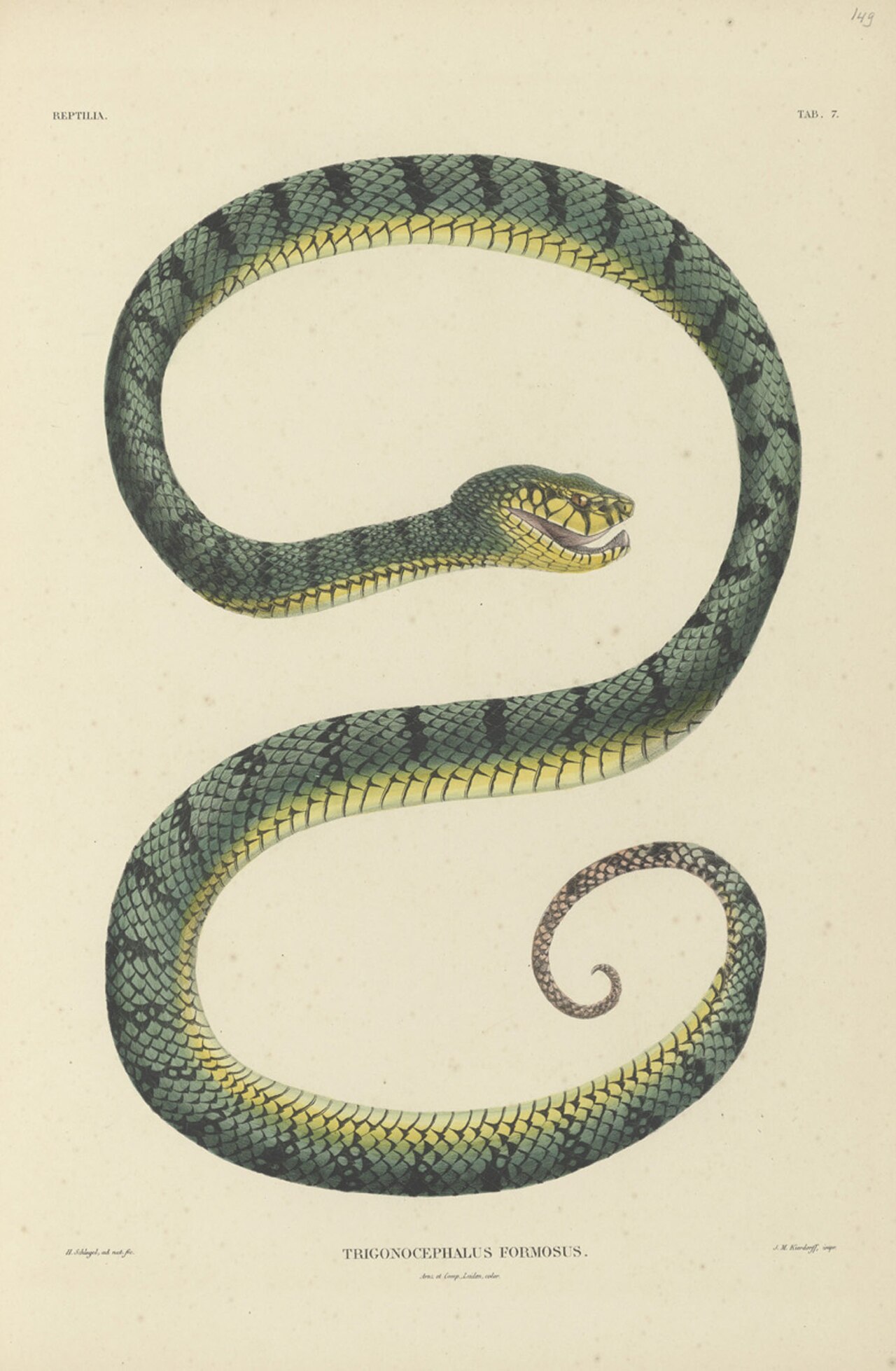
Sumatran pit vipers blend seamlessly into the tropical rainforest canopy, relying on their vibrant neon-green coloration and disruptive black bands to remain invisible to prey. These highly arboreal predators spend their days draped quietly over branches near forest streams, waiting to ambush passing lizards, frogs, or small rodents. When threatened, they vibrate their reddish tails and can strike with remarkable speed, utilizing heat-sensing pits to target warm-blooded intruders even in total darkness.
ArborealVenomousNocturnal
—observations
—countries
—peak records
Least ConcernConservation statusIUCN Red List categoriesLCNTVUENCREWEXLeast ConcernRed List categories, explained →
Diet & preyTree Frogs, Geckos, Forest Mice
Predators
- Birds of Prey
- Larger Snakes
- Civets
ThreatsHabitat loss due to deforestation and the illegal pet trade
HabitatsLowland tropical rainforests, swamps, and montane forests
Life span10 to 15 years
Classification
- FamilyViperidae
- SpeciesTrimeresurus sumatranus
Range data is not available yet.
Interaction riskVery high
- Low
- Moderate
- High
- Very high
- Why interaction risk is very high
- Possesses potent hemotoxic venom; maintain a safe distance and never attempt to handle.
- Why it is dangerous
- Possesses a potent hemotoxic venom that causes severe localized pain, swelling, tissue destruction, and potentially fatal systemic bleeding.
- How to recognize a risky encounter
- Look for a neon-green body with black vertical bands, a reddish tail tip, and a triangular head with heat-sensing pits.
- What to do
- Never attempt to touch, capture, or corner this snake; back away slowly and let it retreat on its own.
Responsible observation
- Watch the Canopy: Scan lower branches and foliage near forest streams where these snakes love to drape themselves.
- Keep Your Distance: Maintain a safety perimeter of at least two snake-lengths to avoid triggering a defensive strike.
- Use a Flashlight: Watch your step and hand placement during night walks, as these vipers become active after dark.
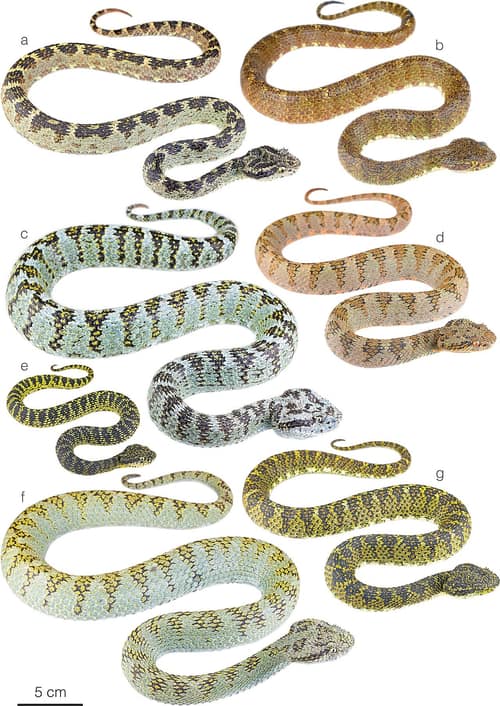
Distant Look-alike Alejandro Arteaga, R. Alexander Pyron, Abel Batista, Jose Vieira, Elson Meneses Pelayo, Eric N. Smith, César L. Barrio Amorós, Claudia Koch, Stefanie Agne, Jorge H. Valencia, Lucas Bustamante, Kyle J. Harris / CC BY 4.0 · cc-by Image unavailable
Close Relative 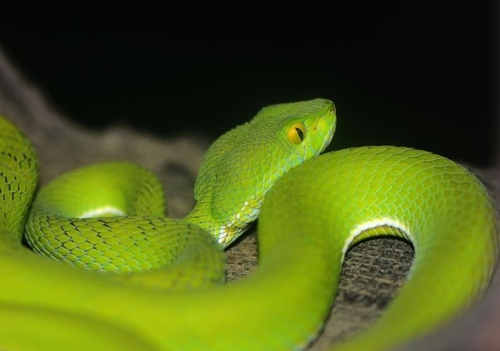
Close Relative (c) Zinogre, some rights reserved (CC BY-SA), uploaded by Zinogre · cc-by-sa
Help improve the field guideSomething wrong?
Checking your Fauna account…Report a name, category, or profile issue for review.