
Reptile
Wagler's Pit Viper
Tropidolaemus wagleriAlso known as Temple Viper, Temple Pit Viper
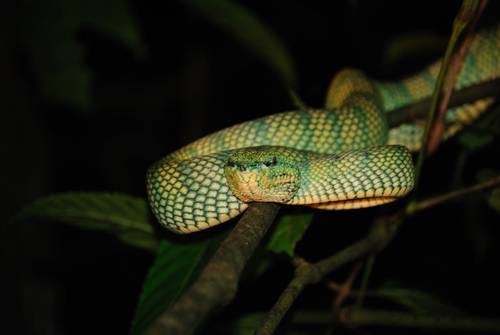
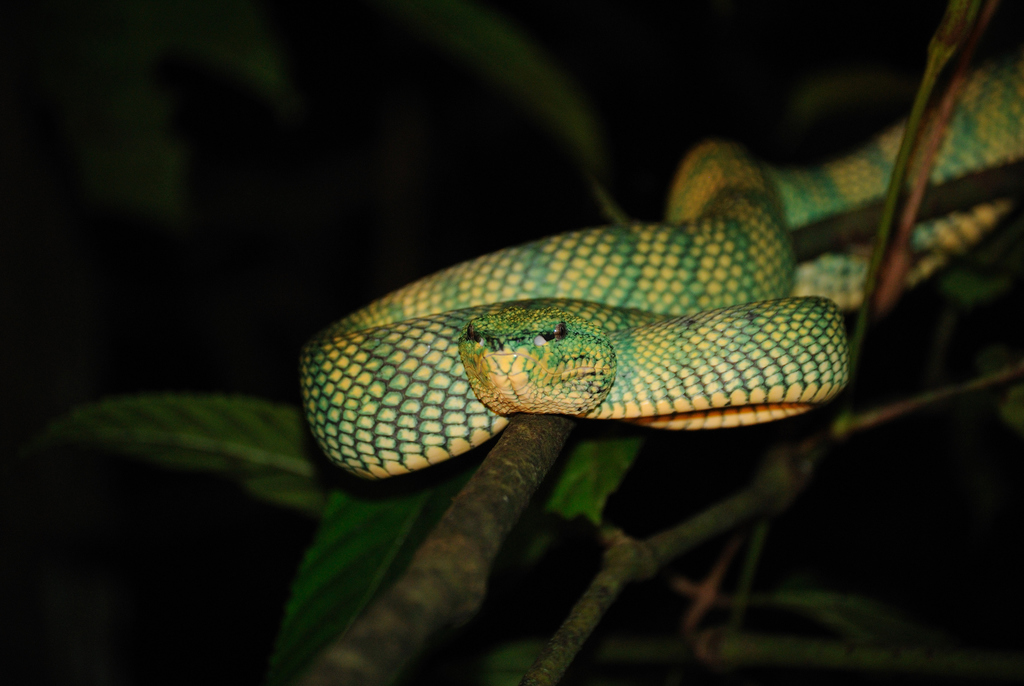
Wagler's pit vipers are sluggish arboreal ambush predators renowned for extreme sexual dimorphism, with massive patterned females dwarfing slender, vivid green males. They spend days motionless coiled around branches, using sensitive loreal pits to track the infrared signatures of passing birds and rodents. At dusk, they shift into hunting posture, relying on potent peptide-rich venom and hinged front fangs to immobilize their prey.
VenomousArborealNocturnal
—observations
—countries
—peak records
Least ConcernConservation statusIUCN Red List categoriesLCNTVUENCREWEXLeast ConcernRed List categories, explained →
Diet & preyRats and mice, Small songbirds, Geckos
Predators
- Birds of prey
- King cobras
- Monitor lizards
ThreatsHabitat loss from deforestation, urbanization, and collection for the exotic pet trade
HabitatsLowland tropical rainforests, swamp forests, and coastal mangroves
Life span10–15 years
Classification
- FamilyViperidae
- SpeciesTropidolaemus wagleri
Range data is not available yet.
Interaction riskVery high
- Low
- Moderate
- High
- Very high
- Why interaction risk is very high
- Possesses medically significant hemotoxic venom; admire from several paces away and never attempt to handle.
- Why it is dangerous
- Produces waglerin neurotoxins and procoagulant enzymes that disrupt neuromuscular transmission and cause severe localized tissue swelling and pain.
- How to recognize a risky encounter
- Look for a broad, triangular head covered in tiny keeled scales and a deep sensory pit between the nostril and eye.
- What to do
- Do not attempt to touch or relocate; back away slowly if encountered at close range along low foliage.
Responsible observation
- Viewing distance: Maintain a buffer of at least two meters when observing perched individuals.
- Look up: Watch tree branches and low foliage carefully along forest trails, where they sit motionless.
- No flashlight beams: Avoid shining high-powered lights directly into their eyes at night.
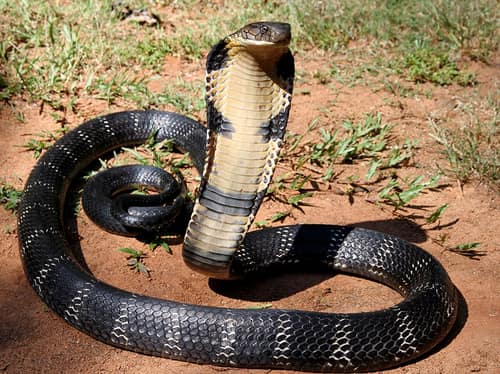
Predator Michael Allen Smith from Seattle, USA / CC BY-SA 2.0 · cc-by-sa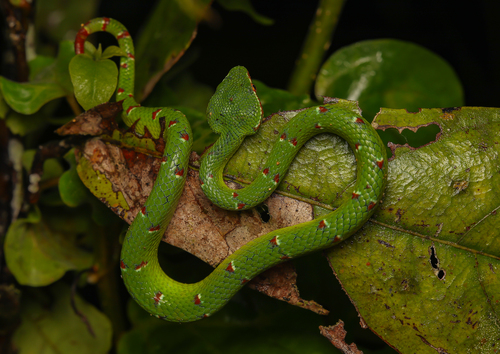
Close Relative (c) Ioannis Magouras, some rights reserved (CC BY) · cc-by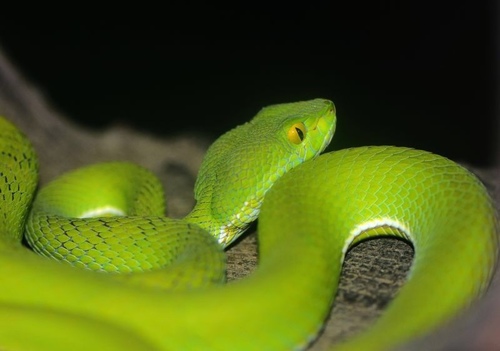
Same Family (c) Zinogre, some rights reserved (CC BY-SA), uploaded by Zinogre · cc-by-sa
Help improve the field guideSomething wrong?
Checking your Fauna account…Report a name, category, or profile issue for review.