
Reptile
Assam Roofed Turtle
Pangshura sylhetensisAlso known as Sylhet Roofed Turtle
Assam roofed turtles spend long hours basking on emergent logs and sandy riverbanks, retreating into deep pools at the slightest vibration or disturbance. Females lay small clutches of elongated eggs in sandy river shores between late autumn and early spring, timed around seasonal hydrological cycles. Heavy sand mining, dam construction, and incidental capture in fishing gear have severely fragmented their remaining riverine habitat across northeastern South Asia.
EndangeredFreshwaterReptile
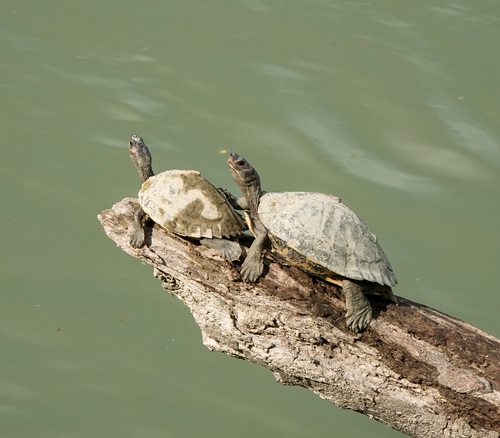
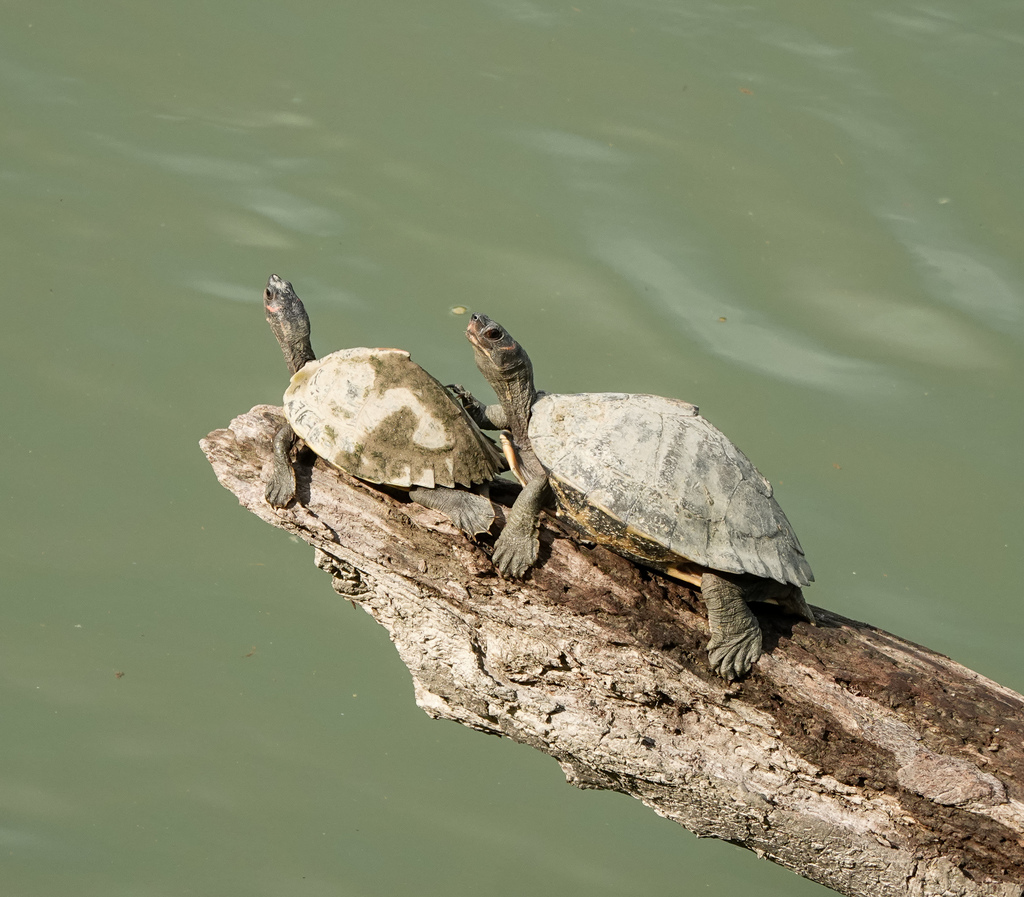
—observations
—countries
—peak records
Critically EndangeredConservation statusIUCN Red List categoriesLCNTVUENCREWEXCritically EndangeredRed List categories, explained →
Diet & preyAquatic macrophyte, Freshwater snail, Filamentous algae
Predators
- Fishing cat
- Mugger crocodile
- Monitor lizard
ThreatsHabitat loss from sand mining and dams, illegal wildlife trade, and accidental drowning in fishing nets
HabitatsFast-flowing upland streams, slow river channels, oxbow lakes, and associated marshlands
Life span25–40 years
Classification
- FamilyGeoemydidae
- SpeciesPangshura sylhetensis
Range data is not available yet.
Interaction riskLow
- Low
- Moderate
- High
- Very high
- Why interaction risk is low
- Safe to observe at a normal distance.
- What to notice
- Look for a high, strongly peaked carapace keel with a backward-pointing spike on the third vertebral scute.
- Support conservation
- Do not disturb basking or nesting turtles, avoid walking over river sandbars, and keep boat traffic slow.
Responsible observation
- Observation distance: Keep several meters away from basking logs to avoid startling them into the water.
- Nesting season: Avoid disturbing river sandbanks between November and March to protect delicate clutches.
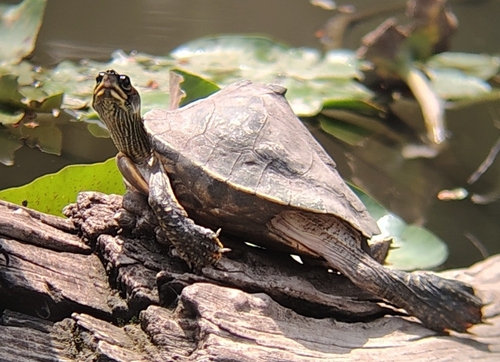
Close Relative (c) Aadi Kulkarni, some rights reserved (CC BY) · cc-by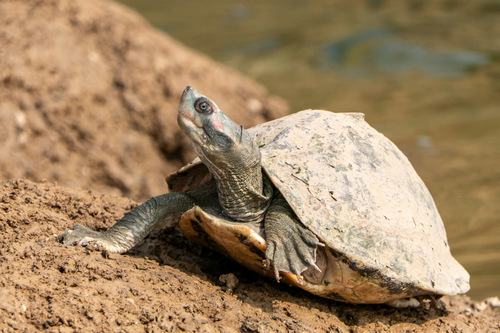
Close Relative (c) Mike Prince, some rights reserved (CC BY), uploaded by Mike Prince · cc-by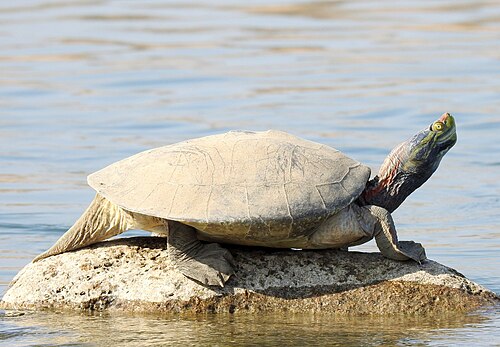
Same Family Hari arcw / CC BY-SA 4.0 · cc-by-sa
Help improve the field guideSomething wrong?
Checking your Fauna account…Report a name, category, or profile issue for review.