
Reptile
Ornate Box Turtle
Terrapene ornataAlso known as Western Box Turtle
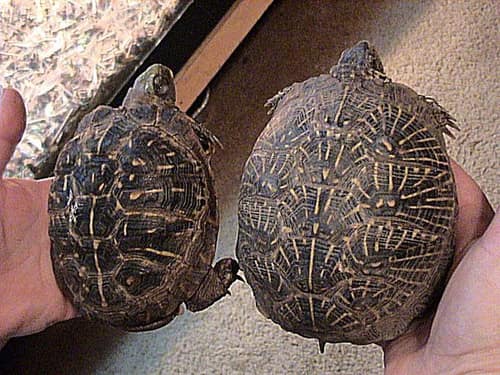
Ornate box turtles forage across North American prairies and open grasslands, tracking down beetles, caterpillars, and fallen fruits beneath sparse canopy cover. When threatened, a specialized hinge on their lower shell allows them to pull in their head, limbs, and tail, sealing themselves inside a tight bony box. Males exhibit striking reddish eyes and yellow-streaked shells, spending winters dormant in deep burrows dug below the frost line.
TerrestrialPrairieReptile

—observations
—countries
—peak records
Near ThreatenedConservation statusIUCN Red List categoriesLCNTVUENCREWEXNear ThreatenedRed List categories, explained →
Diet & preyGrasshoppers, Beetles, Earthworms
Predators
- Coyotes
- Raccoons
- Skunks
ThreatsHabitat loss, road mortality, agricultural machinery, illegal collection
HabitatsPrairies, open grasslands, pastures, sandy plains
Life span30–50 years
Classification
- FamilyEmydidae
- GenusTerrapene
- SpeciesTerrapene ornata
Range data is not available yet.
Interaction riskLow
- Low
- Moderate
- High
- Very high
- Why interaction risk is low
- Safe to observe at a normal distance.
- What to notice
- Recognized by a domed dark brown carapace radiating vibrant yellow lines, and a hinged plastron that closes completely.
- Support conservation
- Observe from a respectful distance without handling, and avoid disclosing exact location coordinates on public platforms.
Responsible observation
- Observation Etiquette: Maintain a gentle distance and avoid picking up wild turtles, which causes severe stress.
- Road Safety: If moving a turtle off a road, carry it carefully in the direction it was already heading.
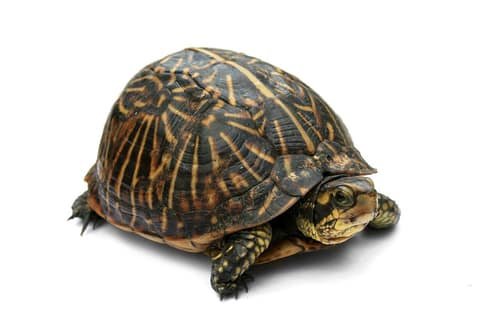
Close Relative “Jonathan Zander (Digon3)" / CC BY-SA 3.0 · cc-by-sa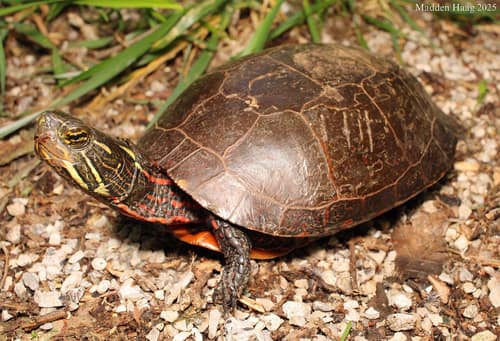
Family Relative MH Herpetology / CC BY-SA 4.0 · cc-by-sa
Help improve the field guideSomething wrong?
Checking your Fauna account…Report a name, category, or profile issue for review.