
Reptile · GBIF taxon 2442896
Northwestern Pond Turtle
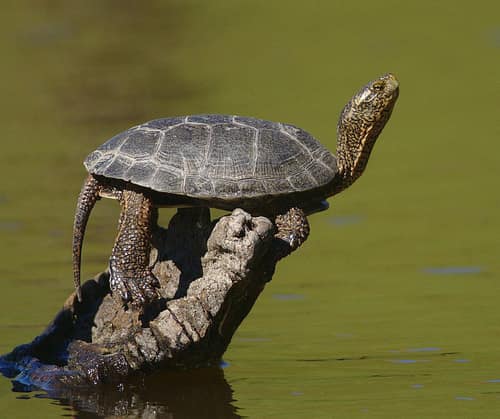
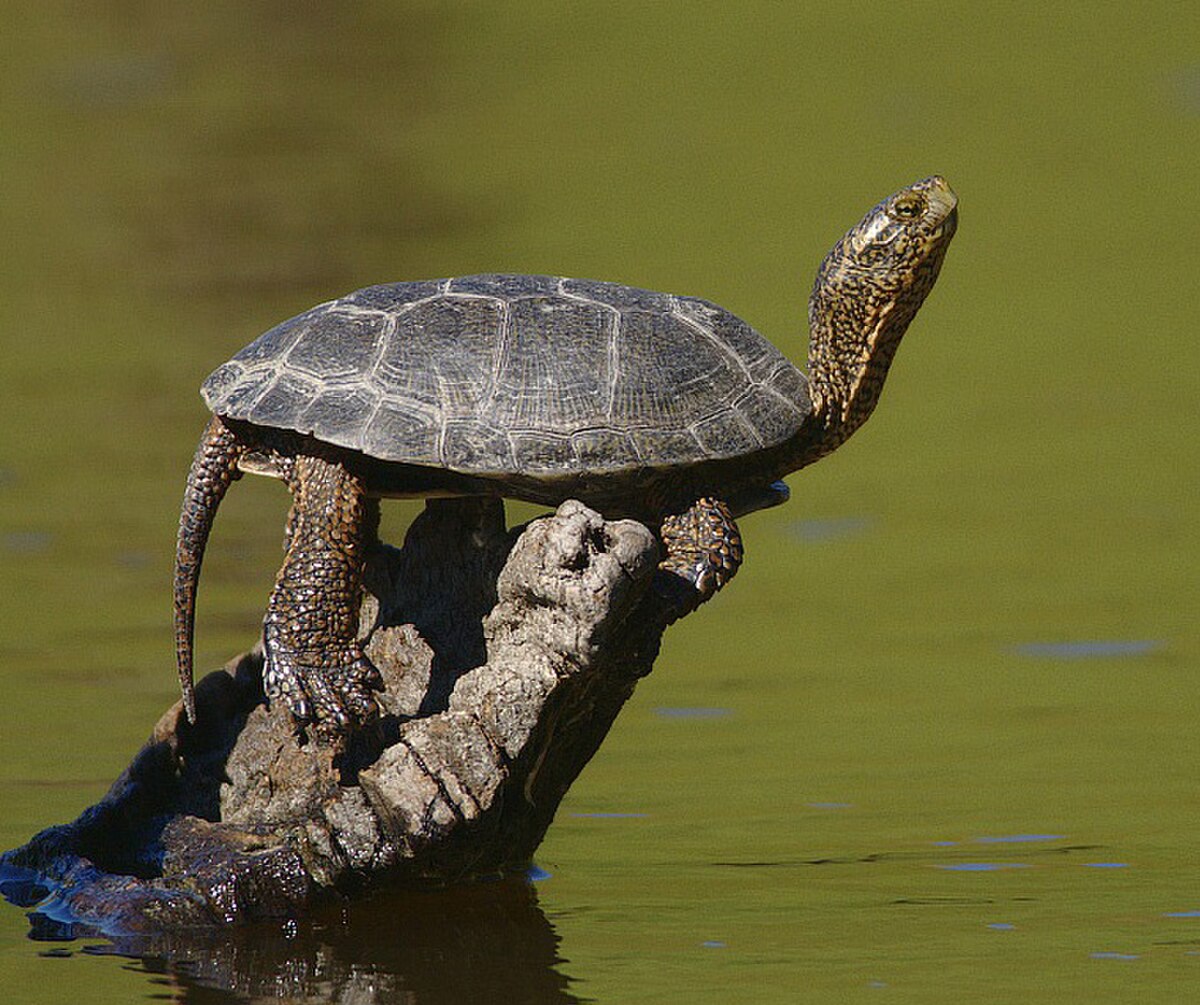
Actinemys marmorataThe Northwestern Pond Turtle is a small to medium freshwater turtle with a low dark shell and subtle mottling on its head and limbs. It basks near quiet water but also travels overland to nest, overwinter, or reach seasonal habitat.
Freshwater TurtleBasking ReptileWetland Traveler
—observations
—countries
—peak records
VulnerableConservation statusIUCN Red List categoriesLCNTVUENCREWEXVulnerableRed List categories, explained →
Diet & prey
- Aquatic insects
- Tadpoles
- Snails
Predators
- Raccoons
- Bullfrogs
- Large fish
ThreatsWetland loss, introduced predators, road mortality, drought, disease, and basking-site disturbance
HabitatsPonds, slow rivers, marshes, reservoirs, seasonal wetlands, and nearby uplands
Life spanLong-lived; adults may survive 40 years or more
Size / weightNot available
Classification
- FamilyEmydidae
- SpeciesActinemys marmorata
Range data is not available yet.
Interaction riskModerate
- Low
- Moderate
- High
- Very high
- Why interaction risk is moderate
- Wild turtles can carry Salmonella; do not handle, and wash immediately after accidental contact.
- Why it is dangerous
- Wild turtles can carry Salmonella bacteria without appearing ill and contaminate hands or nearby surfaces.
- How to recognize a risky encounter
- Recognize the low dark shell and fine yellowish mottling while observing from shore with binoculars.
- What to do
- Do not touch or relocate it; after accidental contact, wash hands thoroughly with soap and water.
- What to notice
- Look for a low oval dark shell and fine yellowish mottling on the head, neck, and limbs.
- Support conservation
- Observe from shore without touching or relocating turtles, and keep exact coordinates out of public reports.
Responsible observation
- Distance: Scan logs and banks through binoculars from a fixed position.
- Privacy: Withhold precise locations when submitting public observations.
- Habitat: Keep dogs leashed and out of occupied shallows.
Help improve the field guideSomething wrong?
Checking your Fauna account…Report a name, category, or profile issue for review.