
Reptile · GBIF taxon 2442680
Spiny Softshell
Apalone spiniferaAlso known as Spiny Softshell Turtle
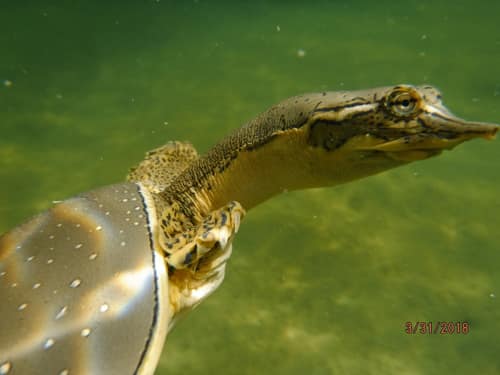
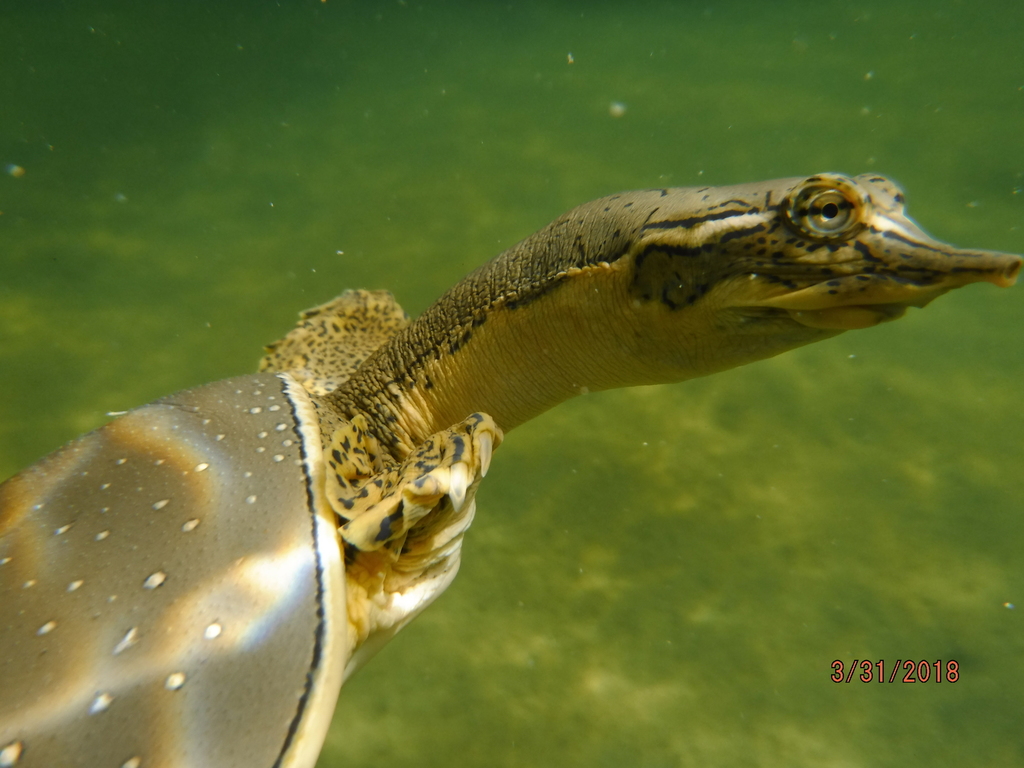
The Spiny Softshell is a flattened freshwater turtle with a flexible leathery shell, snorkellike nose, and webbed feet. Small cone-shaped bumps line the shell's front edge, and the turtle often buries itself in sand with only its head exposed.
Softshell TurtleSand BurrowerFreshwater Reptile
—observations
—countries
—peak records
Least ConcernConservation statusIUCN Red List categoriesLCNTVUENCREWEXLeast ConcernRed List categories, explained →
Diet & prey
- Aquatic insects
- Crayfish
- Small fish
Predators
- Raccoons
- Large fish
- Alligators
ThreatsRiver alteration, pollution, fishing hooks, boat strikes, nest predation, and shoreline development
HabitatsRivers, lakes, reservoirs, backwaters, and sand-bottomed shallows with basking banks
Life spanSeveral decades; adults may live 30 years or more
Size / weightNot available
Classification
- FamilyTrionychidae
- GenusApalone
- SpeciesApalone spinifera
Range data is not available yet.
Interaction riskModerate
- Low
- Moderate
- High
- Very high
- Why interaction risk is moderate
- A softshell can bite and carry Salmonella; never handle it, and wash after accidental contact.
- Why it is dangerous
- Its long neck and sharp jaws can deliver a deep bite, and wild turtles may carry Salmonella bacteria.
- How to recognize a risky encounter
- Look for a flat leathery shell with small front-edge spines, a pointed tubular snout, and fully webbed feet.
- What to do
- Never grasp or lift it; give it an open route, and wash thoroughly after accidental contact.
Responsible observation
- Distance: Observe from shore without blocking access to water.
- Identify: Note the flat leathery shell, pointed nose, and front-edge bumps.
- Handling: Contact trained responders rather than lifting a stranded turtle.
Help improve the field guideSomething wrong?
Checking your Fauna account…Report a name, category, or profile issue for review.