
Reptile · GBIF taxon 2442665
Florida Softshell Turtle
Apalone feroxThe Florida Softshell Turtle is a large flattened turtle with a leathery olive to dark-brown shell, a long flexible neck, and a tubular snorkellike snout. It often lies buried in sand or mud with only its nostrils and eyes exposed.
Softshell TurtleAquatic Ambush PredatorSand Burrower
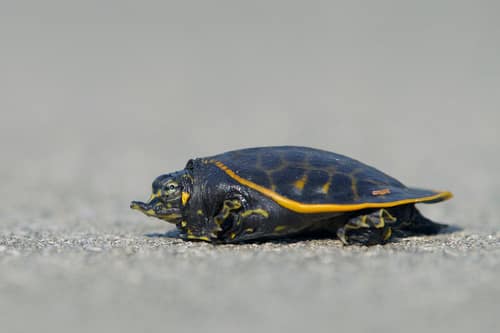
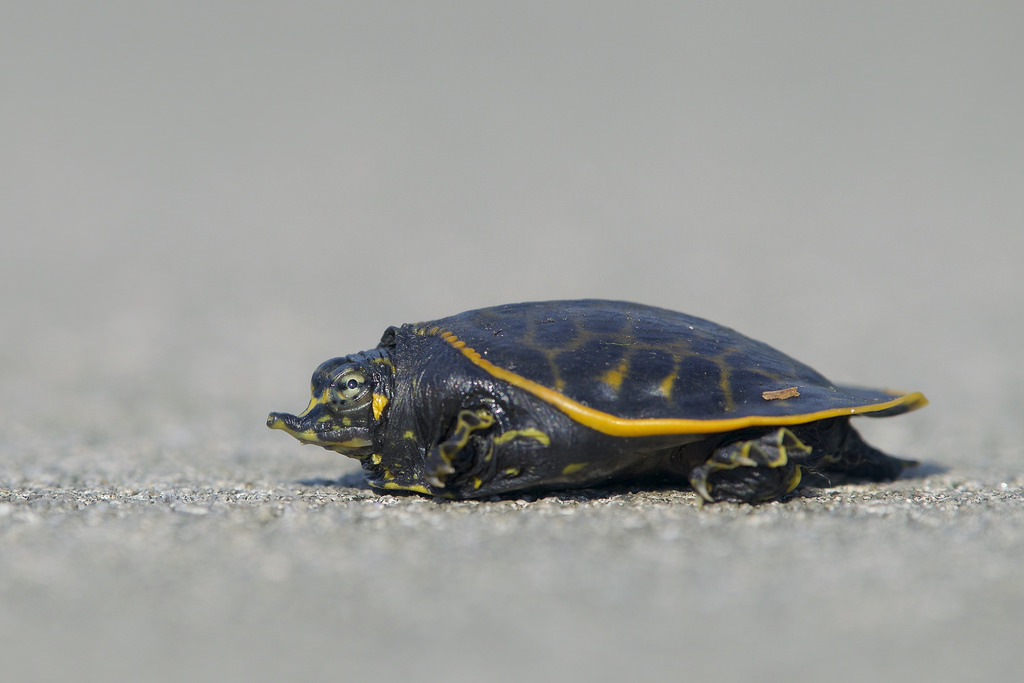 1 / 7
1 / 7—observations
—countries
—peak records
Least ConcernConservation statusIUCN Red List categoriesLCNTVUENCREWEXLeast ConcernRed List categories, explained →
Diet & prey
- Small fish
- Crayfish
- Aquatic insects
Predators
- American Alligators
- Raccoons
- Large wading birds
ThreatsWetland loss, road mortality, boat strikes, fishing hooks, water pollution, harvest, and nest predation
HabitatsLakes, ponds, marshes, canals, slow rivers, and other warm freshwater with soft bottoms
Life spanA long-lived turtle that can survive for several decades
Size / weightNot available
Classification
- FamilyTrionychidae
- GenusApalone
- SpeciesApalone ferox
Range data is not available yet.
Interaction riskModerate
- Low
- Moderate
- High
- Very high
- Why interaction risk is moderate
- Its long neck and sharp jaws can inflict a deep bite, and wild turtles may carry Salmonella.
- Why it is dangerous
- A Florida Softshell can reach around with its long neck and bite forcefully, while fecal contamination may spread Salmonella bacteria.
- How to recognize a risky encounter
- Confirm a broad flattened leathery shell, paddlelike webbed feet, and an elongated nostril-bearing snout.
- What to do
- Never grasp or restrain it; keep hands away from the head and wash thoroughly after accidental contact.
Responsible observation
- Distance: Observe from shore and leave an unobstructed route to deep water.
- Shape: Note the flat leathery shell, webbed feet, and long tubular snout.
- Handling: Contact trained wildlife responders instead of lifting a turtle.
Help improve the field guideSomething wrong?
Checking your Fauna account…Report a name, category, or profile issue for review.