
Reptile
Yellow Mud Turtle
Kinosternon flavescensAlso known as Yellow-necked Mud Turtle
Yellow mud turtles are small, highly terrestrial mud turtles that spend a significant portion of the year estivating or hibernating underground in sandy soils. Their distinctive yellow coloration on the throat, chin, and neck distinguishes them from other regional mud and musk turtles. Active mostly after spring rains, they frequent temporary wetlands, stock ponds, and slow streams before retreating beneath the sand during dry summer spells.
AquaticReptileBurrowing


—observations
—countries
—peak records
Least ConcernConservation statusIUCN Red List categoriesLCNTVUENCREWEXLeast ConcernRed List categories, explained →
Diet & preyAquatic Insects, Crayfish, Snails
Predators
- Raccoons
- Coyotes
- Large Birds of Prey
ThreatsHabitat loss, agricultural conversion of sandy grasslands, and road mortality.
HabitatsSandy prairies, temporary ponds, stock tanks, and slow-moving streams.
Life spanup to 40 years
Classification
- FamilyKinosternidae
- SpeciesKinosternon flavescens
Range data is not available yet.
Interaction riskLow
- Low
- Moderate
- High
- Very high
- Why interaction risk is low
- May bite or produce a foul musk if handled; observe from a respectful distance.
- What to notice
- Identified by a smooth, olive-brown shell and bright yellow coloration on the chin, throat, and neck sides.
- Support conservation
- Observe from a distance without disturbing nesting or burrowing sites, and report sightings in northern range edges.
Responsible observation
- Observation: Look for active turtles around temporary rain pools in late spring.
- Handling Caution: Avoid lifting wild individuals to prevent stress and defensive musking or biting.
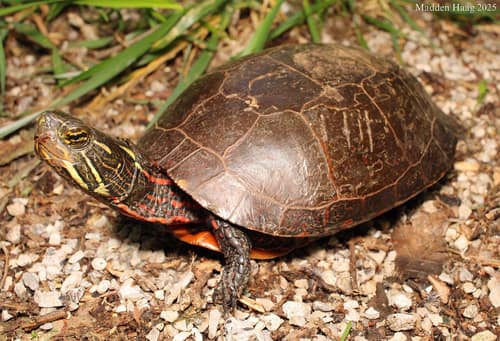
Frequent Companion MH Herpetology / CC BY-SA 4.0 · cc-by-sa
Close Relative (c) evangrimes, some rights reserved (CC BY) · cc-by
Family Relative (c) Curtis Meyers, some rights reserved (CC BY-SA) · cc-by-sa
Help improve the field guideSomething wrong?
Checking your Fauna account…Report a name, category, or profile issue for review.