
Reptile · GBIF taxon 2441812
Gopher Tortoise
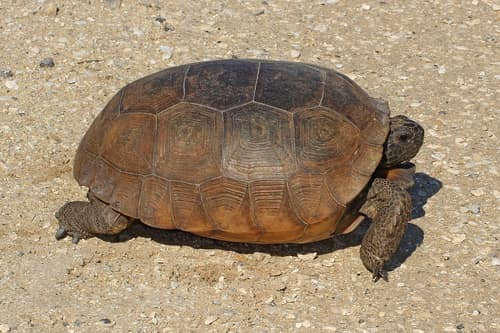
Gopherus polyphemusThe Gopher Tortoise is a heavy land tortoise with a dull domed shell, elephantlike hind legs, and flattened forelimbs built for digging. Its deep sandy burrows provide refuge for hundreds of other animal species during heat, cold, drought, and fire.
Burrowing TortoiseKeystone SpeciesSandy Uplands

—observations
—countries
—peak records
Critically EndangeredConservation statusIUCN Red List categoriesLCNTVUENCREWEXCritically EndangeredRed List categories, explained →
Diet & prey
- Grasses, broadleaf plants, flowers, cacti, and other low vegetation
Predators
- Raccoons
- Coyotes
- Large raptors
ThreatsHabitat loss, road mortality, burrow collapse, disease, fire suppression, and illegal collection
HabitatsLongleaf pine savanna, sandhill, scrub, dry prairie, pine flatwoods, and open oak woodland
Life spanLong-lived; adults commonly survive 40 to 60 years and may live longer
Size / weightNot available
Classification
- FamilyTestudinidae
- GenusGopherus
- SpeciesGopherus polyphemus
Range data is not available yet.
Interaction riskModerate
- Low
- Moderate
- High
- Very high
- Why interaction risk is moderate
- Tortoises may carry Salmonella without appearing ill; never handle one and wash after contact with contaminated surfaces.
- Why it is dangerous
- Gopher Tortoises can shed Salmonella bacteria in feces and on contaminated surfaces even when they appear healthy.
- How to recognize a risky encounter
- A sturdy brown domed shell, elephantlike rear legs, and flattened shovel-shaped forelimbs identify this burrowing tortoise.
- What to do
- Do not touch, feed, move, or remove the tortoise; wash thoroughly after accidental contact with it or its waste.
- What to notice
- Look for a brown unpatterned shell, powerful digging limbs, and a broad half-moon burrow entrance in sandy soil.
- Support conservation
- Observe remotely, never enter or damage a burrow apron, and keep exact occupied-burrow locations out of public posts.
Responsible observation
- Burrow: Keep off the sandy apron and never block a half-moon entrance.
- Distance: Let a foraging tortoise choose its own route.
- Roads: Contact trained responders and follow local wildlife guidance.
Help improve the field guideSomething wrong?
Checking your Fauna account…Report a name, category, or profile issue for review.