
Reptile
African Spurred Tortoise
Centrochelys sulcataAlso known as Sulcata Tortoise, Grooved Tortoise
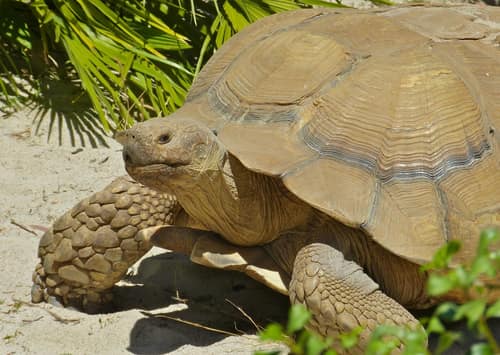
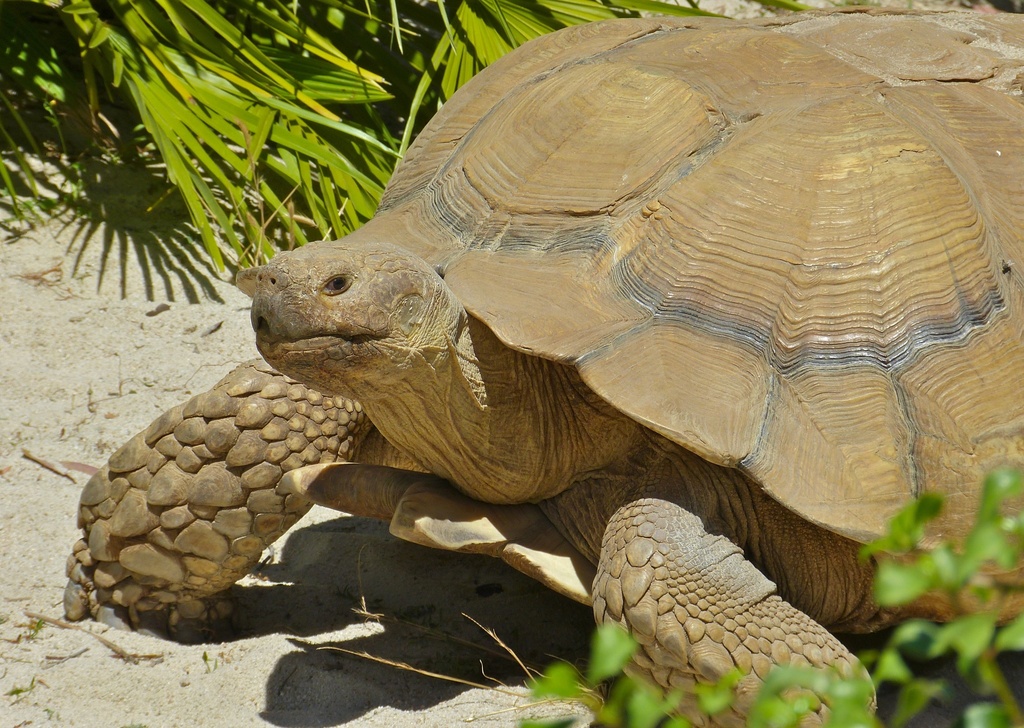
African spurred tortoises are subterranean architects that dig burrows up to fifteen meters long to escape the searing Sahel heat. Adults possess prominent conical spurs on their thighs and heavy, grooved shells that deflect harsh sunlight and physical threats. As crucial seed dispersers in arid grasslands, their foraging habits shape the dryland plant community.
Desert-DwellingBurrowingHerbivorous
—observations
—countries
—peak records
EndangeredConservation statusIUCN Red List categoriesLCNTVUENCREWEXEndangeredRed List categories, explained →
Diet & preyGrasses, Succulents, Dryland Foliage
Predators
- Jackals
- Hyenas
- Raptors
ThreatsHabitat loss, overgrazing, agricultural expansion, pet trade exploitation
HabitatsArid savannas, grasslands, Sahelian thorn scrub
Life span50–100+ years
Classification
- FamilyTestudinidae
- GenusCentrochelys
- SpeciesCentrochelys sulcata
Range data is not available yet.
Interaction riskHigh
- Low
- Moderate
- High
- Very high
- Why interaction risk is high
- Large adults possess immense strength and powerful jaws; maintain a respectful distance to avoid accidental injury.
- Why it is dangerous
- Heavy adult weight combined with sharp beak edges can cause accidental crushing injuries or painful bites.
- How to recognize a risky encounter
- Look for a massive tan shell with deeply grooved scutes and distinct conical spurs on the hind legs.
- What to do
- Keep hands clear of the mouth and shell edges, and never attempt to lift heavy adults without assistance.
- What to notice
- Recognized by its golden-brown carapace, broad head, and prominent thigh spurs in Sahelian terrain.
- Support conservation
- Report illegal harvesting to conservation authorities and refrain from sharing exact GPS coordinates of wild sightings.
Responsible observation
- Observation: Watch from a polite distance to avoid scaring the tortoise into retreat.
- Habitat Care: Avoid disrupting burrow entrances, which provide vital shelter for desert wildlife.
- Wild Ethics: Never buy wild-caught specimens or disturb native populations in the Sahel.
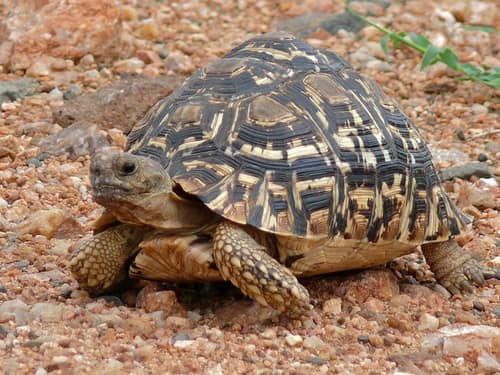
Co-occurring Species (c) Bernard DUPONT, some rights reserved (CC BY-SA) · cc-by-sa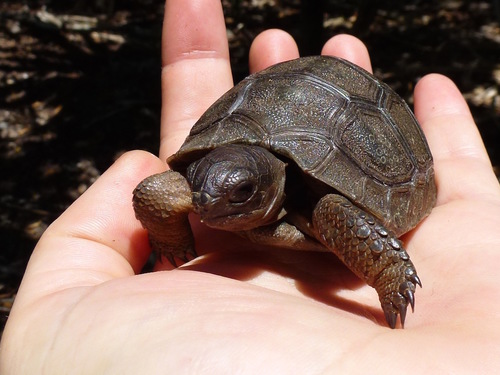
Giant Relative (c) Eliane Küpfer, some rights reserved (CC BY-SA), uploaded by Eliane Küpfer · cc-by-sa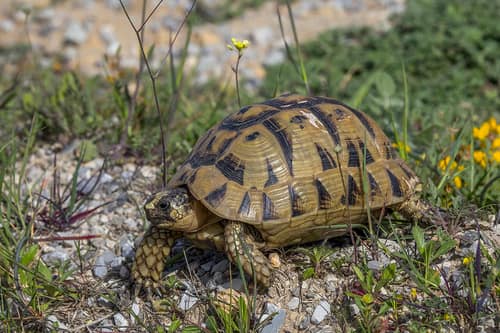
Family Relative Charles J. Sharp / CC BY-SA 4.0 · cc-by-sa
Help improve the field guideSomething wrong?
Checking your Fauna account…Report a name, category, or profile issue for review.